



Relevant for Exams
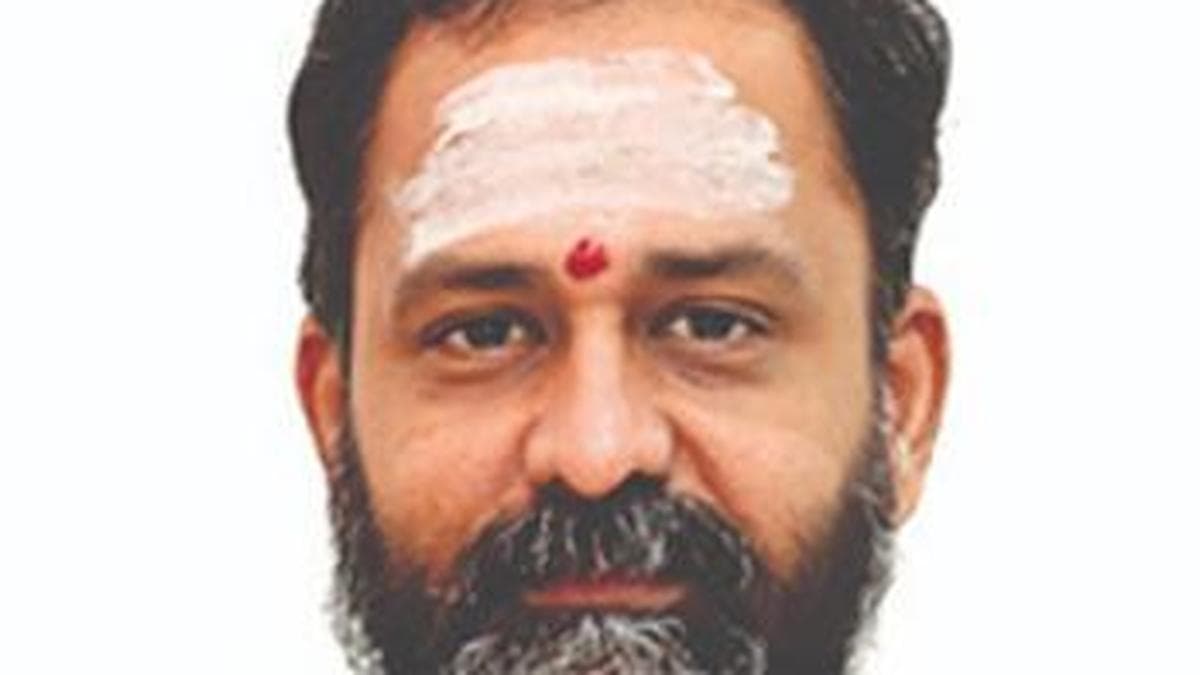
36 ex-judges oppose Opposition's impeachment move against Justice Swaminathan over temple ruling.
Summary
A group of 36 former judges condemned an Opposition move to impeach Justice Swaminathan. This action is in response to his ruling on December 1 concerning the Arulmighu Subramania Swamy Temple's duty to light a lamp at the Deepathoon. This event underscores the delicate balance of judicial independence and the political scrutiny faced by judges, making the impeachment process and judicial roles significant for competitive exams.
Key Points
- 1A group of 36 former judges condemned the Opposition's move to impeach Justice Swaminathan.
- 2The impeachment move is linked to a ruling made by Justice Swaminathan on December 1.
- 3Justice Swaminathan's ruling concerned the Arulmighu Subramania Swamy Temple.
- 4The ruling mandated the temple's duty to light a lamp at the Deepathoon.
- 5This lamp lighting was to be in addition to the customary lighting near the Uchi Pillaiyar Mandapam.
In-Depth Analysis
The recent controversy surrounding Justice Swaminathan's ruling and the subsequent move by the Opposition to initiate impeachment proceedings, met with condemnation from 36 former judges, brings to the forefront critical aspects of India's constitutional framework: judicial independence, the delicate balance of powers, and the state's role in religious affairs. This incident is not merely a legal skirmish but a significant event underscoring the constant tension between different pillars of democracy.
**Background Context and What Happened:**
India's judiciary is envisioned as an independent body, a guardian of the Constitution, operating free from executive and legislative interference. This independence is crucial for upholding the rule of law and protecting citizens' rights. The Constitution provides for a stringent and complex process for the removal of judges to safeguard this independence. In this context, Justice Swaminathan of the Madras High Court delivered a ruling on December 1 concerning the Arulmighu Subramania Swamy Temple. His judgment mandated that the temple was duty-bound to light a lamp at the 'Deepathoon' in addition to the customary lighting near the 'Uchi Pillaiyar Mandapam'. This directive, seemingly minor in its subject matter, touched upon the administration of a religious institution, a domain often sensitive and prone to public and political scrutiny. Following this ruling, certain Opposition parties reportedly initiated steps towards impeaching Justice Swaminathan, implying dissatisfaction with his judicial conduct or the substance of his judgment. This move, however, was swiftly and strongly condemned by a group of 36 former judges, who viewed it as an attempt to undermine judicial independence and politicize the judiciary.
**Key Stakeholders Involved:**
1. **Justice Swaminathan (The Judiciary):** As the presiding judge, his ruling is at the heart of the controversy. His actions represent the exercise of judicial power and the interpretation of existing laws or religious customs. The attempt to impeach him directly challenges the sanctity of judicial decisions and the judge's security of tenure.
2. **Opposition Parties (The Legislature/Political Actors):** Their move to impeach signifies a legislative attempt to hold the judiciary accountable, albeit through an extreme measure. This highlights the political dimension of judicial actions and the potential for the impeachment process to be weaponized for political ends.
3. **Arulmighu Subramania Swamy Temple Administration (Religious Institutions):** The temple, as a religious body, is directly affected by the judicial directive. This brings into focus the autonomy of religious institutions versus judicial oversight, particularly concerning their internal management and practices.
4. **Former Judges (Legal Fraternity/Civil Society):** Their collective condemnation serves as a powerful voice advocating for judicial independence. Their intervention reflects the legal community's concern over potential threats to the integrity and impartiality of the judiciary.
5. **The Public/Devotees:** While not directly involved in the impeachment move, devotees of the temple and the broader public are stakeholders in the administration of religious institutions and the functioning of a fair and independent judiciary.
**Why This Matters for India:**
This incident carries significant implications for India's constitutional democracy. Firstly, it directly challenges **judicial independence**, a cornerstone of India's democratic structure, enshrined to ensure unbiased justice delivery. If judges face impeachment threats for their rulings, it could create a 'chilling effect', making them hesitant to deliver judgments that might be politically unpopular. Secondly, it highlights the delicate balance of **separation of powers** between the judiciary and the legislature. While accountability is vital, the impeachment process, outlined in **Article 124(4) and (5)** of the Constitution (for Supreme Court judges, applicable to High Court judges via Article 217 read with Article 124 and the Judges (Inquiry) Act, 1968), is meant for 'proved misbehaviour or incapacity', not for disagreeing with a judgment. Using it otherwise blurs the lines and can lead to legislative overreach.
Thirdly, the ruling itself touches upon the **state's role in religious affairs**, a sensitive area governed by **Articles 25, 26, and 27** of the Constitution, which guarantee freedom of conscience, free profession, practice, and propagation of religion, and the freedom to manage religious affairs. Judicial pronouncements on temple administration often spark debates about the extent of state intervention in religious practices versus the autonomy of religious denominations. Historically, courts have intervened in temple administration to ensure fairness, prevent corruption, and uphold public order, but direct intervention in specific ritualistic practices can be contentious.
**Historical Context and Future Implications:**
Attempts to impeach judges are rare but not unprecedented in India. Notable instances include Justice V. Ramaswami in 1993 and Justice Soumitra Sen in 2009, both of whom faced impeachment proceedings for alleged financial irregularities or misbehaviour, rather than for judicial rulings. This current instance, if purely based on disagreement with a judgment, sets a dangerous precedent, potentially politicizing judicial review itself. The **Judges (Inquiry) Act, 1968**, lays down the detailed procedure for investigation and proof of misbehaviour or incapacity, emphasizing the seriousness required for such a move.
In the future, such incidents could lead to greater scrutiny of judicial appointments and tenure, potentially making the judiciary more vulnerable to political pressures. It could also encourage more public debate on the limits of judicial intervention in religious and cultural matters. The strong reaction from former judges suggests a pushback against any perceived attempt to erode judicial autonomy. This event underscores the need for all branches of government to respect the constitutional boundaries of their powers to maintain the integrity of India's democratic institutions. It also reinforces the importance of a robust, independent judiciary for upholding constitutional values and protecting fundamental rights against potential majoritarian pressures or political interference.
Exam Tips
This topic falls under 'Indian Polity and Governance' in UPSC CSE (GS-II) and State PSC exams. Focus on the constitutional provisions related to the judiciary, especially Articles 124, 217, 235, and the Judges (Inquiry) Act, 1968.
Study the 'Separation of Powers' doctrine and 'Judicial Independence' as core concepts. Questions often involve scenarios testing your understanding of how these principles are maintained and challenged in practice.
Relate this to Fundamental Rights, particularly Articles 25-28 concerning freedom of religion. Understand the extent of state/judicial intervention in religious institutions and the concept of 'essential religious practice' doctrine.
Common question patterns include direct questions on the impeachment procedure, analytical questions on the implications of political pressure on the judiciary, and case-study based questions on the role of courts in religious matters.
Prepare for questions on the role of the High Courts (Article 226) and their powers, as this incident involves a High Court judge. Understand the difference between removal criteria for a judge and disagreement with a judgment.
Related Topics to Study
Full Article
On December 1, Justice Swaminathan held that the Arulmighu Subramania Swamy Temple was duty-bound to light the lamp at the Deepathoon, in addition to the customary lighting near the Uchi Pillaiyar Mandapam