



Relevant for Exams
No content available for 'In Memoriam' (polity) article; specific exam facts cannot be extracted.
Summary
This article, titled 'Simply Put: In Memoriam' under the 'polity' category, lacks content for analysis. Consequently, no specific facts, dates, or names can be extracted for competitive exam preparation. Its significance and direct relevance for exams remain undetermined due to the complete absence of textual information.
Key Points
- 1The article's title is 'Simply Put: In Memoriam'.
- 2The article's category is 'polity'.
- 3No content was provided for analysis, preventing extraction of specific facts, dates, or names.
- 4Due to the absence of text, no constitutional or legal provisions could be identified.
- 5The direct exam relevance and importance cannot be assessed without article content.
In-Depth Analysis
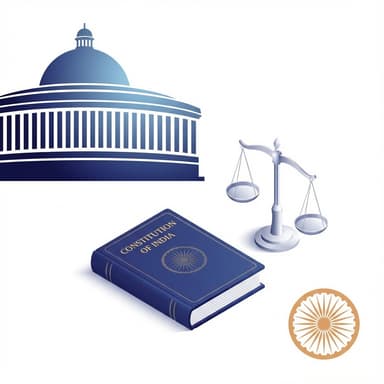
The title "Simply Put: In Memoriam" under the 'polity' category, despite lacking specific content, prompts a profound reflection on the foundational elements and enduring legacy of India's political system. "In Memoriam" signifies remembrance, a tribute to something or someone past. In the context of Indian polity, this invites us to recall the principles, institutions, and individuals that have shaped the nation's democratic journey, making it a living testament to constitutionalism and the rule of law. It's an opportunity to delve into the spirit that animates the Indian Constitution and the continuous efforts to uphold its ideals.
The background context for such a reflection traces back to India's arduous freedom struggle against colonial rule. The dream of an independent India was not merely about political sovereignty but about establishing a just, equitable, and democratic society. This vision culminated in the drafting and adoption of the Constitution of India, a monumental task undertaken by the Constituent Assembly between 1946 and 1949. Its formal adoption on November 26, 1949, and commencement on January 26, 1950, marked the birth of the Indian Republic. The members of the Constituent Assembly, including towering figures like Dr. B.R. Ambedkar (Chairman of the Drafting Committee), Jawaharlal Nehru, Sardar Vallabhbhai Patel, and Rajendra Prasad, engaged in extensive debates and deliberations, drawing inspiration from various constitutional models while firmly rooting the document in India's unique socio-cultural fabric.
What is being remembered, therefore, is not a single event but the collective wisdom, foresight, and sacrifices that went into crafting a Constitution designed to navigate a diverse nation through complex challenges. This includes the Preamble, which encapsulates the core values of justice, liberty, equality, and fraternity, solemnly resolving to constitute India into a Sovereign, Socialist, Secular, Democratic Republic. It also encompasses the fundamental rights enshrined in Part III (Articles 12-35), guaranteeing civil and political freedoms, and the Directive Principles of State Policy in Part IV (Articles 36-51), outlining the socio-economic goals of the state. These provisions are the bedrock upon which India's governance structure stands.
Key stakeholders in this continuous process of remembrance and constitutional upholding include the citizens of India, who are the ultimate custodians of the Constitution. The framers of the Constitution, through their debates and final text, laid the blueprint. The Parliament, with its power to amend the Constitution (Article 368), plays a crucial role in adapting it to changing times, though always subject to the 'Basic Structure Doctrine' as enunciated in the Kesavananda Bharati case (1973). The Judiciary, particularly the Supreme Court, acts as the guardian and interpreter of the Constitution, ensuring its supremacy and protecting fundamental rights. The Executive, comprising the government at various levels, is responsible for implementing constitutional provisions and policies.
This remembrance matters immensely for India. It reinforces constitutional morality, a concept Dr. Ambedkar emphasized as crucial for the successful functioning of a democracy. It reminds us of the sacrifices made to secure fundamental rights and freedoms, fostering a sense of national unity and shared purpose. The historical context of partition, communal tensions, and socio-economic disparities at independence underscores the importance of a robust constitutional framework to hold the nation together. Remembering the constitutional journey helps in understanding the evolution of governance, policy-making, and the ongoing efforts towards social justice and inclusive development.
Future implications of constantly returning to these foundational memories are profound. It ensures that contemporary challenges, be it economic inequality, social discrimination, or threats to democratic institutions, are addressed within the constitutional framework. It guides policy formulation, legislative action, and judicial pronouncements. The Constitution, often called a 'living document,' evolves through amendments and judicial interpretations, but its core spirit, the 'in memoriam' of its founding ideals, remains constant. Upholding these ideals is critical for India's continued journey as a vibrant democracy, ensuring that the principles of justice, liberty, equality, and fraternity are not just enshrined in text but are lived realities for all its citizens. This constant reflection is essential for fostering an informed citizenry and accountable governance, ensuring that the future of India remains firmly anchored in the democratic and secular values envisioned by its founders.
Exam Tips
This topic falls under the 'Indian Polity and Governance' section of the UPSC Civil Services Exam (GS Paper II), SSC CGL, and State PSCs. Focus on the Preamble, Fundamental Rights, Directive Principles, and the Basic Structure Doctrine.
Study the historical evolution of the Indian Constitution, including key dates (e.g., August 15, 1947; January 26, 1950; November 26, 1949) and the roles of prominent figures in the Constituent Assembly. Connect constitutional provisions to their historical context.
Understand landmark Supreme Court judgments, especially those related to constitutional amendments and the basic structure of the Constitution (e.g., Kesavananda Bharati case 1973, Minerva Mills case 1980). Questions often test conceptual clarity and the impact of these judgments.
Be prepared for both direct questions on constitutional articles and conceptual questions requiring an understanding of constitutional morality, democratic values, and the interplay between different organs of the state.
Practice essay writing on themes like 'The Indian Constitution: A Living Document' or 'Constitutionalism in India' to integrate historical, legal, and contemporary aspects.