



Relevant for Exams
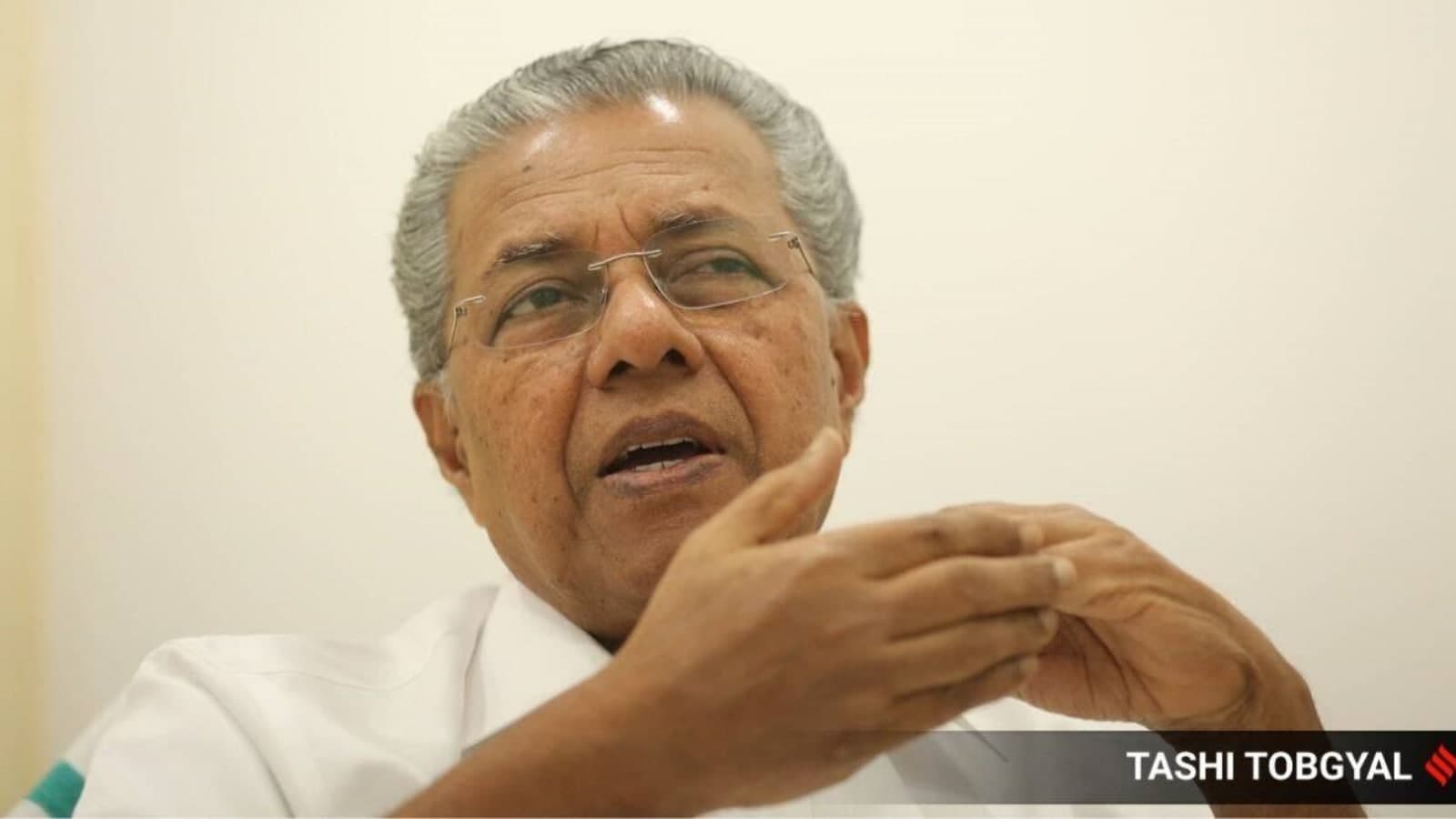
ED probes Rs 466 crore KIIFB masala bond forex violation case against Kerala CM Vijayan, Isaac.
Summary
The Enforcement Directorate (ED) has initiated a forex violation case concerning the Kerala Infrastructure Investment Fund Board (KIIFB)'s Rs 466 crore 'masala bond' issuance. The investigation targets Kerala Chief Minister Pinarayi Vijayan and former Finance Minister Thomas Isaac. This case is significant for understanding the powers of central investigative agencies and the regulatory oversight of state-backed financial instruments, crucial for competitive exam preparation.
Key Points
- 1The case involves an alleged forex violation related to the Rs 466 crore 'masala bond' issuance by the Kerala Infrastructure Investment Fund Board (KIIFB).
- 2The central investigative agency involved in the probe is the Enforcement Directorate (ED).
- 3Kerala Chief Minister Pinarayi Vijayan is one of the key figures implicated in the forex violation case.
- 4Former Kerala Finance Minister Thomas Isaac is also under investigation concerning the KIIFB masala bonds.
- 5'Masala bonds' are rupee-denominated bonds issued outside India by Indian entities, used by KIIFB to raise funds.
In-Depth Analysis
The KIIFB masala bond case, involving the Enforcement Directorate (ED) and top political figures in Kerala, offers a crucial lens through which to understand the intricate dynamics of federalism, state financial autonomy, and regulatory oversight in India. At its heart, the case concerns an alleged foreign exchange violation related to the Kerala Infrastructure Investment Fund Board's (KIIFB) issuance of 'masala bonds' worth Rs 466 crore in 2019.
**Background Context: KIIFB and Masala Bonds**
Kerala Infrastructure Investment Fund Board (KIIFB) was established in 1999 by the Kerala government with the primary objective of mobilizing funds for critical infrastructure projects in the state. Historically, state governments largely rely on central government grants, market borrowings through state development loans (SDLs) issued via the Reserve Bank of India (RBI), and their own tax and non-tax revenues. However, to bypass the limitations of traditional borrowing mechanisms and accelerate development, KIIFB was restructured in 2016 under the KIIFB Act, 1999, to become a statutory body capable of raising significant funds from various sources, including international markets. This innovative approach aimed to unlock substantial capital for projects that would otherwise face delays due to budgetary constraints. One such innovative instrument was the 'masala bond'. Masala bonds are rupee-denominated bonds issued outside India by Indian entities. The key feature is that the currency risk lies with the investor, not the issuer. KIIFB issued its masala bonds in 2019, raising Rs 2,150 crore (approximately USD 312 million at the time) from international markets, including the London Stock Exchange, making it the first state-level entity to do so. The Rs 466 crore mentioned in the context is a specific tranche or part of this larger issuance.
**What Happened: The ED Probe**
The Enforcement Directorate (ED), a multi-disciplinary organization mandated to investigate economic crimes and violations of foreign exchange laws, initiated a probe into KIIFB's masala bond issuance. The ED's investigation stems from allegations of violations under the Foreign Exchange Management Act (FEMA), 1999. Specifically, the agency is looking into whether the issuance of these bonds by KIIFB, a state-owned entity, adhered to all the guidelines set by the Reserve Bank of India (RBI) regarding external commercial borrowings (ECBs) and masala bonds. The ED’s contention reportedly revolves around whether KIIFB, as a 'body corporate' under FEMA regulations, was eligible to issue such bonds and if the procedural compliances were met. The probe has targeted high-profile individuals, including Kerala Chief Minister Pinarayi Vijayan and former State Finance Minister Thomas Isaac, who was instrumental in KIIFB's fundraising strategy.
**Key Stakeholders Involved**
1. **Kerala Infrastructure Investment Fund Board (KIIFB):** The primary issuer of the masala bonds, a statutory body under the Kerala government. Its financial autonomy and operational methods are under scrutiny.
2. **Kerala Government (Chief Minister Pinarayi Vijayan & former Finance Minister Thomas Isaac):** The political leadership that championed KIIFB's fundraising model. They are facing the brunt of the investigation, raising questions of political motivation behind the central agency's actions.
3. **Enforcement Directorate (ED):** The central investigative agency probing the alleged FEMA violations. Its role as an independent agency and its jurisdiction over state-level financial instruments are central to the discourse.
4. **Reserve Bank of India (RBI):** The apex monetary authority and regulator of foreign exchange transactions and external commercial borrowings in India. Its guidelines on masala bonds and ECBs are paramount to determining any violations.
**Significance for India**
This case holds profound significance for India, touching upon several critical aspects of governance and economy:
* **Federalism and Centre-State Relations:** It highlights the often-strained relationship between the central government and state governments, particularly when central investigative agencies like the ED or CBI probe state-level matters. States often allege political vendetta, while central agencies assert their statutory mandate. This case exemplifies the ongoing debate on the extent of central intervention in state affairs.
* **Financial Autonomy of States:** The ability of state governments and their entities to raise funds independently for development is crucial. Article 293 of the Indian Constitution empowers states to borrow, but also places limitations, including requiring consent from the Centre if the state is indebted to the Centre. The KIIFB case tests the boundaries of state financial innovation and the regulatory oversight of such borrowings, especially from international markets.
* **Regulatory Framework and Compliance:** The case underscores the importance of strict adherence to the Foreign Exchange Management Act (FEMA), 1999, and RBI guidelines for all entities engaged in foreign exchange transactions. It brings into focus the clarity and interpretation of these regulations, especially for non-sovereign, state-backed entities.
* **Investment Climate:** The outcome could influence how international investors perceive state-backed bonds and the overall regulatory environment for capital raising in India. Any perceived ambiguity or overreach could impact future foreign investment flows into state-level development projects.
**Historical Context and Future Implications**
Historically, central agencies have frequently investigated state-level corruption or financial irregularities, often leading to political confrontations. The transition from the stringent Foreign Exchange Regulation Act (FERA) of 1973 to the more liberal Foreign Exchange Management Act (FEMA) in 1999 aimed to facilitate external trade and payments and promote the orderly development and maintenance of the foreign exchange market in India. However, the regulatory oversight remains robust. The KIIFB case will likely set a precedent for how state-backed entities navigate the complexities of international finance and central regulations.
Looking ahead, the case could lead to protracted legal battles, potentially reaching higher courts. Its resolution may result in clearer guidelines from the RBI regarding state-backed entities' eligibility and procedures for issuing masala bonds or other external commercial borrowings. It will also continue to fuel the debate on the independence and potential politicization of central investigative agencies, impacting the broader federal structure of India. The outcome will be crucial for the financial strategies of other states contemplating similar innovative funding mechanisms for their infrastructure development.
Exam Tips
This topic falls under 'Indian Economy' (specifically, financial markets, government borrowing, and foreign exchange) and 'Indian Polity & Governance' (Centre-State relations, federalism, role of central agencies). For UPSC, it's relevant for GS Paper II and III. For State PSCs and Banking exams, direct questions on KIIFB or Masala Bonds are possible.
Study related topics like the Foreign Exchange Management Act (FEMA), 1999, its objectives, and key provisions. Understand the functions of the Reserve Bank of India (RBI) as a regulator of foreign exchange and external commercial borrowings (ECBs). Also, delve into Article 293 of the Constitution concerning borrowing by states and the broader concept of fiscal federalism.
Common question patterns include: (a) Definition-based MCQs (e.g., 'What are Masala Bonds?', 'Which act governs foreign exchange in India?'); (b) Factual questions (e.g., 'Which state entity issued Masala Bonds first?'); (c) Analytical questions for Mains exams (e.g., 'Discuss the implications of central agency probes on state financial autonomy and federalism in India, using recent examples like the KIIFB case.'); (d) Role-based questions (e.g., 'What is the role of ED/RBI in regulating foreign exchange transactions?').