



Relevant for Exams
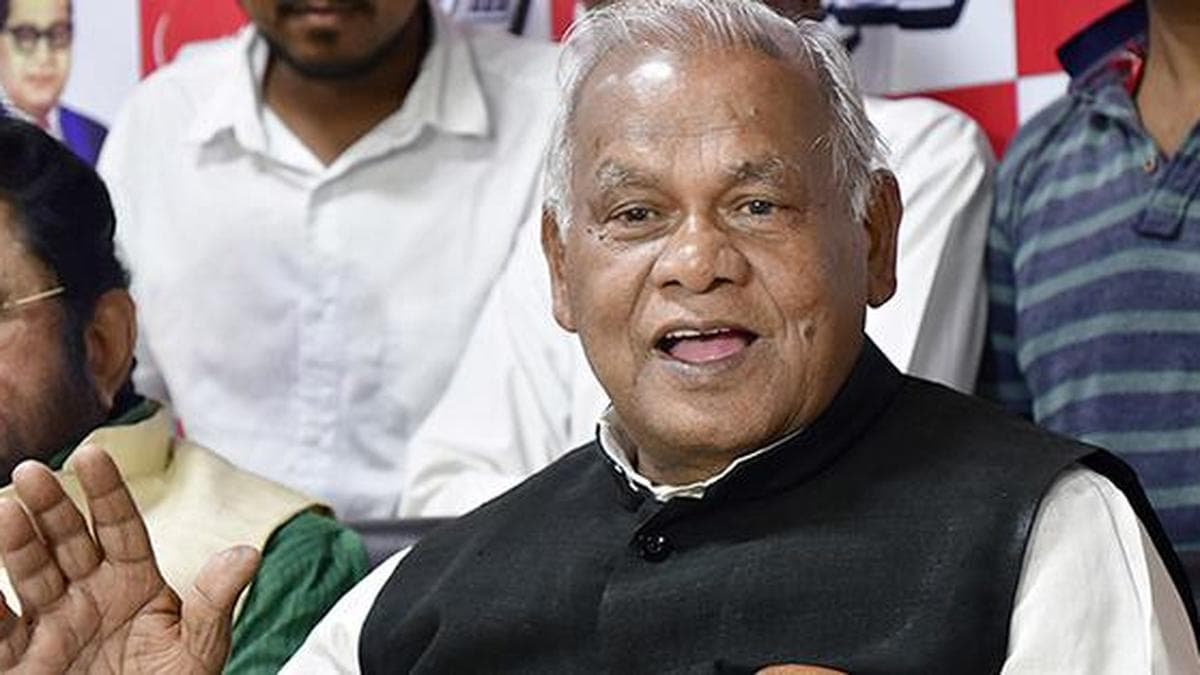
RJD accuses Union Minister Jitan Ram Manjhi of vote rigging based on a viral video; Manjhi claims video is doctored.
Summary
The Rashtriya Janata Dal (RJD) has accused Union Minister and HAM(S) leader Jitan Ram Manjhi of vote rigging, citing a viral video where he purportedly admitted to 'helping' a candidate win. Manjhi has strongly refuted these allegations, claiming the video is doctored. This political controversy highlights ongoing tensions and is relevant for understanding current political dynamics, particularly in state-level contexts.
Key Points
- 1The Rashtriya Janata Dal (RJD) leveled accusations of vote rigging against Jitan Ram Manjhi.
- 2Jitan Ram Manjhi is identified as a leader of the Hindustani Awam Morcha (Secular) (HAM(S)).
- 3Manjhi, who is also a Union Minister, was accused based on a purported viral video.
- 4The video allegedly shows Manjhi stating he had 'helped' a party candidate win an election.
- 5Jitan Ram Manjhi denied the allegations, asserting that the viral video had been doctored.
In-Depth Analysis
The recent accusation by the Rashtriya Janata Dal (RJD) against Union Minister and Hindustani Awam Morcha (Secular) (HAM(S)) leader Jitan Ram Manjhi regarding alleged vote rigging has ignited a significant political controversy, particularly relevant in the context of India's robust yet often tumultuous electoral landscape. This incident, stemming from a purported viral video, underscores critical issues concerning electoral integrity, political accountability, and the delicate balance of power within coalition politics.
To understand the gravity of these allegations, it's essential to grasp the background context. Bihar, the state where this controversy originates, is known for its highly competitive and identity-driven politics. Both RJD and HAM(S) are significant players, with the RJD being a major opposition force and HAM(S) a smaller, but often crucial, ally in larger coalitions. Jitan Ram Manjhi, a former Chief Minister of Bihar and a prominent Dalit leader, holds considerable influence, particularly within the Mahadalit community. His party, HAM(S), frequently plays the role of a kingmaker or a crucial coalition partner, making any allegations against its leader politically charged. The general election environment in India, with its intense campaigning and fierce competition, often sees such accusations emerge, testing the robustness of democratic institutions.
The core of the incident revolves around a viral video where Manjhi purportedly admits to 'helping' a party candidate win an election. While the RJD has seized upon this video as evidence of vote rigging, Manjhi has vehemently denied the allegations, asserting that the video is 'doctored' and fabricated to malign his image. The key stakeholders involved are, firstly, the **Rashtriya Janata Dal (RJD)**, which, as the accuser, aims to expose alleged malpractice and gain political mileage. Secondly, **Jitan Ram Manjhi and HAM(S)** are at the receiving end of these accusations, fighting to defend their reputation and political standing. Lastly, and most importantly, the **Election Commission of India (ECI)** becomes a crucial stakeholder. The ECI is the constitutional body entrusted with the superintendence, direction, and control of elections (Article 324 of the Constitution of India), making it responsible for investigating such claims and ensuring free and fair elections.
This controversy matters profoundly for India because it directly challenges the integrity of its democratic process. Free and fair elections are the bedrock of Indian democracy. Allegations of vote rigging, if proven true, erode public trust in electoral outcomes and the institutions that govern them. It raises serious questions about the fairness of representation and the legitimacy of elected officials. Moreover, it highlights the constant vigilance required to uphold the rule of law in political conduct, especially given the significant resources and influence wielded by political parties and leaders. The incident also brings to the fore the increasing role of social media and digital evidence in political discourse, often leading to rapid dissemination of information, both true and false.
Historically, India has a long record of striving for electoral reforms to curb malpractices. The **Representation of the People Act, 1951**, is the principal legislation governing elections, defining electoral offenses and corrupt practices. Sections like 123 of this Act list various corrupt practices, including bribery, undue influence, and promotion of enmity. The Indian Penal Code (IPC) also contains relevant provisions, such as Section 171B (bribery) and 171C (undue influence at elections). Over the decades, the ECI has taken significant steps, from introducing Electronic Voting Machines (EVMs) to implementing the Model Code of Conduct, to enhance transparency and fairness. However, challenges persist, and new forms of alleged malpractice continue to emerge.
Looking ahead, the future implications of this incident are multi-faceted. The ECI is expected to launch a thorough investigation into the authenticity of the video and the veracity of the claims. The outcome of this investigation could have significant political ramifications for Manjhi, HAM(S), and their alliances, especially with upcoming state and national elections. If the allegations are substantiated, it could lead to legal action and even disqualification under the Representation of the People Act, 1951. Conversely, if the video is proven to be doctored, it would underscore the dangers of misinformation and defamation in the political arena. This incident also serves as a reminder of the continuous need for electoral reforms, robust investigative mechanisms, and greater transparency in political funding and campaigning to safeguard the sanctity of India's democratic process. Ultimately, upholding the principles enshrined in the Constitution regarding free and fair elections is paramount for the nation's democratic health and global standing.
Exam Tips
This topic falls under 'Indian Polity and Governance' in the UPSC Civil Services Syllabus (GS Paper II) and State PSCs, and 'General Awareness' for SSC and Railways. Focus on the powers and functions of the Election Commission of India (ECI).
Study the Representation of the People Act, 1951, specifically provisions related to electoral offenses, corrupt practices, and disqualification of members. Also, understand relevant sections of the Indian Penal Code (IPC) concerning elections.
Be prepared for questions on electoral reforms, the role of money and muscle power in elections, and the challenges faced by the ECI. Analytical questions might ask about the impact of social media on electoral integrity or the balance between freedom of speech and preventing misinformation during elections.
Understand the constitutional basis for elections in India, primarily Article 324, which vests the power of superintendence, direction, and control of elections in the ECI. Memorize key provisions and their implications.
Related Topics to Study
Full Article
A purported video of the HAM(S) leader saying he had ‘helped’ a party candidate win election has gone viral; Union Minister hits back at the Opposition, says the video had been doctored, ‘he is no longer afraid of anyone’