



Relevant for Exams
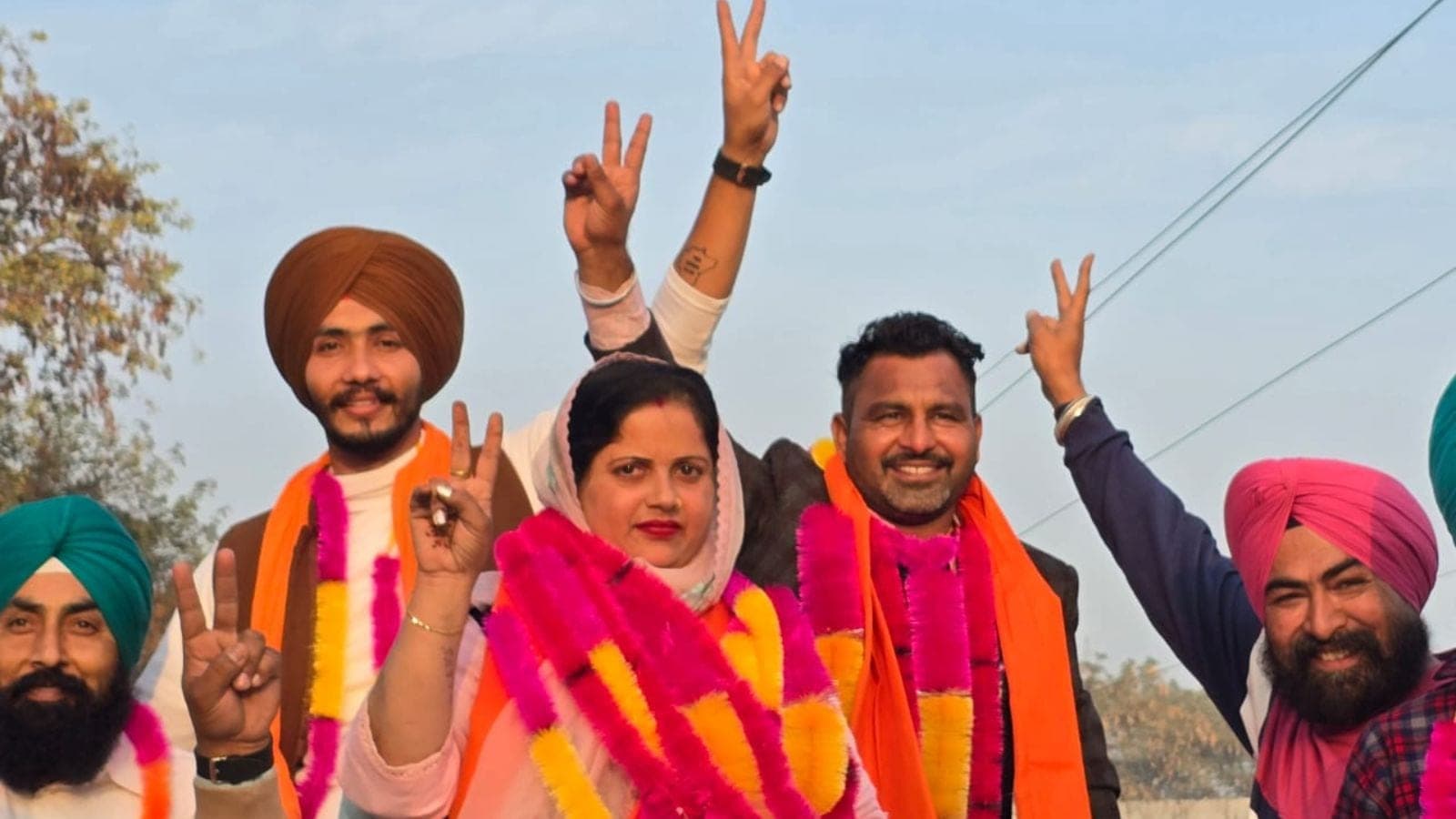
Punjab rural poll results discussed, but content unavailable for detailed analysis.
Summary
This article analyzes Punjab rural poll results and their impact on AAP, Congress, Akalis, and BJP. However, the detailed content is unavailable, precluding extraction of specific facts, dates, numbers, or constitutional implications. Therefore, a precise summary of election outcomes and party performances cannot be provided for exam preparation.
Key Points
- 1The article's topic is the analysis of Punjab rural poll results.
- 2Key political parties mentioned in the context are AAP, Congress, Shiromani Akali Dal (Akalis), and BJP.
- 3The focus of the analysis is the meaning of the results for these 'big players' in Punjab politics.
- 4Specific election details such as dates, voter turnout, or exact winning figures are not available due to missing content.
- 5The relevance for competitive exams is primarily for understanding state-level political dynamics, especially for State Public Service Commission (PSC) exams.
In-Depth Analysis
Understanding the dynamics of rural polls in states like Punjab is crucial for competitive exam aspirants, as these elections often serve as a barometer for the political mood and the performance of various parties at the grassroots level. While specific results from the mentioned article are unavailable, we can delve into the broader implications and the significance of such polls for the major political players in Punjab: the Aam Aadmi Party (AAP), Congress, Shiromani Akali Dal (SAD), and the Bharatiya Janata Party (BJP).
**Background Context and Historical Landscape:**
Punjab's political history has largely been dominated by a bipolar contest between the Shiromani Akali Dal (often in alliance with the BJP) and the Indian National Congress. This traditional rivalry shaped the state's governance for decades. However, the political landscape witnessed a seismic shift with the emergence of the Aam Aadmi Party (AAP), which capitalized on public discontent against traditional parties, issues like drug menace, agricultural distress, and sacrilege incidents. AAP's spectacular victory in the 2022 Assembly elections marked a new era, relegating both Congress and SAD to opposition benches. Rural polls, or Panchayat elections, are fundamental to India's democratic fabric, representing the third tier of governance established by the 73rd Constitutional Amendment Act of 1992. These elections empower local self-governance institutions, giving rural communities a direct say in their development and administration. They are crucial for political parties to gauge their ground-level support, test their organizational strength, and identify potential leaders before major state or national elections.
**Key Stakeholders and Their Stakes:**
1. **Aam Aadmi Party (AAP):** As the incumbent ruling party, the rural poll results are a direct referendum on their performance and governance. A strong showing would validate their policies, strengthen their grassroots presence, and provide momentum for future elections. Conversely, a poor performance could signal disillusionment among the rural electorate, which forms a significant portion of Punjab's population, and raise questions about their ability to deliver on promises like improving education, healthcare, and tackling corruption.
2. **Indian National Congress:** Having lost power in 2022, Congress views rural polls as an opportunity to regain lost ground and demonstrate its resilience. Success in these elections would indicate a revival of their organizational structure and a renewed connect with the rural voters, essential for rebuilding their base ahead of the 2024 Lok Sabha elections.
3. **Shiromani Akali Dal (SAD):** Historically, SAD has drawn its primary strength from Punjab's rural heartland, particularly among the Sikh peasantry. Their recent electoral performance has been dismal, struggling with issues like infighting, sacrilege controversies, and a perceived disconnect from the youth. A strong performance in rural polls is absolutely critical for SAD's revival, as it would re-establish their traditional base and signal their potential return to relevance in state politics.
4. **Bharatiya Janata Party (BJP):** The BJP has traditionally been a junior partner to SAD and has a limited rural footprint in Punjab. Post the farmers' protests and the breakdown of their alliance with SAD, BJP is attempting to expand its independent base, particularly among Hindu voters and some Sikh sections. Rural polls offer them a chance to test their independent organizational capabilities and identify areas for growth. Any significant gains, however small, would be a strategic victory for the party's long-term ambitions in the state.
**Significance for India and Future Implications:**
Rural poll results in a politically significant state like Punjab have broader implications for India's federal structure and democratic health. They reflect the efficacy of democratic decentralization envisioned by the 73rd Amendment, which aimed to bring governance closer to the people. Strong local self-governance is vital for effective implementation of welfare schemes and sustainable rural development. The outcomes can influence the political narrative at the national level, impacting alliance formations and strategies for the upcoming Lok Sabha elections. For instance, if AAP consolidates its rural base, it could embolden its national ambitions. Conversely, a resurgence of Congress or SAD could complicate the national opposition's unity efforts. Furthermore, Punjab, being a border state, has unique security and socio-economic challenges. The stability and responsiveness of its local governance directly impact national security and the well-being of its population, including issues related to agricultural policies, water disputes, and internal law and order.
**Constitutional and Policy References:**
These rural polls are directly governed by the **73rd Constitutional Amendment Act, 1992**, which granted constitutional status to Panchayati Raj Institutions (PRIs). Key articles to remember include:
* **Article 243:** Defines Panchayats and Gram Sabhas.
* **Article 243B:** Mandates the establishment of Panchayats at village, intermediate, and district levels.
* **Article 243D:** Provides for reservation of seats for Scheduled Castes, Scheduled Tribes, and women in Panchayats.
* **Article 243E:** Fixes the duration of Panchayats at five years.
* **Article 243K:** Establishes the **State Election Commission (SEC)**, responsible for the superintendence, direction, and control of the preparation of electoral rolls and the conduct of all elections to the Panchayats. The SEC is an independent body, crucial for ensuring free and fair local elections.
* **Article 243G:** Enlists the powers, authority, and responsibilities of Panchayats, including the preparation of plans for economic development and social justice and the implementation of schemes entrusted to them. This highlights the direct impact of these elections on local development.
The performance of parties in these elections also influences the allocation and utilization of funds from the **State Finance Commission (Article 243I)**, which reviews the financial position of Panchayats and makes recommendations to the Governor regarding the distribution of taxes, duties, tolls, and fees between the State and the Panchayats.
In conclusion, while the specific results of the Punjab rural polls are not available, understanding their foundational importance, the high stakes for the key political parties, and their constitutional underpinnings is vital for any aspirant studying Indian Polity and Governance. These local elections are not merely local events but significant indicators of broader political currents and the health of democratic decentralization in India.
Exam Tips
This topic falls under the 'Indian Polity and Governance' section of the UPSC Civil Services Exam (Prelims & Mains GS-II) and State Public Service Commission exams. Focus on the constitutional provisions related to local self-governance.
Study the 73rd and 74th Constitutional Amendment Acts in detail. Understand the powers, functions, and composition of Panchayati Raj Institutions (PRIs) and Urban Local Bodies (ULBs), as well as the role of the State Election Commission and State Finance Commission.
Common question patterns include direct questions on the articles related to PRIs (e.g., Article 243K for SEC), the significance of democratic decentralization, the evolution of Panchayati Raj, and the challenges faced by local self-governing bodies. Be prepared for analytical questions on the impact of state/local election results on national politics.
Relate the performance of political parties in rural polls to their broader strategies for state assembly and Lok Sabha elections. Analyze how local issues (e.g., agriculture, rural development, social justice) influence voting patterns.