



Relevant for Exams
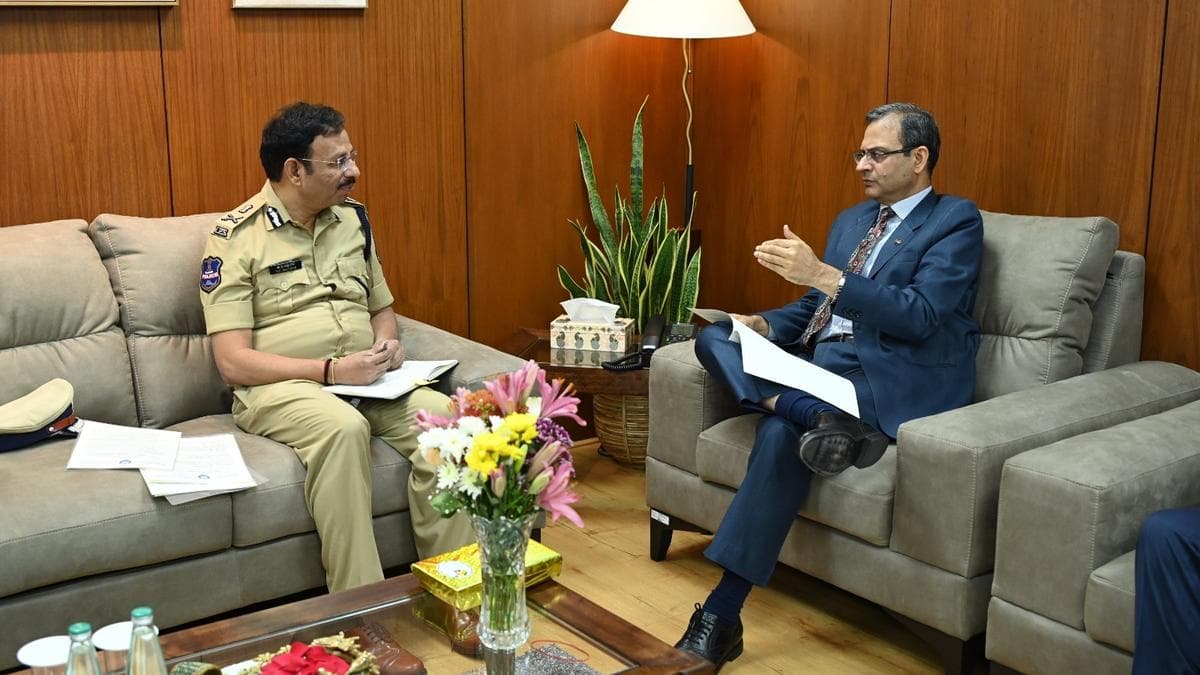
Hyderabad Police seeks RBI aid to combat cyber fraud via mule accounts.
Summary
The Hyderabad police chief has sought support from the Reserve Bank of India (RBI) to combat cyber fraud by curbing "mule accounts." This initiative highlights the growing challenge of cybercrime and the necessity of inter-agency coordination between law enforcement and financial regulators. It is significant for understanding India's approach to financial security and cybercrime prevention.
Key Points
- 1The request for support was made by the Hyderabad police chief.
- 2The assistance is specifically sought from the Reserve Bank of India (RBI).
- 3The primary objective of the initiative is to curb the use of "mule accounts."
- 4Mule accounts are identified as a key factor fuelling "cyber fraud."
- 5The action underscores the importance of inter-agency cooperation between police and financial regulators.
In-Depth Analysis
The request by the Hyderabad police chief for support from the Reserve Bank of India (RBI) to curb 'mule accounts' fueling cyber fraud is a critical development, underscoring India's escalating battle against digital crime. This initiative highlights the growing sophistication of cybercriminals and the imperative for multi-agency collaboration to safeguard India's rapidly expanding digital economy.
**Background Context:**
India has witnessed an unprecedented surge in digital transactions, largely propelled by government initiatives like 'Digital India' and the widespread adoption of Unified Payments Interface (UPI). While this has fostered financial inclusion and economic growth, it has also created fertile ground for cybercriminals. From phishing and vishing scams to sophisticated malware attacks, the methods of fraud are diverse and constantly evolving. A key enabler for these fraudsters is the 'mule account.' These are bank accounts opened by individuals, often unknowingly or under false pretenses, and then used by criminals to receive and quickly transfer illicitly gained funds. They act as intermediaries, making it incredibly difficult for law enforcement to trace the ultimate beneficiaries of the fraud, thus providing a crucial layer of anonymity to the perpetrators.
**What Happened:**
The Hyderabad police chief’s plea to the RBI signifies a recognition that traditional police methods alone are insufficient to tackle this interconnected financial crime. Law enforcement agencies can investigate individual cases, but the systemic nature of mule accounts, often spread across multiple banks and jurisdictions, requires a regulator with overarching authority over the financial system. The police are seeking the RBI's unique powers to intervene at a systemic level – potentially through directives to banks for enhanced monitoring, real-time data sharing, proactive identification of suspicious accounts, and quicker freezing mechanisms. This aims to disrupt the financial supply chain of cybercriminals, making it harder for them to cash out their ill-gotten gains.
**Key Stakeholders Involved:**
1. **Hyderabad Police (and other Law Enforcement Agencies):** They are on the front lines, investigating cyber fraud cases, arresting perpetrators, and trying to recover stolen funds. Their challenge lies in the cross-jurisdictional nature of these crimes and the rapid movement of money.
2. **Reserve Bank of India (RBI):** As India's central bank and financial regulator, RBI governs all scheduled commercial banks, payment banks, and other financial institutions. It has the power to issue directives, set prudential norms, and enforce compliance, making its support indispensable for a coordinated crackdown on mule accounts.
3. **Financial Institutions (Banks, Payment Service Providers):** These are the custodians of the accounts where fraudulent transactions occur. They are crucial for implementing RBI directives, strengthening their KYC (Know Your Customer) processes, transaction monitoring systems, and fraud detection mechanisms.
4. **Cybercriminals:** The perpetrators of these frauds, constantly seeking new ways to exploit vulnerabilities and launder money through mule accounts.
5. **Victims:** Individuals and businesses who suffer financial losses and often psychological distress due to these frauds.
**Why This Matters for India:**
This issue is profoundly significant for India. Economically, widespread cyber fraud erodes public trust in digital payment systems, potentially hindering the 'Digital India' vision and financial inclusion efforts. If people lose faith in the security of online transactions, it could reverse years of progress in shifting towards a cashless economy. Socially, it leads to widespread victimisation, impacting individuals' savings and economic stability. From a governance perspective, it highlights the need for robust regulatory frameworks and effective inter-agency coordination to combat transnational and technologically advanced crimes. The integrity of India's financial system and its global reputation as a digital-first economy are at stake.
**Historical Context:**
While cybercrime is a relatively new phenomenon in its current form, financial fraud has existed for centuries. The rise of the internet and digital payments merely provided new avenues. India enacted the Information Technology Act, 2000 (IT Act) to address cybercrimes. Over the years, amendments and new regulations have been introduced to keep pace with technological advancements, but the sheer scale and speed of digital transactions continue to pose formidable challenges to law enforcement and regulators alike. The concept of 'money mules' has evolved from traditional hawala networks to digitally facilitated transfers, making it faster and harder to trace.
**Future Implications:**
This collaboration could lead to several positive outcomes. We might see more stringent KYC norms for opening bank accounts, especially for suspicious patterns. The RBI could mandate banks to implement advanced AI/ML-based fraud detection systems for real-time anomaly detection. There could be a standardized protocol for inter-bank information sharing regarding suspicious accounts and transactions. Furthermore, this could accelerate the development of a national framework for cybercrime investigation and prevention, potentially involving dedicated cybercrime units with enhanced technical capabilities. On the legal front, it may prompt further amendments to the IT Act, the Indian Penal Code (IPC), and the Prevention of Money Laundering Act (PMLA), 2002, to specifically address digital money laundering through mule accounts. The active involvement of RBI, empowered by the Reserve Bank of India Act, 1934, and the Banking Regulation Act, 1949, can provide the regulatory muscle needed to compel banks to act decisively. This collaboration is crucial for maintaining the trust and security essential for India's continued digital growth.
Exam Tips
This topic primarily falls under GS Paper III of UPSC Civil Services Exam (Internal Security, Economy, Science & Technology - Cyber Security). For SSC/Banking/State PSCs, it's relevant for General Awareness, Current Affairs, and Computer Knowledge sections. Focus on the 'who, what, why, and how' aspects.
Study related topics such as the Information Technology Act, 2000, Prevention of Money Laundering Act (PMLA), 2002, the role and functions of RBI, various government initiatives like Digital India and UPI, and the structure of India's cybersecurity framework (e.g., CERT-In).
Common question patterns include: (a) Factual questions on specific acts, bodies (RBI, CERT-In), or definitions (mule accounts, phishing). (b) Analytical questions on the impact of cyber fraud on India's economy or digital payment systems. (c) Policy-oriented questions asking for measures or strategies to combat cybercrime and enhance cybersecurity.
Understand the difference between various types of cyber fraud (phishing, vishing, smishing, ransomware) and the role of 'mule accounts' as a critical link in the financial chain of these crimes. Also, be aware of the concept of 'money laundering' and how these accounts facilitate it.
Pay attention to the concept of inter-agency coordination. Questions might explore why such collaboration (e.g., Police and RBI) is essential for tackling modern crimes and what challenges it faces.