



Relevant for Exams
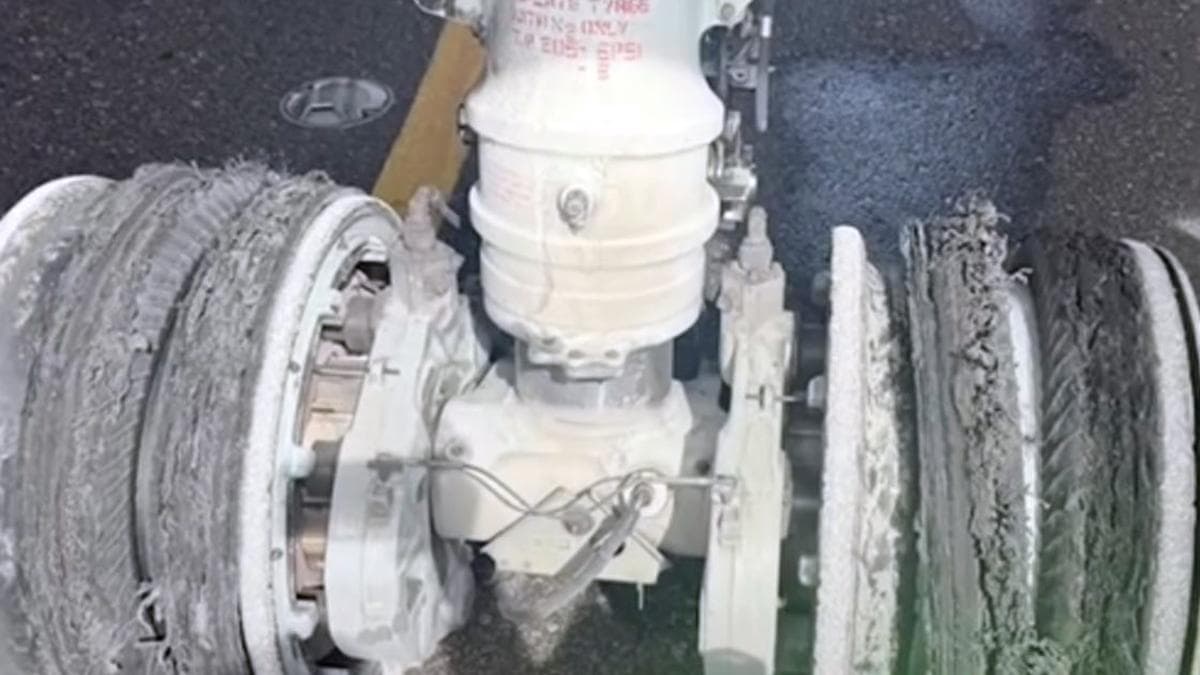
Air India Express flight makes emergency landing in Kochi after tyre burst, averting tragedy.
Summary
An Air India Express flight successfully made an emergency landing at Kochi (Cochin International Airport) following a tyre burst, averting a potential tragedy. This incident highlights the critical importance of aviation safety protocols and the efficiency of emergency response systems. For competitive exams, it underscores the role of regulatory bodies like the DGCA in ensuring air travel safety and operational preparedness.
Key Points
- 1The incident involved an Air India Express flight.
- 2The flight executed an emergency landing.
- 3The cause of the emergency landing was a tyre burst.
- 4The emergency landing occurred at Kochi (Cochin International Airport).
- 5Aviation safety in India is primarily regulated by the Directorate General of Civil Aviation (DGCA).
In-Depth Analysis
The incident of an Air India Express flight making an emergency landing at Kochi after a tyre burst, successfully averting a potential tragedy, serves as a crucial case study in aviation safety and emergency preparedness in India. While the immediate outcome was positive, such events underscore the constant vigilance required in a rapidly expanding sector.
**Background Context and the Growing Indian Aviation Sector:**
India's aviation sector has witnessed phenomenal growth over the last two decades, driven by economic liberalization, rising disposable incomes, and government initiatives like the UDAN (Ude Desh ka Aam Naagrik) scheme, launched in 2016, aimed at enhancing regional connectivity. This growth has led to a significant increase in air traffic, new airlines, and expanded airport infrastructure. With this expansion comes the paramount responsibility of ensuring stringent safety standards. The Indian skies, once dominated by a few players, now see millions of passengers annually, making safety a non-negotiable aspect for both economic progress and public confidence. The underlying challenge is to maintain world-class safety records while accommodating this rapid growth.
**The Incident and Immediate Response:**
The specific incident involved an Air India Express flight, a subsidiary of Air India, which successfully executed an emergency landing at Cochin International Airport (CIAL) after a tyre burst. This situation, while alarming, highlights the effectiveness of several critical elements: the rigorous training of the flight crew, the advanced systems and protocols aboard modern aircraft, and the swift and coordinated response from air traffic control and ground emergency services at CIAL. The calm and professional handling by the pilots prevented a major disaster, showcasing the human element's crucial role in aviation safety.
**Key Stakeholders and Their Roles:**
Several entities play vital roles in ensuring aviation safety in India. Firstly, **Air India Express**, as the airline operator, bears primary responsibility for the airworthiness of its fleet, maintenance schedules, and crew training. Secondly, the **Directorate General of Civil Aviation (DGCA)** is the principal regulatory body in India, overseeing safety aspects, licensing, airworthiness, and accident investigation. It operates under the aegis of the Ministry of Civil Aviation. Thirdly, **Cochin International Airport (CIAL)**, being a public-private partnership airport, is responsible for providing robust infrastructure, air traffic control (though often managed by AAI personnel), and emergency response capabilities. The **Airports Authority of India (AAI)** manages most civilian airports and provides Air Traffic Management (ATM) services across Indian airspace. Finally, the **Ministry of Civil Aviation** formulates policies, sets strategic directions, and ensures that India's aviation sector aligns with international standards set by bodies like the International Civil Aviation Organization (ICAO).
**Significance for India:**
This incident, though averted, holds significant implications for India. Economically, a strong safety record is crucial for attracting foreign investment in the aviation sector, promoting tourism, and facilitating business travel. Any major accident could severely dent passenger confidence and impact the sector's growth trajectory. Socially, it reinforces public trust in air travel and the efficacy of emergency services. Politically, maintaining high aviation safety standards is a matter of national pride and international reputation, especially as India aims to become a global aviation hub. India's compliance with ICAO standards is regularly audited, and such incidents, if not handled well, could affect its standing.
**Historical Context and Regulatory Framework:**
India's aviation safety journey has evolved significantly. The foundational legal framework is the **Aircraft Act, 1934**, supplemented by the **Aircraft Rules, 1937**. These pieces of legislation empower the government to regulate air navigation, air transport, and ensure safety. The DGCA, established in 1947, derives its powers from these acts. Over the decades, lessons from various incidents, both domestic and international, have led to continuous refinements in safety protocols, technology adoption, and training methodologies. India has generally maintained a commendable safety record, though constant vigilance is essential.
**Constitutional and Policy References:**
While there isn't a single constitutional article dedicated solely to aviation, the Union Government's power to legislate on aviation matters stems from the **Seventh Schedule of the Constitution, List I (Union List)**. Specifically, **Entry 29** deals with "Airways; air traffic and aerodromes; regulation and organisation of air traffic and aerodromes; provision for aeronautical education and training and for the regulation of air traffic therein; provision for beacons and other facilities for the safety of air navigation." The functioning of the DGCA and the Ministry of Civil Aviation falls under the executive powers of the Union Government, guided by **Article 77** (Conduct of business of the Government of India). Policies like the **National Civil Aviation Policy (NCAP) 2016** further outline the government's vision for the sector, with safety being a core pillar.
**Future Implications:**
Such incidents invariably lead to enhanced scrutiny and potential policy reviews. Airlines will likely reinforce maintenance checks, particularly for critical components like tyres. There might be an increased focus on advanced tyre monitoring systems and more frequent training for pilots and cabin crew on emergency procedures. Regulatory bodies like the DGCA will continue to conduct audits and inspections to ensure compliance. Furthermore, airport authorities will review their emergency response times and coordination mechanisms. The incident serves as a reminder that technological advancements must be continuously matched by robust regulatory oversight, skilled human resources, and efficient emergency protocols to ensure the continued safety and reliability of air travel in India.
Exam Tips
This topic falls under General Studies Paper 3 (Economy - Infrastructure, Disaster Management) and General Studies Paper 2 (Governance - Statutory Bodies) for UPSC. For SSC/Banking/State PSC, it's relevant for General Awareness/Current Affairs and Static GK.
Study the roles and responsibilities of key regulatory bodies like DGCA and AAI. Understand their statutory backing (e.g., Aircraft Act, 1934) and their functions in licensing, airworthiness, and accident investigation. Also, know about international bodies like ICAO.
Familiarize yourself with government policies related to civil aviation, such as the UDAN scheme and the National Civil Aviation Policy (NCAP) 2016. Questions can be factual (e.g., 'When was the Aircraft Act enacted?'), analytical (e.g., 'Discuss the challenges in ensuring aviation safety in India'), or policy-based (e.g., 'What are the key objectives of the UDAN scheme?').
Understand the importance of Public-Private Partnerships (PPPs) in airport development, citing examples like Cochin International Airport (CIAL) or Delhi/Mumbai airports. This can be asked in both prelims (factual) and mains (analytical) exams.
Be aware of basic disaster management protocols and emergency response systems in the context of infrastructure. This links to broader topics of crisis management and inter-agency coordination.