



Relevant for Exams
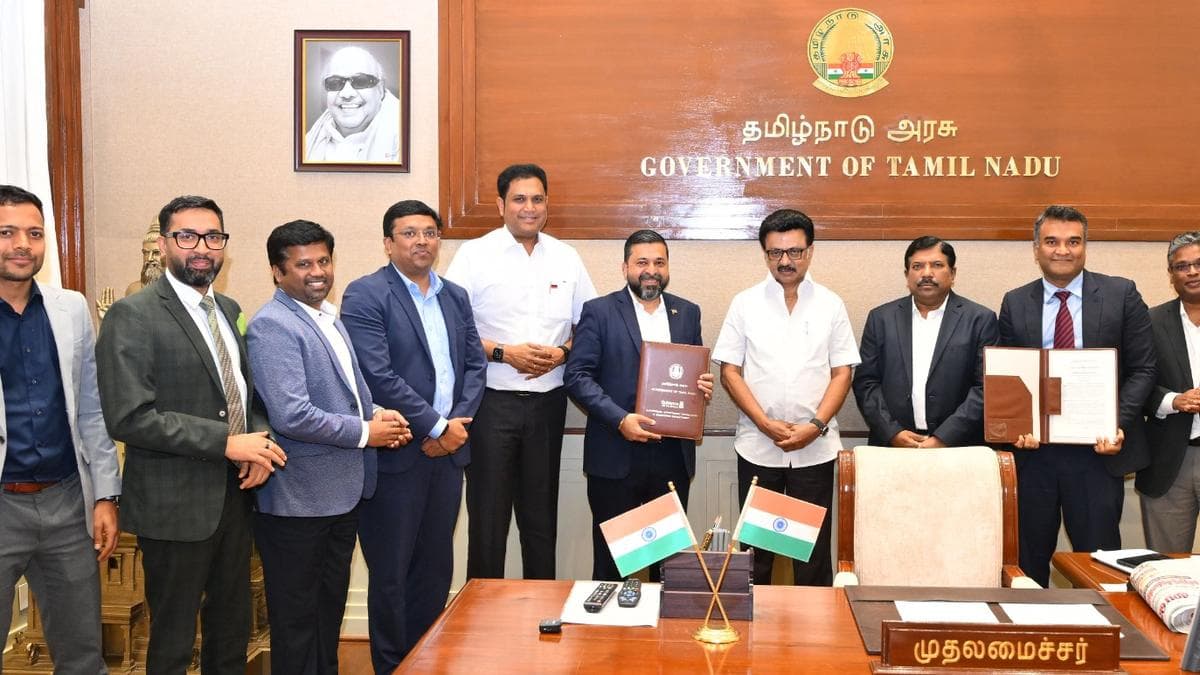
Tamil Nadu inks ₹718 crore MoU with Schneider Electric for new projects, boosting state investment.
Summary
Tamil Nadu has signed a Memorandum of Understanding (MoU) with Schneider Electric for projects valued at ₹718 crore. This initiative aims to attract industrial investment and foster economic development within the state. For competitive exams, it highlights state government efforts in industrial growth and public-private partnerships, crucial for economic current affairs and state-specific knowledge.
Key Points
- 1The Indian state involved in the MoU is Tamil Nadu (T.N.).
- 2The company partnering with Tamil Nadu is Schneider Electric.
- 3The total value of the projects under the MoU is ₹718 crore.
- 4The agreement signed between Tamil Nadu and Schneider Electric is a Memorandum of Understanding (MoU).
- 5The agreement pertains to the development and implementation of various projects within the state.
In-Depth Analysis
Tamil Nadu's recent Memorandum of Understanding (MoU) with Schneider Electric, valued at ₹718 crore, is a significant development that underscores the state's ongoing commitment to industrial growth and its strategy to attract foreign investment. For competitive exam aspirants, understanding this event requires delving into its broader economic, governance, and policy implications.
**Background Context and Tamil Nadu's Industrial Prowess:**
Tamil Nadu has historically been one of India's most industrialized states, renowned for its robust manufacturing base. It boasts a diverse industrial landscape, excelling in sectors such as automobiles and auto components (earning it the moniker 'Detroit of Asia'), textiles, leather, heavy engineering, IT/ITeS, and electronics manufacturing. This industrial strength is a result of consistent policy support, a skilled workforce, well-developed infrastructure (ports, highways, power), and a proactive government approach to investment promotion. The state has regularly organized Global Investors Meets (GIMs) to showcase its potential and secure investment commitments. This latest MoU fits perfectly into this established trajectory, aiming to sustain and enhance Tamil Nadu's position as a preferred investment destination within India.
**The Essence of the Agreement:**
While specific project details are not available, the signing of an MoU with Schneider Electric, a global leader in energy management and automation, for projects worth ₹718 crore, indicates a strategic focus. Schneider Electric's expertise spans across critical areas like electrical distribution, industrial automation, data centers, and sustainable energy solutions. Therefore, the projects are likely to involve manufacturing facilities, research and development centers, or service delivery hubs that leverage these core competencies. Such investments typically lead to job creation, technology transfer, and the development of local supply chains, contributing to the state's industrial ecosystem.
**Key Stakeholders Involved:**
1. **Tamil Nadu Government:** The primary driver behind this initiative, represented by its Industries Department and nodal agencies like Guidance Tamil Nadu. Their objective is to boost economic growth, generate employment, enhance the state's tax revenue, and maintain its competitive edge in attracting capital. This aligns with the state's vision of becoming a trillion-dollar economy.
2. **Schneider Electric:** As a multinational corporation, Schneider Electric seeks to expand its market presence in India, a rapidly growing economy. Investing in Tamil Nadu offers access to a large consumer base, a skilled talent pool, and a supportive industrial environment. Such investments allow them to localize production, reduce costs, and cater more effectively to the Indian and potentially South Asian markets.
3. **Local Workforce and Economy:** The direct beneficiaries include engineers, technicians, and other skilled and semi-skilled workers who will find employment opportunities. Indirectly, ancillary industries, local businesses, and service providers will also benefit from increased economic activity.
**Significance for India:**
This MoU holds multi-faceted significance for India. Economically, it contributes to the national GDP and strengthens India's manufacturing capabilities. It aligns with the 'Make in India' initiative, launched in 2014, which aims to transform India into a global manufacturing hub, and the 'Atmanirbhar Bharat Abhiyan' (Self-Reliant India Campaign), which emphasizes domestic production and value addition. Such investments also signal India's attractiveness as a Foreign Direct Investment (FDI) destination, boosting investor confidence. Furthermore, by bringing in advanced technology in energy management and automation, it contributes to India's goals for sustainable development and energy efficiency, crucial for achieving climate targets. It also fosters healthy competition among states to create investor-friendly environments, leading to overall improvements in the 'Ease of Doing Business' across the country.
**Constitutional and Policy Framework:**
From a constitutional perspective, industrial development falls primarily under the **Seventh Schedule** of the Indian Constitution. While 'Industries' (Entry 24) is on the State List, the Union Parliament has the power to declare industries of national importance (Entry 52, Union List). 'Economic and Social Planning' (Entry 20) is on the Concurrent List, allowing both the Union and states to legislate. State governments, under these provisions, formulate their own industrial policies to attract investment, provide incentives, and create a conducive business environment. This MoU is a direct outcome of Tamil Nadu's industrial policy framework, which aims to facilitate private sector participation and growth. The state's investment promotion agency, Guidance Tamil Nadu, operates within these policy parameters to streamline processes for investors.
**Future Implications:**
This investment is expected to catalyze further growth in Tamil Nadu's manufacturing sector, particularly in advanced electrical and energy solutions. It could lead to a ripple effect, attracting more ancillary units and fostering a robust ecosystem for energy management and automation technologies. The creation of high-quality jobs and skill development initiatives associated with such projects will enhance human capital. Moreover, successful implementation of these projects will reinforce Tamil Nadu's reputation as a reliable and progressive state for industrial investment, potentially drawing more global players and contributing significantly to India's vision of becoming a $5 trillion economy. It also highlights the growing trend of focused investments in green technology and energy efficiency, vital for India's long-term sustainable growth.
Exam Tips
This topic falls under the 'Indian Economy' and 'Current Affairs' sections of competitive exams. Focus on state-specific industrial policies, FDI trends, and government initiatives like 'Make in India' and 'Atmanirbhar Bharat'.
Study related topics such as the 'Ease of Doing Business' index, major industrial corridors (e.g., Chennai-Bengaluru Industrial Corridor), and the role of state investment promotion agencies (like Guidance Tamil Nadu).
Common question patterns include: factual questions (e.g., 'Which state signed an MoU with Schneider Electric?', 'What is the value of the MoU?'), analytical questions (e.g., 'Discuss the significance of such MoUs for India's industrial growth and employment generation.'), and policy-related questions (e.g., 'How do state industrial policies align with national initiatives like Make in India?').