



Relevant for Exams
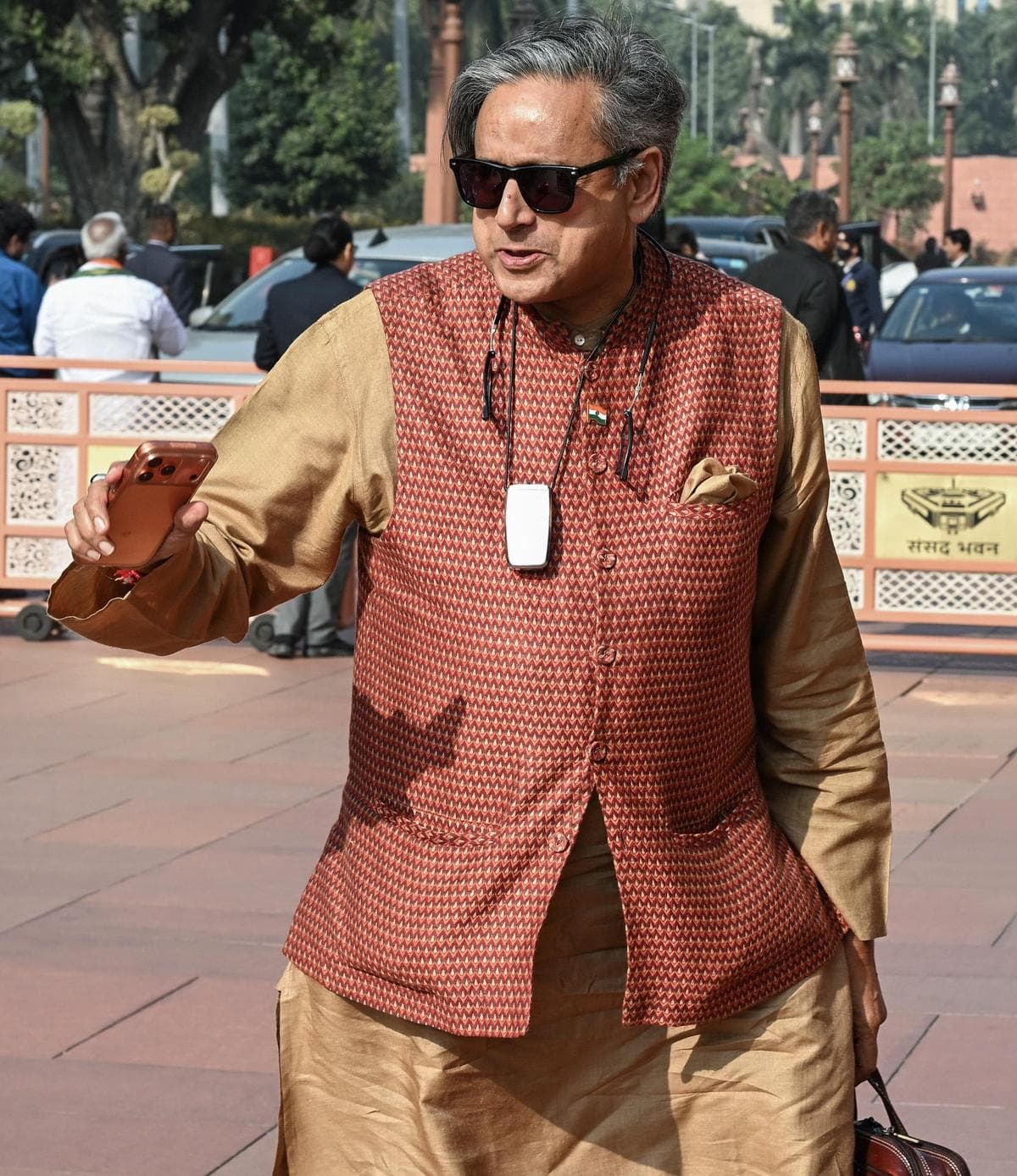
Tharoor slams govt. over nuclear Bill in Lok Sabha; details unavailable.
Summary
Shashi Tharoor reportedly criticized the government concerning a nuclear Bill in the Lok Sabha. While specific details of the bill, Tharoor's exact arguments, or the government's response are unavailable from the provided content, such parliamentary debates are crucial for understanding legislative processes and India's nuclear policy. This highlights the importance of parliamentary scrutiny over significant legislation for competitive exam preparation.
Key Points
- 1Shashi Tharoor, a Member of Parliament, expressed strong criticism against the government.
- 2The criticism pertains to a 'nuclear Bill' that was discussed in the Lok Sabha.
- 3The Lok Sabha is the lower house of India's Parliament, where legislation is debated and passed.
- 4Specific details regarding the Bill's provisions, the date of discussion, or the full context of Tharoor's remarks are not available from the provided content.
- 5This event underscores the parliamentary process of scrutinizing significant legislation, particularly concerning strategic sectors like nuclear energy.
In-Depth Analysis
The news of Shashi Tharoor criticizing the government over a 'nuclear Bill' in the Lok Sabha, while lacking specific details of the bill itself, offers a crucial lens through which to understand India's legislative process, its strategic nuclear policy, and the vibrant role of parliamentary opposition. This event underscores the importance of robust debate and scrutiny when it comes to legislation impacting critical sectors like atomic energy, which has profound implications for national security, energy independence, and international relations.
India's journey in nuclear energy began with a vision for self-reliance and strategic autonomy, championed by figures like Homi J. Bhabha and Prime Minister Jawaharlal Nehru. The foundational legal framework, the Atomic Energy Act of 1962, empowers the Central Government with comprehensive control over all aspects of atomic energy, from research and development to production and use of radioactive materials. This Act was designed to ensure India could pursue its nuclear program for both peaceful applications (like power generation, medicine, and agriculture) and strategic deterrence. The subsequent 'Smiling Buddha' test in 1974 and the 'Operation Shakti' tests in 1998 cemented India's status as a nuclear weapons state, leading to international sanctions but also underscoring its commitment to an independent nuclear policy. The India-US Civil Nuclear Deal (2005-2008) marked a significant shift, bringing India into the global nuclear mainstream despite not being a signatory to the Nuclear Non-Proliferation Treaty (NPT).
When a 'nuclear Bill' is debated in Parliament, several key stakeholders are involved. The **Government**, specifically the ruling party and the executive branch (Department of Atomic Energy, which functions directly under the Prime Minister's Office), is the proposer of the bill. Their objective is usually to update existing legislation, streamline regulatory processes, facilitate new projects, or address international obligations. The **Opposition**, represented by members like Shashi Tharoor, plays a vital role as a check and balance. They scrutinize the bill for potential flaws, raise concerns about public safety, environmental impact, financial implications, transparency, or potential compromises to India's strategic interests. Other stakeholders include the **Atomic Energy Regulatory Board (AERB)**, which is responsible for safety and radiation protection, and the **Nuclear Power Corporation of India Limited (NPCIL)**, the public sector undertaking responsible for operating nuclear power plants. Public advocacy groups and scientific communities also often weigh in on such critical legislation.
This parliamentary scrutiny matters immensely for India. Firstly, nuclear energy is a vital component of India's energy security strategy. With ambitious targets to reduce carbon emissions and achieve Net Zero by 2070, expanding nuclear power capacity is crucial for a cleaner energy mix. Currently, nuclear power contributes a modest percentage to India's electricity generation, but there are plans for significant expansion. Any new legislation could impact project timelines, funding mechanisms, or the regulatory environment for these expansions. Secondly, safety and liability are paramount. Post-Fukushima events, the Civil Liability for Nuclear Damage Act, 2010, was enacted to ensure prompt compensation to victims and address concerns about supplier liability, a contentious issue that has often hindered international collaboration. A new bill might seek to amend or clarify aspects of this Act. Thirdly, it touches upon India's strategic autonomy. While civilian nuclear cooperation has expanded, India maintains its independent nuclear deterrent, and any legislation must carefully navigate this dual-use technology landscape without compromising national security interests.
Constitutionally, nuclear energy falls under the **Union List (List I, Entry 6)** of the Seventh Schedule, giving the Parliament exclusive power to legislate on this subject. This centralization of power reflects the strategic importance of atomic energy. Debates in the Lok Sabha are governed by **Articles 107-111** of the Constitution, which outline the legislative procedure for ordinary bills, including introduction, discussion, committee scrutiny, and voting. The role of the opposition in questioning the government is a cornerstone of parliamentary democracy, ensuring accountability and preventing arbitrary decision-making. Future implications of such a bill could include accelerated development of indigenous nuclear technology (e.g., Fast Breeder Reactors), enhanced international collaborations for advanced reactors, or reforms to the AERB to bolster its independence and regulatory oversight. Ultimately, a well-debated and robust nuclear bill is essential for India to safely and effectively harness nuclear energy for its developmental and strategic goals, while upholding democratic principles of transparency and accountability.
Exam Tips
This topic falls under 'Indian Polity and Governance' (Parliamentary System, Legislative Process) and 'Science & Technology' (Nuclear Energy, India's Nuclear Programme) in the UPSC Civil Services Syllabus. For SSC/State PSCs, focus on factual aspects like acts and constitutional provisions.
Study related topics like the Atomic Energy Act, 1962; Civil Liability for Nuclear Damage Act, 2010; India's Nuclear Doctrine; the role of the Department of Atomic Energy (DAE) and AERB; and India's international nuclear engagements (e.g., NSG, IAEA, India-US Nuclear Deal).
Expect questions on the legislative procedure for bills, the powers of Parliament, the role of the opposition, the constitutional provisions related to atomic energy (Seventh Schedule), and the policy objectives behind India's nuclear program. Analytical questions might ask about the challenges and prospects of nuclear energy in India or the balance between energy security and safety.
Understand the distinction between the strategic and peaceful uses of nuclear energy in India's context, and how legislation balances these aspects. Pay attention to key dates and events in India's nuclear history.