



Relevant for Exams
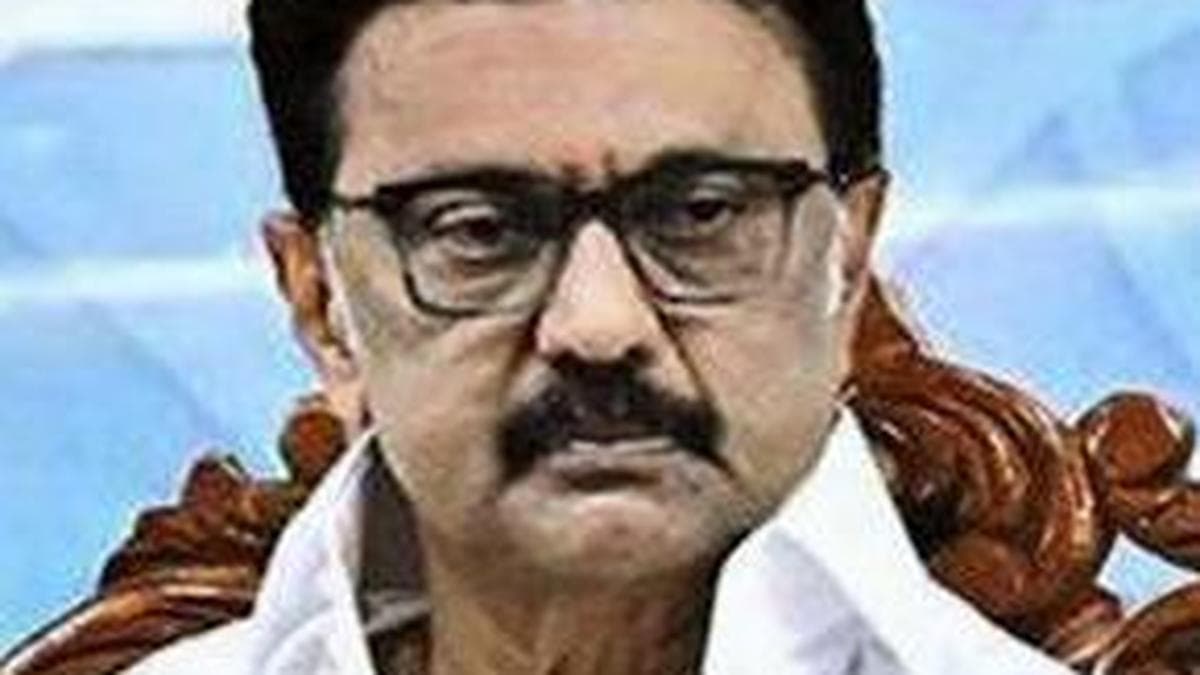
TN CM Stalin objects to VB-G RAM G Bill, which seeks to replace MGNREGA.
Summary
Tamil Nadu CM M.K. Stalin has written to PM Modi, conveying the state's objections to the proposed VB-G RAM G Bill. This Bill is significant as it aims to repeal and replace the Mahatma Gandhi National Rural Employment Guarantee Act (MGNREGA). The move highlights Centre-State relations and potential changes to a major social welfare scheme, making it crucial for governance and policy questions in competitive exams.
Key Points
- 1Tamil Nadu Chief Minister M.K. Stalin conveyed objections to the VB-G RAM G Bill.
- 2The VB-G RAM G Bill proposes to repeal and replace the Mahatma Gandhi National Rural Employment Guarantee Act (MGNREGA).
- 3MGNREGA is a flagship social welfare scheme guaranteeing 100 days of wage employment in a financial year to adult members of rural households.
- 4The objection from Tamil Nadu highlights concerns regarding the potential impact on rural employment and Centre-State relations.
- 5The news is categorized as 'national', indicating its broad policy implications.
In-Depth Analysis
The recent objection raised by Tamil Nadu Chief Minister M.K. Stalin against the proposed VB-G RAM G Bill, which seeks to repeal and replace the Mahatma Gandhi National Rural Employment Guarantee Act (MGNREGA), marks a significant moment in India's policy landscape and Centre-State relations. To truly grasp its implications, one must delve into the background, the current context, and the potential future trajectory.
**Background Context: The Genesis and Significance of MGNREGA**
MGNREGA, enacted on September 7, 2005, is a landmark legislation that provides a legal guarantee for 100 days of wage employment in a financial year to adult members of any rural household willing to do unskilled manual work. Launched initially in 200 districts, it was expanded to cover all rural districts of India from April 1, 2008. The Act was a transformative step, moving from discretionary welfare to a rights-based framework, directly addressing rural poverty and unemployment. Its objectives are multi-fold: providing social protection for the most vulnerable, enhancing livelihood security, creating durable assets (like roads, irrigation canals, water harvesting structures), and strengthening Panchayati Raj institutions by involving them in planning and implementation. It has been hailed globally as one of the largest public works programs, offering a vital safety net, especially during economic shocks and natural disasters, as evidenced during the COVID-19 pandemic when it absorbed millions of migrant workers returning to their villages.
**What Happened: Tamil Nadu's Objection to the VB-G RAM G Bill**
Tamil Nadu Chief Minister M.K. Stalin conveyed strong objections to Prime Minister Narendra Modi regarding the proposed VB-G RAM G Bill. While the specifics of the new bill are not yet fully public, the primary concern stems from its stated aim to 'repeal and replace' MGNREGA. This suggests a fundamental restructuring or re-envisioning of the existing employment guarantee scheme. States like Tamil Nadu, which have been instrumental in the effective implementation of MGNREGA and rely on its provisions for rural development and poverty alleviation, are naturally apprehensive about any changes that might dilute its legal guarantee, reduce funding, alter wage structures, or shift implementation responsibilities in a manner detrimental to the beneficiaries or state autonomy.
**Key Stakeholders Involved**
1. **Central Government**: The Union Ministry of Rural Development is the nodal ministry for MGNREGA and would be the architect of the new VB-G RAM G Bill. Their motivation could range from improving efficiency, addressing perceived leakages, rationalizing expenditure, or introducing new models of rural employment. They are responsible for policy formulation and a significant portion of the funding.
2. **State Governments (e.g., Tamil Nadu)**: States are the primary implementers of MGNREGA. They are responsible for identifying beneficiaries, generating demand for work, executing projects, and disbursing wages. Their concerns revolve around potential loss of control, reduced central assistance, increased financial burden, and the impact on their rural populations.
3. **Rural Households/Beneficiaries**: The millions of rural poor who depend on MGNREGA for their livelihoods are the most critical stakeholders. Any change directly impacts their income security, access to work, and overall well-being. Their voice, often channeled through local self-governments and civil society, is paramount.
4. **Panchayati Raj Institutions (PRIs)**: Gram Panchayats are central to MGNREGA's decentralized planning and implementation. Changes could affect their role, funding, and capacity.
5. **Civil Society Organizations and Academics**: These groups often monitor the scheme's effectiveness, advocate for workers' rights, and provide critical analysis of its functioning and potential reforms.
**Why This Matters for India: Economic, Political, and Social Impact**
This development is profoundly significant for India. Socially, MGNREGA acts as a crucial safety net, especially for women, marginalized communities, and during agricultural lean seasons. Any weakening could push millions back into extreme poverty. Economically, it injects significant purchasing power into rural economies, stimulates local demand, and creates valuable community assets. Politically, it touches upon the delicate balance of **fiscal federalism** and **Centre-State relations**. States often rely on centrally sponsored schemes for funding and policy directives. Unilateral changes by the Centre without sufficient consultation can lead to friction, undermining cooperative federalism. This debate also highlights the ongoing tension between universal rights-based entitlements and targeted, potentially more flexible, welfare approaches.
**Historical Context and Constitutional Provisions**
The idea of public works for employment generation is not new in India, with various programs existing before MGNREGA. However, the 2005 Act was revolutionary due to its legal guarantee. MGNREGA draws its spirit from the **Directive Principles of State Policy (DPSP)** enshrined in Part IV of the Indian Constitution. Specifically, **Article 41** directs the State to make effective provision for securing the right to work, to education, and to public assistance in cases of unemployment, old age, sickness, and disablement. **Article 43** mandates securing a living wage and conditions of work ensuring a decent standard of life. MGNREGA is a legislative embodiment of these principles, translating them into an enforceable right. The proposed bill's implications also touch upon the distribution of legislative powers under the **Seventh Schedule**, where 'Public health and sanitation; hospitals and dispensaries' (Entry 6) and 'Relief of the disabled and unemployable' (Entry 9) fall under the State List, while 'Economic and social planning' (Entry 20) is in the Concurrent List. While the Centre can legislate, the implementation and impact often fall on states, necessitating consultation and collaboration.
**Future Implications**
The future implications are substantial. If the VB-G RAM G Bill passes, it could usher in a new era of rural employment policy. This might involve a shift towards skill-based employment, different funding mechanisms, or a more targeted approach, potentially moving away from the universal demand-driven model of MGNREGA. This could trigger broader debates on the future of welfare programs in India, the role of direct benefit transfers versus employment guarantees, and the optimal balance between central policy mandates and state autonomy. The political ramifications, especially in states where MGNREGA has been impactful, could be significant for the ruling party at the Centre. The outcome will shape not only rural livelihoods but also the very fabric of India's federal structure and its commitment to social justice.
Exam Tips
This topic falls under GS Paper II (Indian Polity, Social Justice, Governance) and GS Paper III (Indian Economy, Rural Development) for UPSC. For State PSCs and other exams, focus on 'Social Welfare Schemes', 'Government Policies', and 'Indian Constitution'.
Study MGNREGA in detail: its objectives, features (e.g., 100-day guarantee, 1/3rd women beneficiaries, payment within 15 days), achievements, and challenges (e.g., wage delays, corruption, asset quality). Compare and contrast the existing scheme with potential proposed changes.
Pay attention to the concept of 'fiscal federalism' and 'Centre-State relations'. Questions often involve analyzing the impact of central policies on states, the role of DPSP in policy formulation, and the challenges of implementing large-scale welfare programs in a diverse federal structure. Be prepared for analytical questions on the pros and cons of replacing a well-established scheme.
Related Topics to Study
Full Article
The Bill seeks to repeal and replace the Mahatma Gandhi National Rural Employment Guarantee Act