

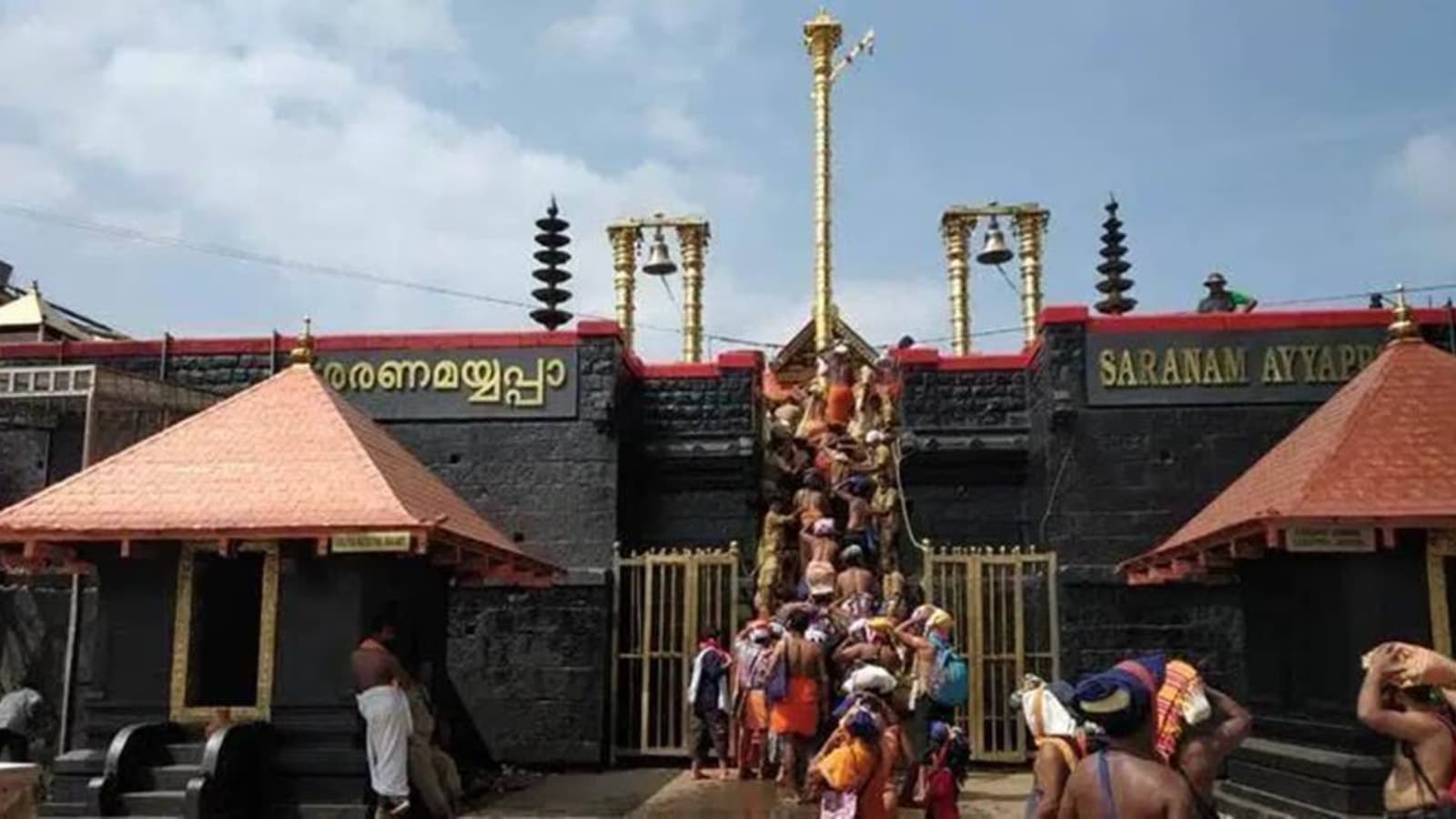


Content unavailable; CPI(M) Lord Ayyappa song parody controversy in Kerala unanalyzable.
Summary
The provided article content is unavailable, making it impossible to analyze the reported controversy involving the CPI(M) and a Lord Ayyappa song parody after the Kerala local body polls. Without specific details on the incident, the political context, or any legal/constitutional aspects, no exam-relevant facts can be extracted for competitive exam preparation.
Key Points
- 1No specific facts available as article content is missing.
- 2Details regarding the CPI(M) controversy in Kerala cannot be extracted.
- 3The nature of the Lord Ayyappa song parody is not described.
- 4Impact of Kerala local body polls on the CPI(M) is not elaborated.
- 5No dates, names, or specific political implications can be identified due to missing content.
In-Depth Analysis
The reported controversy involving the CPI(M) in Kerala, particularly concerning a Lord Ayyappa song parody after local body polls, highlights a recurring and sensitive intersection of religion, politics, and culture in India. While the specific details of the incident itself are unavailable, the title provides enough context to delve into the broader implications and underlying dynamics that such events often trigger, especially in a politically vibrant and religiously diverse state like Kerala.
**Background Context and What Happened (Generalised Scenario):**
Kerala’s political landscape is primarily dominated by two major fronts: the Left Democratic Front (LDF), led by the Communist Party of India (Marxist) (CPI(M)), and the United Democratic Front (UDF), led by the Indian National Congress. The Bharatiya Janata Party (BJP) has been making persistent efforts to establish a stronger foothold. Local body polls are crucial barometers of public sentiment, often setting the tone for subsequent assembly and parliamentary elections. The CPI(M), ideologically rooted in Marxism, traditionally champions secularism and, in principle, an atheist stance. However, in practice, political parties in India, including the Left, often engage with religious communities and sentiments to secure electoral success. A 'parody' of a religious song, especially one associated with a revered deity like Lord Ayyappa (of Sabarimala fame), can easily be perceived as disrespectful or offensive by devotees. Such an act, if indeed it occurred and caused outrage, would be seized upon by political opponents to discredit the CPI(M), particularly after an election where results might have been mixed or disappointing for the party.
**Key Stakeholders Involved:**
1. **CPI(M):** As the party allegedly involved in the parody, they would be the primary target of criticism. Their leadership would have to manage the fallout, potentially issuing clarifications, apologies, or defending the artistic intent, all while navigating their ideological commitments versus electoral pragmatism.
2. **Lord Ayyappa Devotees/Hindu Organizations:** These groups would be the aggrieved party, likely mobilizing protests, issuing condemnations, and demanding action. Organizations like the Nair Service Society (NSS), various Hindu socio-cultural bodies, and the BJP would likely lead this charge.
3. **Political Opposition (UDF, BJP):** The Congress-led UDF and the BJP would capitalize on the controversy. The BJP, in particular, often seeks to consolidate Hindu votes by highlighting perceived slights against religious sentiments, as seen during the Sabarimala controversy (2018-19) where they strongly advocated for traditional practices.
4. **Media and Social Media:** These platforms would play a critical role in amplifying the controversy, shaping public opinion, and disseminating both the original content (if available) and the reactions to it.
**Why This Matters for India:**
This type of incident underscores several critical issues for India:
* **Secularism and Religious Harmony:** India is a secular nation, yet the lines between religious freedom, freedom of expression, and respecting religious sentiments are often blurred. Controversies like these test the robustness of India's secular fabric and can lead to communal polarization.
* **Freedom of Speech vs. Religious Sentiments:** The incident touches upon the delicate balance between the constitutional right to freedom of speech and expression (Article 19(1)(a)) and the need to prevent deliberate and malicious acts intended to outrage religious feelings (Section 295A of the Indian Penal Code). The question often arises: where does satire end and offense begin?
* **Electoral Politics and Identity:** Religious identity plays a significant role in Indian electoral politics. Political parties often use or react to religious issues to consolidate vote banks, especially in states like Kerala where caste and community affiliations often influence political alignments. For the CPI(M), such a controversy could alienate a section of Hindu voters, potentially benefiting the BJP or UDF.
**Historical Context:**
Kerala has a history of such intersections. The Sabarimala Temple entry issue (2018-19), following the Supreme Court's verdict allowing women of all ages entry, saw massive protests and became a major political flashpoint. The CPI(M)-led LDF government's decision to implement the verdict faced strong opposition from religious groups and opposition parties, significantly impacting the Lok Sabha elections in 2019. This demonstrates how deeply religious issues resonate and influence political outcomes in the state.
**Future Implications:**
Such incidents can lead to increased caution by political parties regarding cultural and religious expressions. There might be greater scrutiny on content created by party affiliates, especially in the run-up to elections. The controversy could further intensify the political competition, particularly between the CPI(M) and the BJP, with the latter likely to continue portraying the Left as anti-religious or disrespectful of Hindu traditions. It also highlights the growing influence of social media in quickly escalating local issues into statewide or even national debates, compelling political parties to be more responsive to public sentiment and potential outrage.
**Related Constitutional Articles, Acts, or Policies:**
* **Article 19(1)(a):** Guarantees freedom of speech and expression to all citizens.
* **Article 19(2):** Allows for reasonable restrictions on this freedom in the interests of public order, decency, morality, or incitement to an offence.
* **Articles 25-28:** Enshrine the freedom of conscience and the right to freely profess, practice, and propagate religion, subject to public order, morality, and health.
* **Section 295A of the Indian Penal Code (IPC):** Punishes deliberate and malicious acts intended to outrage religious feelings of any class by insulting its religion or religious beliefs.
* **Representation of the People Act, 1951:** Contains provisions (e.g., Section 123) against promoting enmity between different classes of citizens on grounds of religion during elections, which constitutes a corrupt practice. This ensures that religious issues are not exploited for electoral gains in a divisive manner.
In essence, while the specific incident remains opaque, its potential reverberations are deeply rooted in India's constitutional principles of secularism, freedom of expression, and religious freedom, constantly tested in the dynamic arena of electoral politics.
Exam Tips
This topic falls under GS Paper I (Indian Society, Culture) and GS Paper II (Indian Polity and Governance). Focus on the interplay between religion, politics, and fundamental rights.
Study related topics like the concept of secularism in India (constitutional provisions vs. practical challenges), freedom of speech and its reasonable restrictions (Article 19), and the role of religious identity in electoral politics. Analyze case studies like the Sabarimala controversy.
Common question patterns include: 'Discuss the challenges to India's secular fabric in contemporary times,' 'Analyze the delicate balance between freedom of speech and protection of religious sentiments with suitable examples,' or 'Examine how regional political parties navigate religious issues in their electoral strategies.'
Understand the legal framework around religious offenses (e.g., IPC Section 295A) and the Representation of the People Act, 1951, concerning the use of religion in elections.
Be prepared to critically analyze the role of social media in amplifying such controversies and its impact on public discourse and political accountability.