



Relevant for Exams
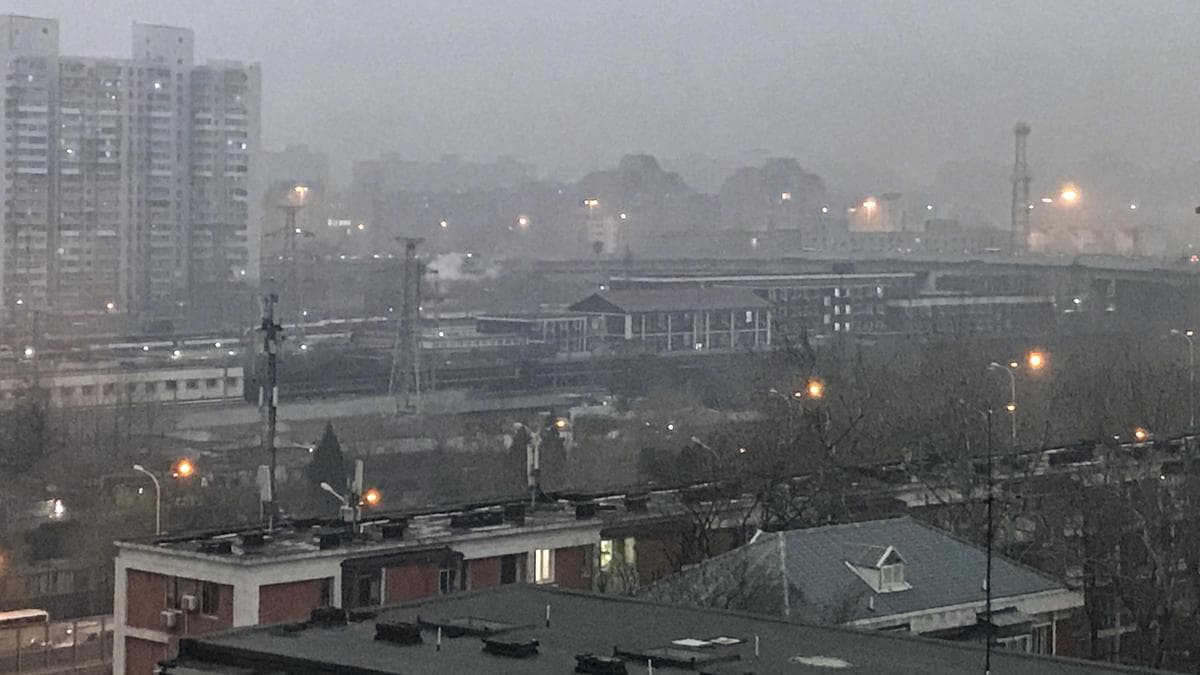
Beijing hit by rare smog spike, AQI at 215, yellow alert issued despite clean-up efforts.
Summary
Beijing recently experienced a rare and severe smog spike, with its Air Quality Index (AQI) reaching 'very unhealthy' levels of 215. This led to the issuance of a yellow alert in parts of China, highlighting persistent environmental challenges despite years of pollution clean-up efforts. For competitive exams, this event is significant for general awareness on global environmental issues, pollution indicators like AQI, and China's environmental policies.
Key Points
- 1Beijing was recently shrouded in heavy smog, marking a rare spike in pollution.
- 2The Air Quality Index (AQI) in Beijing climbed to 'very unhealthy' levels.
- 3The specific AQI reading recorded during the spike was 215.
- 4A yellow alert was issued in some parts of China due to the severe smog conditions.
- 5This smog spike occurred after years of significant pollution clean-up efforts in Beijing and China.
In-Depth Analysis
Beijing, once infamous for its 'airpocalypse' days, recently experienced a significant smog spike, with its Air Quality Index (AQI) soaring to 'very unhealthy' levels of 215. This led to a 'yellow alert' issuance in parts of China, a concerning event given the extensive and aggressive pollution clean-up efforts undertaken by the Chinese government over the past decade. This incident serves as a crucial reminder that environmental battles are protracted and require sustained vigilance.
The background to China's environmental challenge is rooted in its rapid industrialization and economic growth since the late 1970s. For decades, environmental protection was secondary to economic expansion, leading to widespread air, water, and soil pollution. Beijing, as the capital, became a global symbol of this crisis, with its skies frequently obscured by thick smog. However, recognizing the severe public health implications, social unrest, and damage to its international image, China declared a 'war on pollution' in 2014. This campaign involved stringent measures: shutting down highly polluting factories, investing heavily in renewable energy, restricting vehicle emissions, and relocating heavy industries. These efforts yielded significant results, with average PM2.5 concentrations in Beijing dropping substantially, leading to more frequent 'blue sky days' and international praise.
The recent smog spike, however, indicates that the fight is far from over. The AQI reaching 215, while not as high as the extreme levels seen a decade ago (which sometimes exceeded 500), is still a major setback. This particular incident was likely influenced by a combination of factors: unfavorable meteorological conditions (such as cold temperatures leading to increased heating demands, atmospheric inversions trapping pollutants, and a lack of wind to disperse them), coupled with persistent emissions from industrial activities and coal-fired power plants, despite regulations. The 'yellow alert' is part of China's four-tier color-coded warning system for air pollution, signifying a serious health risk and prompting advisories for vulnerable populations.
Key stakeholders in this ongoing environmental drama include the Chinese government, particularly the Ministry of Ecology and Environment, which sets policies and enforces regulations. Local governments are responsible for implementation, often balancing economic growth with environmental targets. Industries, both state-owned and private, are crucial actors, as they are sources of emissions and also drivers of technological solutions. The citizens of China, who bear the health burden of pollution, are increasingly vocal advocates for cleaner air. Internationally, organizations like the UN Environment Programme and global climate bodies monitor China's progress, given its status as the world's largest emitter of greenhouse gases.
For India, this event carries profound significance. India faces its own severe air pollution crisis, with cities like Delhi frequently topping global pollution charts. The Indo-Gangetic Plain is particularly vulnerable, experiencing similar winter smog phenomena driven by a mix of vehicular emissions, industrial pollution, stubble burning, and unfavorable meteorology. India can learn valuable lessons from China's experience: the importance of a strong political will, the need for comprehensive and coordinated policy implementation, and the challenges of sustaining environmental gains amidst economic pressures. Both nations, as large developing economies, share a common interest in balancing development with environmental protection and are key players in global climate negotiations. Understanding China's successes and failures can inform India's strategies under initiatives like the National Clean Air Programme (NCAP) and the Graded Response Action Plan (GRAP).
From a legal and constitutional perspective in India, the right to a clean environment is implicitly recognized as part of the fundamental Right to Life under **Article 21** of the Constitution. Furthermore, **Article 48A**, a Directive Principle of State Policy, mandates that 'the State shall endeavor to protect and improve the environment and to safeguard the forests and wild life of the country.' Similarly, **Article 51A(g)** imposes a Fundamental Duty on every citizen 'to protect and improve the natural environment including forests, lakes, rivers and wild life, and to have compassion for living creatures.' India's legislative framework includes the Environment (Protection) Act, 1986, the Air (Prevention and Control of Pollution) Act, 1981, and the Water (Prevention and Control of Pollution) Act, 1974, all aimed at regulating and mitigating pollution. The Beijing incident underscores the need for robust enforcement of these acts and continuous policy innovation.
The future implications are multifaceted. For China, it means redoubling efforts to transition to a greener economy, investing further in renewable energy, and enforcing stricter emission standards across all sectors. It also highlights the need for resilient urban planning and public health infrastructure to cope with pollution episodes. Globally, it reminds us that environmental challenges transcend national borders. The actions of major economies like China and India will significantly influence the world's ability to meet climate targets set by agreements like the Paris Agreement. The incident reinforces the notion that environmental protection is not a one-time fix but a continuous process requiring adaptive strategies, technological advancements, and international cooperation to safeguard public health and the planet's ecological balance.
Exam Tips
This topic falls under General Studies Paper I (Geography - Environmental Pollution) and General Studies Paper III (Environment & Ecology, Disaster Management) for UPSC. For other exams, it's relevant for General Awareness/Current Affairs.
Study the Air Quality Index (AQI) in detail: its components (PM2.5, PM10, NOx, SO2, CO, O3), how it's calculated, and its different categories (Good, Satisfactory, Moderate, Poor, Very Poor, Severe). Understand the health implications of each category.
Be prepared for analytical questions comparing India's and China's approaches to tackling air pollution, their successes, failures, and the challenges faced by developing nations in balancing economic growth with environmental protection. Also, expect questions on constitutional provisions and major environmental acts/policies in India.
Familiarize yourself with India's National Clean Air Programme (NCAP) and the Graded Response Action Plan (GRAP) for Delhi-NCR, including their objectives, strategies, and implementation challenges. Understand the role of bodies like the Central Pollution Control Board (CPCB).
Expect questions on international environmental agreements (e.g., Paris Agreement) and how the actions of major economies like India and China impact global climate goals. Factual questions on specific pollution events or environmental initiatives are also common.
Related Topics to Study
Full Article
Beijing was shrouded in heavy smog with Air Quality Index climbing to ‘very unhealthy’ levels of 215 which led to the issue of yellow alert in some parts of China