



Relevant for Exams
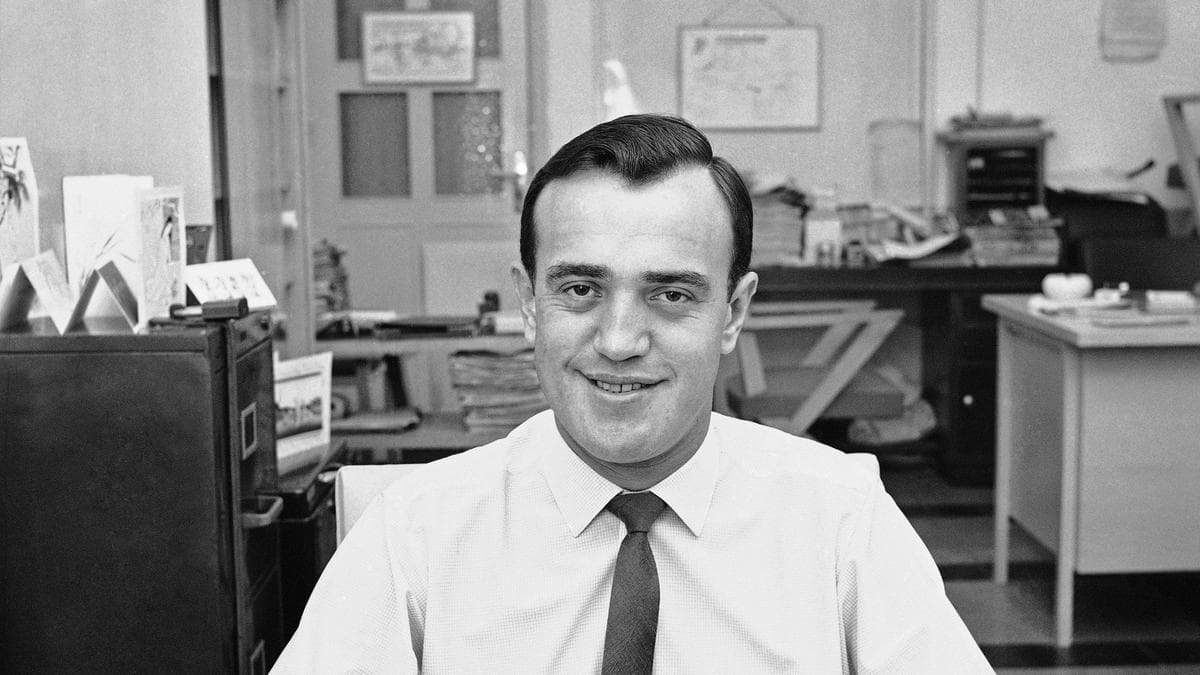
Pulitzer-winning war reporter Peter Arnett, known for Vietnam & Gulf Wars coverage, dies at 91.
Summary
Pulitzer Prize-winning reporter Peter Arnett, renowned for his courageous and groundbreaking coverage of the Vietnam and Gulf Wars, has passed away at the age of 91. His death signifies the loss of a journalistic legend who pioneered live war reporting, notably from Baghdad during the U.S.-led attack. This event is significant for competitive exams as it highlights a prominent personality in international journalism and a recipient of a major global award.
Key Points
- 1Pulitzer Prize-winning reporter Peter Arnett passed away at the age of 91.
- 2Arnett gained international fame for his extensive reporting during the Vietnam War.
- 3He was also widely recognized for his live coverage of the Gulf Wars.
- 4During the U.S.-led attack on Baghdad, Arnett famously broadcast live via cellphone from his hotel room, while most other Western reporters had left.
- 5His distinguished career in journalism was honored with the prestigious Pulitzer Prize.
In-Depth Analysis
The passing of Peter Arnett at 91 marks the end of an era for war journalism, a field he redefined with his unwavering courage and commitment to reporting from the front lines. Arnett, a New Zealander by birth who later became a naturalized U.S. citizen, was not just a reporter; he was a trailblazer whose career spanned some of the most pivotal conflicts of the 20th century, fundamentally altering how the world consumed news from war zones.
His legend was forged during the brutal years of the Vietnam War (1955-1975). As a correspondent for the Associated Press (AP), Arnett spent a decade in Vietnam, often embedded with U.S. troops. Unlike many of his peers, he chose to stay in Saigon as it fell to North Vietnamese forces in April 1975, providing some of the last dispatches from the besieged capital. His reporting from Vietnam, characterized by raw honesty and a willingness to challenge official narratives, earned him the prestigious Pulitzer Prize for International Reporting in 1966. This era saw the rise of television as a primary news medium, and Arnett's vivid dispatches brought the grim realities of war directly into American homes, significantly influencing public opinion and the anti-war movement.
Decades later, Arnett once again found himself at the epicenter of a major conflict: the First Gulf War (1990-1991). This time, working for CNN, he achieved global renown for his live, unedited reports from Baghdad as U.S.-led coalition forces launched 'Operation Desert Storm.' While almost all other Western journalists evacuated the Iraqi capital, Arnett famously remained, broadcasting live via a satellite phone from his hotel room as missiles rained down. His vivid, real-time accounts provided the only independent Western perspective from inside Baghdad during the initial days of the bombing campaign. This was groundbreaking; it was the first time a major war was extensively covered live on a 24-hour news channel, transforming war reporting into an immediate, global spectacle. Key stakeholders included CNN, which capitalized on this exclusive access, the U.S. military and government, who found their narrative challenged by Arnett's reports, and the global audience, who witnessed war unfold in real-time.
For India, Arnett's legacy resonates deeply with the principles of a free press and the challenges faced by journalists in conflict zones. India, as the world's largest democracy, enshrines the freedom of speech and expression, which implicitly includes freedom of the press, under **Article 19(1)(a)** of its Constitution. Arnett's dedication to reporting, even under extreme duress, underscores the vital role of an independent media in holding power accountable and informing citizens. His work highlights broader themes of media ethics, the responsibility of journalists, and the impact of technology on news dissemination. Indian journalists often operate in challenging environments, from covering Naxal-affected areas to reporting on cross-border tensions, and Arnett's example serves as a testament to journalistic courage.
Historically, Arnett's career marked a significant shift in war reporting, moving from censored, delayed dispatches to immediate, live coverage. This evolution has continued with the advent of the internet and social media, presenting new opportunities and challenges for journalists. The future implications of Arnett's style of reporting are evident in today's media landscape: the demand for instant news, the risks taken by embedded journalists, and the constant battle against misinformation and propaganda in conflict narratives. While technology has made reporting more accessible, it has also blurred lines, making the discerning eye and ethical commitment of a reporter like Arnett more crucial than ever. His career reminds us that while the tools of journalism may change, the core mission of seeking truth and reporting it fearlessly remains paramount for a functioning democracy and an informed global citizenry.
Exam Tips
This topic falls under General Knowledge/Current Affairs (Awards, Personalities, International Events) and Indian Polity (Freedom of Press). Be prepared for direct questions on Peter Arnett's achievements (Pulitzer Prize, wars covered) and his contribution to journalism.
Study related topics such as the history of journalism, media ethics, significant international awards like the Pulitzer Prize, and the role of media in shaping public opinion during conflicts (e.g., Vietnam War, Gulf War).
Understand the constitutional provisions related to freedom of the press in India, specifically Article 19(1)(a). Questions may ask about the importance of a free press in a democracy and challenges faced by journalists.
Common question patterns include factual recall (Who won the Pulitzer for Vietnam reporting?), significance-based questions (Why was Arnett's Gulf War reporting revolutionary?), and analytical questions linking his work to broader themes like press freedom and media's role in conflict.
Related Topics to Study
Full Article
While almost all Western reporters had fled Baghdad in the days before the U.S.-led attack, Arnett stayed; as missiles began raining on the city, he broadcast a live account by cellphone from his hotel room