



Relevant for Exams
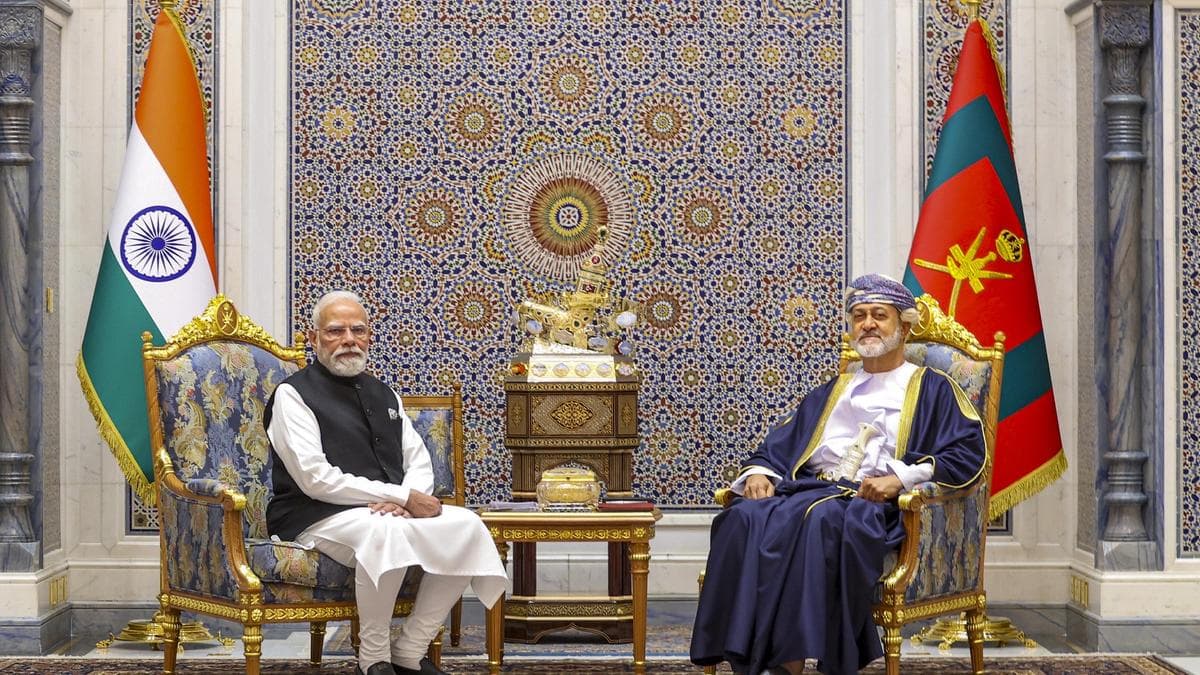
PM Modi conferred with 'Order of Oman', adding to his list of over 28 highest civilian foreign awards.
Summary
Prime Minister Narendra Modi has been conferred with the 'Order of Oman', a significant international honour. This award marks the latest addition to his distinguished list, bringing his total to over 28 highest civilian awards from various foreign nations. This recognition highlights India's growing diplomatic influence and PM Modi's global standing, making it crucial for competitive exam knowledge on international relations and India's foreign policy achievements.
Key Points
- 1Prime Minister Narendra Modi was conferred with the 'Order of Oman'.
- 2The 'Order of Oman' is a civilian award from the nation of Oman.
- 3This award is the latest addition to PM Modi's list of international honours.
- 4PM Modi has now received over 28 highest civilian awards from various foreign nations.
- 5The conferment highlights PM Modi's distinguished global recognition.
In-Depth Analysis
The conferment of the 'Order of Oman' upon Prime Minister Narendra Modi is more than just a ceremonial act; it is a significant milestone reflecting the deepening strategic partnership between India and the Sultanate of Oman, and a testament to India's proactive and successful foreign policy in the West Asian region. This award, the highest civilian honour bestowed by Oman, adds to PM Modi's growing list of international accolades, underscoring his personal diplomatic stature and India's rising global influence.
**Background Context and What Happened:**
India and Oman share a history spanning millennia, rooted in ancient maritime trade routes and cultural exchanges. This historical bond has evolved into a robust modern strategic partnership, particularly in defence, energy, and trade. Oman holds immense strategic importance for India due to its geographical location at the mouth of the Strait of Hormuz, a critical choke point for global oil shipments. India has consistently pursued a 'Look West' policy, enhancing engagement with Gulf nations, and Oman is a cornerstone of this strategy. The 'Order of Oman' was formally conferred upon Prime Minister Narendra Modi, recognizing his contributions to strengthening bilateral relations and his global leadership. This award follows a series of high-level exchanges and growing cooperation across various sectors, symbolizing mutual respect and shared strategic interests.
**Key Stakeholders Involved:**
* **India:** Represented by Prime Minister Narendra Modi, whose personal diplomacy and vision for a stronger India-Oman partnership have been instrumental. India views Oman as a crucial partner for its energy security, maritime security in the Indian Ocean, and economic diversification. The Ministry of External Affairs plays a key role in facilitating these diplomatic engagements.
* **Sultanate of Oman:** The Omani leadership, specifically Sultan Haitham bin Tarik, who bestowed the award. Oman values India as a reliable strategic partner, a major trading ally, and a source of skilled manpower (with a large Indian diaspora residing in Oman). The award signifies Oman's commitment to further strengthening its ties with India.
* **Indian Diaspora:** The significant Indian community in Oman (over 6 lakh individuals) acts as a vital human bridge between the two nations, contributing to Oman's economy and fostering cultural understanding. Their welfare and continued positive relations are a key stake for both governments.
**Why This Matters for India:**
This award carries multi-faceted significance for India. Firstly, it's a **diplomatic triumph**, reinforcing India's image as a responsible global power and highlighting the success of its 'Look West' policy. PM Modi's receipt of over 28 highest civilian awards from foreign nations boosts India's soft power and diplomatic leverage. Secondly, it solidifies the **strategic partnership** with Oman. This includes enhanced defence cooperation (e.g., access to Duqm port for Indian Navy, joint military exercises), which is crucial for India's maritime security in the Indian Ocean Region. Thirdly, it has **economic implications**. Oman is a key source of crude oil and LNG for India, and stronger ties ensure energy security. The award can further stimulate trade, investment, and project collaborations, benefiting both economies. Fourthly, it bolsters **diaspora relations**, ensuring the continued well-being and positive integration of the large Indian community in Oman.
**Historical Context and Future Implications:**
Historically, India and Oman have shared centuries of trade and cultural exchange, particularly through maritime routes. This long-standing relationship provides a strong foundation for current and future cooperation. In modern times, the relationship gained momentum post-independence, with both nations seeking to diversify their partnerships. The future implications are promising. This award is expected to pave the way for deeper engagement in areas such as renewable energy, digital transformation, space technology, and food security. It will likely lead to more frequent high-level visits, expanded defence and security dialogues, and increased people-to-people contact. India's growing economic prowess and its strategic vision for the Indian Ocean Region align well with Oman's aspirations for regional stability and economic growth, positioning this partnership for continued upward trajectory.
**Related Constitutional Articles, Acts, or Policies:**
While the conferment of a foreign award is not directly governed by a specific Act, several constitutional and policy frameworks are relevant:
* **Article 51 of the Indian Constitution:** This Directive Principle of State Policy mandates the state to 'endeavour to promote international peace and security; maintain just and honourable relations between nations; foster respect for international law and treaty obligations; and encourage settlement of international disputes by arbitration.' India's engagement with Oman aligns perfectly with these principles, promoting peaceful and cooperative international relations.
* **Article 18(2) of the Indian Constitution:** This article states, 'No citizen of India shall accept any title from any foreign State.' However, this provision is typically interpreted to prohibit hereditary or honorific titles that create social distinctions, not awards given by foreign states to Indian dignitaries in recognition of their official service or contributions to international relations. Such awards are generally accepted with the prior consent of the President of India, as a matter of protocol and constitutional propriety, ensuring they do not violate the spirit of the article by creating a 'title' in the prohibited sense. This award is an honour, not a title that confers nobility or special status within India.
* **India's Foreign Policy:** The award is a direct outcome and reinforcement of India's 'Look West' policy (often considered part of the broader 'Extended Neighbourhood' policy) which emphasizes strong ties with West Asian and Gulf nations, crucial for India's energy, trade, and diaspora interests. It also aligns with India's broader maritime strategy for the Indian Ocean Region, where Oman is a key security partner.
* **Defence Cooperation Agreements:** While not a specific act, numerous Memoranda of Understanding (MoUs) and agreements govern defence cooperation, joint exercises, and strategic dialogues between India and Oman, which are foundational to the robust relationship recognized by this award.
Exam Tips
This topic falls under 'International Relations' and 'Indian Foreign Policy' for UPSC GS-II, State PSCs, and Current Affairs for all competitive exams. Focus on India's bilateral relations with key West Asian countries.
Study related topics such as India's 'Look West' policy, India-GCC relations, India's energy security strategy, the strategic importance of the Indian Ocean Region, and the role of the Indian diaspora in foreign policy. Understand the significance of the Strait of Hormuz.
Common question patterns include direct questions on the award ('Order of Oman' to PM Modi), its significance for India-Oman relations, or broader questions on India's foreign policy towards the Middle East. Be prepared for questions linking this to India's strategic autonomy or energy security.
Memorize the key constitutional articles like Article 51 (foreign policy principles) and Article 18(2) (prohibition of foreign titles) and understand their nuances in the context of accepting international honours.
Keep track of other international awards received by Indian dignitaries, especially the Prime Minister, as they often appear in current affairs sections.
Related Topics to Study
Full Article
This is the latest addition to PM Modi's distinguished list of over 28 highest civilian awards from foreign nations