



Relevant for Exams
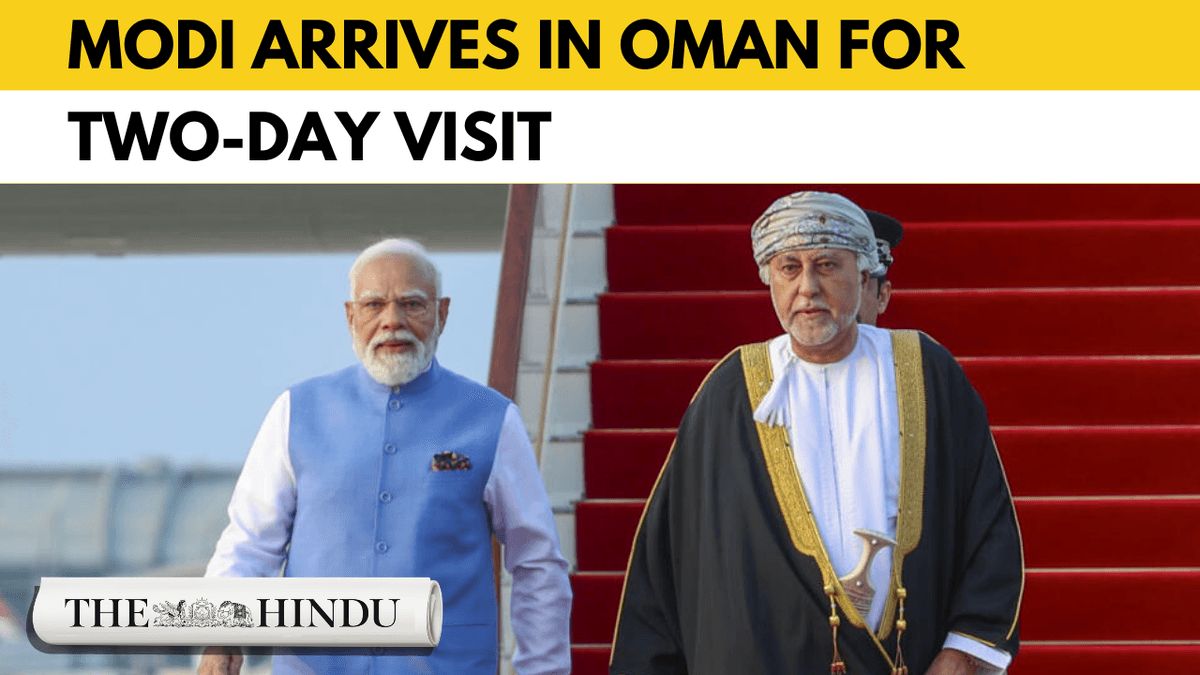
PM Modi in Oman for two-day visit to strengthen ties, finalize FTA, marking 70 years of relations.
Summary
Prime Minister Narendra Modi visited Oman on December 17 for a two-day trip, marking the final leg of a three-nation tour. The visit aimed to strengthen bilateral ties and was expected to finalize a Free Trade Agreement (FTA). This engagement is crucial for competitive exams as it highlights India's strategic foreign policy, economic diplomacy in the Middle East, and commemorates 70 years of India-Oman diplomatic relations.
Key Points
- 1Prime Minister Narendra Modi arrived in Oman on December 17 for a two-day official visit.
- 2The visit's primary objectives included strengthening bilateral ties and finalizing a Free Trade Agreement (FTA).
- 3Oman served as the final leg of PM Modi's three-nation foreign tour.
- 4The visit commemorated 70 years of India-Oman diplomatic relations.
- 5PM Modi was scheduled to hold talks with the Omani leadership during his stay.
In-Depth Analysis
Prime Minister Narendra Modi's visit to Oman on December 17, the final leg of a crucial three-nation tour, holds significant weight in India's broader foreign policy framework, particularly concerning its extended neighborhood in the Middle East. This visit, commemorating 70 years of India-Oman diplomatic relations, was not merely a ceremonial affair but a strategic engagement aimed at deepening economic, political, and strategic ties with a key partner in the Gulf region.
**Background Context:** India's foreign policy, especially under the 'Look West' or 'Extended Neighbourhood' policy, places immense importance on the Gulf region. This region is vital for India's energy security, hosts a large Indian diaspora, and serves as a crucial trade corridor. Oman, strategically located at the mouth of the Strait of Hormuz, a critical choke point for global oil shipments, has historically been a close and reliable partner for India. The two nations share ancient maritime trade links, with a vibrant Indian community having been present in Oman for centuries. This historical bond forms a strong foundation for contemporary diplomatic and economic relations. The recent push for a Free Trade Agreement (FTA) is a natural progression of these deepening ties, aimed at formalizing and expanding the economic partnership.
**What Happened:** PM Modi arrived in Oman on December 17 for a two-day visit. The primary objectives were unequivocally to strengthen bilateral ties across various sectors and, most notably, to finalize a Free Trade Agreement. During his stay, PM Modi engaged in high-level talks with the Omani leadership, including Sultan Haitham bin Tarik. These discussions likely covered a wide array of topics, from trade and investment to defense cooperation, energy partnerships, and regional security issues. The symbolic milestone of 70 years of diplomatic relations, established in 1953, provided a backdrop for reaffirming mutual commitment and charting a future course for cooperation.
**Key Stakeholders Involved:** The primary stakeholders are, of course, India and Oman. From India's side, the Prime Minister, the Ministry of External Affairs, and the Ministry of Commerce play pivotal roles in shaping and executing foreign policy and trade negotiations. For Oman, the Sultan and the Omani leadership, along with their respective ministries, are the key decision-makers. The motivations are clear: India seeks enhanced energy security, diversified trade routes, investment opportunities, and strategic partnerships in a volatile region. Oman, in turn, looks to diversify its economy away from oil, attract foreign investment, and leverage India's growing economic power and strategic influence for its own development and regional stability. The Indian diaspora in Oman, numbering over 600,000, also constitutes a significant stakeholder, contributing to both economies through remittances and cultural exchange.
**Why This Matters for India:** The visit carries profound significance for India. Economically, the finalization of an FTA with Oman would unlock immense potential for bilateral trade and investment, providing Indian businesses greater access to the Omani market and vice-versa. Oman is a reliable supplier of crude oil and natural gas, making enhanced energy cooperation critical for India's energy security. Strategically, Oman's geographic location is invaluable. India has already secured access to Oman's Duqm Port, which offers strategic depth for the Indian Navy in the Western Indian Ocean, enhancing India's maritime security capabilities and its ability to project power and provide humanitarian assistance/disaster relief (HADR) in the region. This aligns with India's vision of being a 'net security provider' in the Indian Ocean Region (IOR). Furthermore, strengthening ties with Oman helps India maintain balance and influence in a complex Middle Eastern geopolitical landscape, fostering regional stability and cooperation against common threats like terrorism and maritime piracy.
**Historical Context and Future Implications:** The historical ties between India and Oman date back millennia, with active trade routes linking the two civilizations. Modern diplomatic relations were established shortly after India's independence, and have steadily grown into a comprehensive strategic partnership. Looking ahead, the visit is expected to pave the way for increased collaboration in emerging sectors like renewable energy, digital technology, and space. Defense cooperation, which already includes joint exercises and port visits, is likely to deepen. The FTA, once finalized, will serve as a robust legal framework, encouraging more predictable and sustained economic engagement. This sustained engagement will further solidify India's position as a key economic and strategic partner in the Gulf, contributing to its broader geopolitical objectives and economic growth.
**Related Constitutional Articles, Acts, or Policies:** India's engagement with Oman, particularly regarding trade agreements and foreign policy, is guided by several constitutional principles and policy frameworks. **Article 51** of the Indian Constitution, a Directive Principle of State Policy, mandates the state to 'endeavour to promote international peace and security; maintain just and honourable relations between nations; foster respect for international law and treaty obligations... and encourage settlement of international disputes by arbitration.' This article forms the philosophical bedrock of India's foreign policy. The negotiation and signing of FTAs fall under the purview of the executive, with parliamentary oversight. The **Foreign Trade (Development and Regulation) Act, 1992**, provides the legal framework for India's foreign trade policy. Furthermore, India's 'Look West' policy, and its broader 'Extended Neighbourhood' policy, are strategic doctrines that underscore the importance of countries like Oman in India's geopolitical and geoeconomic calculations. The ongoing efforts for defense cooperation also align with India's **Defence Production and Export Promotion Policy (DPEPP)**, aiming to boost defense exports and forge strategic partnerships.
Exam Tips
This topic falls under the 'International Relations' section of the UPSC Civil Services Mains General Studies Paper-II syllabus, and 'Current Affairs' for all competitive exams. Focus on India's foreign policy objectives in the Middle East.
Study related topics such as India's 'Look West' policy, the significance of the Gulf Cooperation Council (GCC) for India, India's energy security strategy, and the role of the Indian diaspora in foreign policy.
Expect questions on the strategic importance of Oman (e.g., location of Duqm Port, Strait of Hormuz), the benefits of Free Trade Agreements (FTAs) for India, and the historical context of India-Oman relations. Map-based questions on the region are also common.
Related Topics to Study
Full Article
Prime Minister Narendra Modi arrived in Oman on December 17 for a two-day visit to strengthen bilateral ties. He will hold talks with Omani leadership and is expected to finalise a free trade agreement. The visit marks 70 years of India–Oman diplomatic relations.