



Relevant for Exams
Parliamentary panel examining Bills on PM/CM removal gets extension; Lok Sabha passed resolution.
Summary
A parliamentary panel, tasked with examining crucial Bills concerning the removal of Prime Ministers and Chief Ministers, has been granted an extension to submit its report. This development is significant for competitive exams as it touches upon parliamentary procedures, legislative processes, and potential constitutional implications regarding the highest executive offices, making it relevant for questions on Indian Polity and governance.
Key Points
- 1A parliamentary panel is examining Bills related to the removal of Prime Ministers (PMs) and Chief Ministers (CMs).
- 2The panel has received an extension to submit its report on these significant Bills.
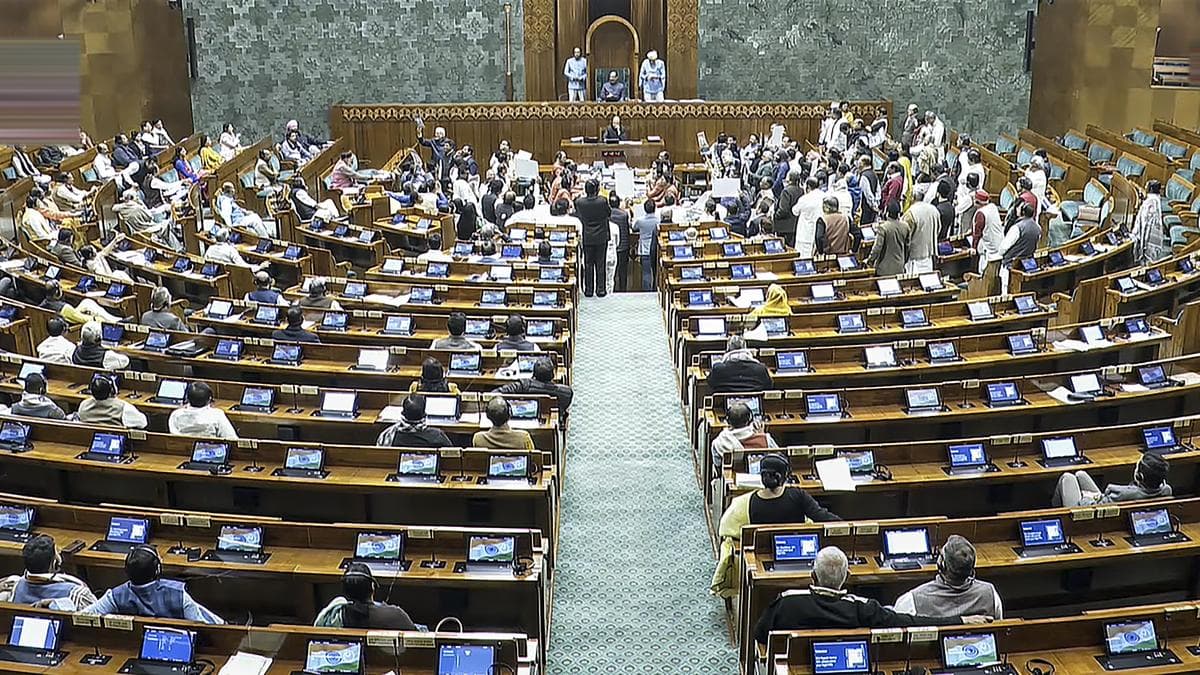
- 3The resolution for granting this extension was passed in the Lok Sabha.
- 4The method used to pass the resolution in the Lok Sabha was a voice vote.
- 5The Bills under examination by the panel address the procedure for removing top executive officeholders.
In-Depth Analysis
The news that a parliamentary panel has received an extension to submit its report on Bills related to the removal of Prime Ministers and Chief Ministers is a subtle yet significant development, offering a crucial window into India's legislative process and constitutional framework. For competitive exam aspirants, this highlights the intricate machinery of governance and the continuous evolution of parliamentary practices.
**Background Context and What Happened:**
India's parliamentary democracy is built on the principle of a responsible executive, meaning the Council of Ministers, led by the Prime Minister at the Centre and Chief Minister in states, is collectively responsible to the Lok Sabha and the State Legislative Assembly, respectively (Article 75(3) and Article 164(2)). The primary mechanism for removing a Prime Minister or Chief Minister who has lost the confidence of the House is through a no-confidence motion. If such a motion passes, the government falls. There are no specific, separate 'Bills' or 'impeachment' procedures for the removal of a sitting PM or CM akin to those for a President (Article 61) or a Supreme Court Judge (Article 124(4)). The existence of Bills specifically addressing the *removal* of PMs and CMs suggests a potential new legislative attempt to formalize or introduce additional grounds/mechanisms for their accountability beyond the existing no-confidence motion. The article indicates that a parliamentary panel, likely a Standing Committee, was tasked with scrutinizing these Bills. These committees are vital for detailed examination of proposed legislation, allowing for expert input, public consultation, and thorough debate away from the main floor of Parliament. The recent development is purely procedural: the Lok Sabha, through a voice vote, granted an extension to this panel to submit its report. This means the Bills are complex, require more deliberation, or the committee needs additional time to gather evidence and build consensus.
**Key Stakeholders Involved:**
Several key stakeholders are involved in this process. The **Parliamentary Panel** itself is central, comprising Members of Parliament from various parties, tasked with in-depth scrutiny and recommending changes. The **Lok Sabha**, as the legislative body that granted the extension, exercises its oversight function and control over the legislative agenda. The **Government of India** (especially the Ministry that introduced these Bills) and the **ruling party** are significant as they would likely be the proponents of such legislation, aiming to shape governance. **Opposition parties** are equally crucial, as their views and potential objections would influence the committee's deliberations and the eventual fate of the Bills. Finally, the **Prime Minister** and **Chief Ministers** are the offices directly impacted, and their respective political parties would naturally have a vested interest in the outcome.
**Significance for India and Historical Context:**
This development is highly significant for India's governance structure. Historically, the Indian Constitution deliberately made the executive accountable to the legislature primarily through the collective responsibility doctrine and no-confidence motions. This design aimed for stability, preventing frequent changes in leadership. Introducing specific Bills for the 'removal' of PMs and CMs could potentially alter this delicate balance. If such Bills were to pass, they might introduce new grounds for removal beyond a loss of confidence, such as proven misbehavior or incapacity (similar to judges), or a more formal impeachment-like process. This could enhance accountability but also potentially lead to political instability if the grounds or procedures are vague or easily manipulable. Any such legislation would also have to carefully navigate the federal structure of India, as Bills impacting Chief Ministers would invariably involve state autonomy. The process highlights the robust nature of India's legislative scrutiny, where even significant proposals undergo thorough committee examination before being put to a full parliamentary vote.
**Future Implications and Constitutional Provisions:**
The extension granted to the parliamentary panel means that the Bills are still under active consideration, and their final shape is yet to emerge. Future implications could include a significant overhaul of how the highest executive offices are held accountable, potentially requiring constitutional amendments if the proposed mechanisms go beyond the existing framework of collective responsibility. Such Bills, if enacted, would likely face intense judicial scrutiny, potentially being challenged on grounds of violating the basic structure of the Constitution (as established in the Kesavananda Bharati case, 1973), particularly concerning the parliamentary form of government and the balance of power between the executive and legislature. The debate surrounding these Bills will inevitably touch upon fundamental principles of parliamentary sovereignty, executive accountability, and the stability of governance. Students should keep an eye on the committee's report and the subsequent parliamentary debate, as it will illuminate the complexities of constitutional law and political practice in India. The process also underscores the importance of parliamentary committees as mini-parliaments, where detailed work on legislation is done before it reaches the floor for final debate and voting. The 'voice vote' in Lok Sabha is a common parliamentary procedure for less contentious or procedural matters, reflecting broad agreement on the extension, rather than the content of the Bills themselves.
Exam Tips
This topic falls under 'Indian Polity and Governance' (UPSC GS-II, State PSCs) and 'General Awareness' (SSC, Banking). Focus on the roles of parliamentary committees, legislative procedures, and the constitutional provisions related to the executive.
Study the various types of parliamentary committees (Standing, Ad Hoc, etc.) and their specific functions, especially their role in scrutinizing Bills. Understand the difference between a voice vote and other voting mechanisms in Parliament.
Prepare comparative questions on the removal procedures of different constitutional functionaries (President, Judges, CAG, CEC) versus the existing mechanisms for PM/CM (no-confidence motion). Analytical questions on the potential impact of new removal Bills on executive stability and accountability are common.
Related Topics to Study
Full Article
The resolution was passed by a voice vote in the Lok Sabha