



Relevant for Exams
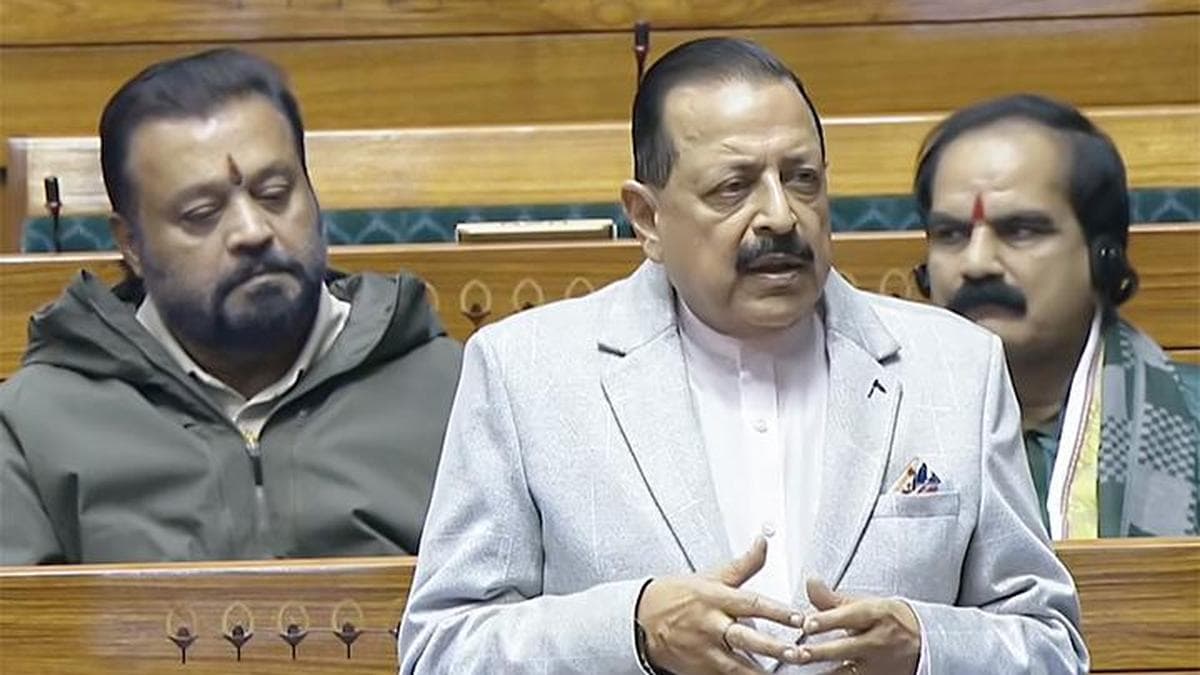
Lok Sabha passes MGNREGA replacement; Rajya Sabha debates new Nuclear Bill SHANTI.
Summary
The Lok Sabha has passed the Viksit Bharat Guarantee for Rozgar and Ajeevika Mission Gramin (VB-G Ram G) Bill, 2025, which is set to replace the Mahatma Gandhi National Rural Employment Guarantee Act (MGNREGA). Concurrently, the Rajya Sabha is debating a new Nuclear Bill, titled SHANTI. These legislative actions signify major policy shifts in rural employment and nuclear energy, making them critical topics for all competitive exam aspirants to understand for questions on government schemes and national policy.
Key Points
- 1The Lok Sabha has passed the 'Viksit Bharat Guarantee for Rozgar and Ajeevika Mission Gramin (VB-G Ram G) Bill, 2025'.
- 2This new bill, 'VB-G Ram G Bill, 2025', is designed to replace the existing Mahatma Gandhi National Rural Employment Guarantee Act (MGNREGA).
- 3The new employment guarantee scheme's full name is 'Viksit Bharat Guarantee for Rozgar and Ajeevika Mission Gramin'.
- 4The Rajya Sabha is currently engaged in a debate over a new Nuclear Bill.
- 5The new Nuclear Bill being debated in the Rajya Sabha is specifically named 'SHANTI'.
In-Depth Analysis
India's legislative landscape is dynamic, and the recent developments in the Parliament's Winter session, particularly the passing of the 'Viksit Bharat Guarantee for Rozgar and Ajeevika Mission Gramin (VB-G Ram G) Bill, 2025' by the Lok Sabha and the ongoing debate on the 'SHANTI' Nuclear Bill in the Rajya Sabha, signify profound shifts in national policy. These twin developments are crucial for understanding India's trajectory in rural development, employment generation, and energy security.
Let's first delve into the 'Viksit Bharat Guarantee for Rozgar and Ajeevika Mission Gramin (VB-G Ram G) Bill, 2025'. This bill is set to replace the Mahatma Gandhi National Rural Employment Guarantee Act (MGNREGA), a landmark social security scheme launched in 2006 (originally as NREGA in 2005). MGNREGA guaranteed 100 days of wage employment in a financial year to every rural household whose adult members volunteer to do unskilled manual work. Its objectives were poverty alleviation, creation of durable assets, strengthening of Panchayati Raj Institutions, and empowerment of women. Over the years, MGNREGA has been lauded for providing a safety net during economic downturns, especially during the COVID-19 pandemic, and for empowering rural women. However, it has also faced criticisms regarding issues like delayed wage payments, corruption, asset quality, and administrative inefficiencies. The proposed VB-G Ram G Bill, 2025, with its full name 'Viksit Bharat Guarantee for Rozgar and Ajeevika Mission Gramin,' hints at a potential shift in focus from mere 'employment guarantee' to a broader 'livelihood mission' aimed at 'Viksit Bharat' (Developed India). This could imply a greater emphasis on skill development, creation of more productive assets, and integration with other rural development schemes to ensure sustainable livelihoods rather than just providing unskilled manual work. Key stakeholders include the Central Government (Ministry of Rural Development), State Governments, Panchayati Raj Institutions responsible for implementation, and millions of rural households who are the beneficiaries. This matters for India as it will redefine the rural social security framework, potentially impacting rural incomes, migration patterns, and the overall rural economy. Constitutionally, such schemes align with the Directive Principles of State Policy (DPSP), particularly Article 39 (right to an adequate means of livelihood), Article 41 (right to work), and Article 43 (living wage and decent standard of life). The 73rd Constitutional Amendment Act, which institutionalized Panchayati Raj, is also directly relevant as PRIs play a crucial role in MGNREGA's implementation.
Concurrently, the Rajya Sabha is debating the new Nuclear Bill, titled 'SHANTI'. India's nuclear program, initiated by Dr. Homi J. Bhabha, has historically focused on self-reliance and energy security, guided by the three-stage nuclear power program. The existing legal framework, primarily the Atomic Energy Act, 1962, has served the nation for decades. However, with increasing energy demands, commitments to climate change mitigation, and evolving international nuclear cooperation, a modernization of the legal framework is essential. The 'SHANTI' Bill likely aims to address contemporary challenges and opportunities, such as facilitating greater private sector participation in nuclear power generation, updating safety and security standards in line with international best practices, streamlining regulatory processes, and potentially addressing issues of nuclear waste management and liability. Key stakeholders in this domain include the Department of Atomic Energy (DAE), the Atomic Energy Regulatory Board (AERB), public sector entities like Nuclear Power Corporation of India Limited (NPCIL), scientific community, and international bodies like the IAEA. For India, this matters profoundly for its energy security, as nuclear power offers a clean and reliable base-load electricity source, crucial for industrial growth and reducing reliance on fossil fuels. It also bolsters India's standing as a responsible nuclear power with advanced capabilities. The constitutional basis for nuclear energy falls under the Union List (Entry 6) of the Seventh Schedule, granting the Central Government exclusive power to legislate on atomic energy. Future implications of the SHANTI Bill could include a significant expansion of India's nuclear power capacity, fostering innovation, attracting investments, and strengthening India's role in global nuclear governance and non-proliferation efforts while ensuring stringent safety protocols.
Both legislative actions underscore India's commitment to inclusive growth and sustainable development. The VB-G Ram G Bill reflects an evolution in rural development policy, aiming for more holistic livelihood generation, while the SHANTI Bill marks a new era for India's nuclear energy program, balancing ambition with responsibility. These are not merely legislative changes but strategic policy shifts with far-reaching economic, social, and environmental consequences for a 'Viksit Bharat'.
Exam Tips
**UPSC Civil Services Exam (GS Paper II - Governance, Social Justice; GS Paper III - Economy, Science & Technology):** Focus on the comparative analysis between MGNREGA and VB-G Ram G Bill (objectives, features, potential impacts, criticisms). For the Nuclear Bill, understand India's energy policy, nuclear program stages, safety regulations, and international nuclear cooperation. Expect analytical questions on policy evolution and its implications.
**SSC CGL/CHSL, Banking & Railway Exams (General Awareness/Current Affairs):** Memorize the full names of the new bills (VB-G Ram G Bill, SHANTI Bill), their predecessors (MGNREGA, Atomic Energy Act, 1962), and their primary objectives. Questions might be direct, asking about the replacement scheme or the name of the new nuclear bill.
**State PSC & Defence Exams (General Studies):** Understand the constitutional provisions relevant to these topics – DPSP for employment schemes (Articles 39, 41, 43) and Union List for Atomic Energy (Seventh Schedule, Entry 6). Be prepared for questions on the role of Panchayati Raj Institutions in rural employment schemes and the significance of nuclear energy for national security and development.
**Common Question Patterns:** Expect questions on the 'why' behind these changes (e.g., why replace MGNREGA?), the 'what' (key features of the new bills), and the 'impact' (economic, social, environmental). For nuclear, questions on India's energy mix and climate goals are common.
Related Topics to Study
Full Article
Lok Sabha passes MGNREGA's replacement - Viksit Bharat Guarantee for Rozgar and Ajeevika Mission Gramin (VB-G Ram G) Bill, 2025