

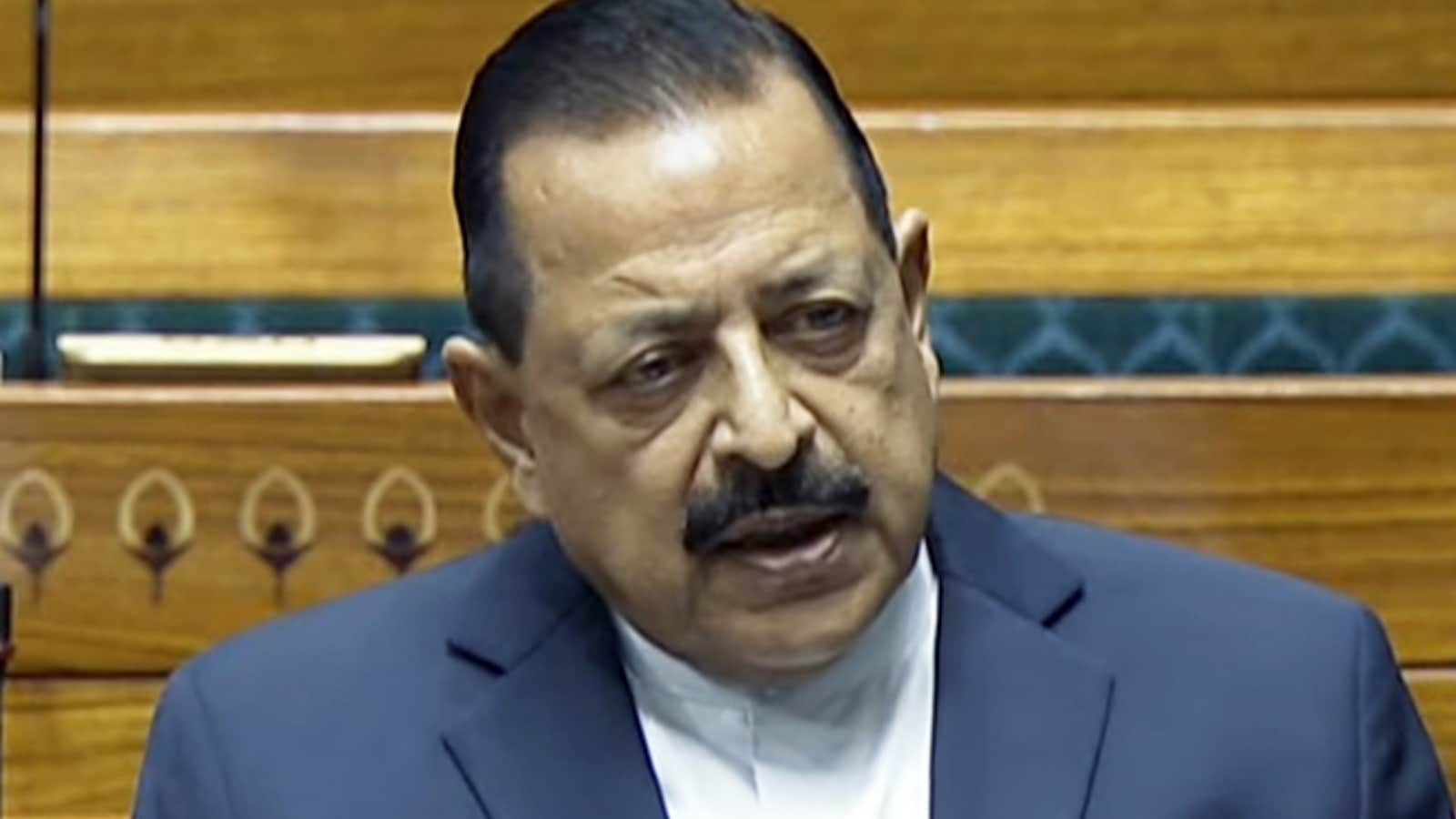


Nuclear Bill approved by Parliament; content unavailable for detailed analysis.
Summary
The article reports Parliament's approval of a Nuclear Bill, with the MoS highlighting safety protocols. However, the actual content of the article is unavailable. This prevents the extraction of specific details, provisions, or names crucial for competitive exam preparation, making a comprehensive analysis impossible.
Key Points
- 1No content available in the article for detailed analysis of the Nuclear Bill.
- 2Specific provisions, dates, or names related to the Nuclear Bill cannot be extracted.
- 3The article mentions Parliament's approval of a Nuclear Bill.
- 4MoS stated that Standard Operating Procedures (SOP) prioritize safety.
- 5Lack of content prevents identification of exam-specific facts and implications.
In-Depth Analysis
While the specific content of the 'Nuclear Bill' mentioned in the article is unavailable, the parliamentary approval of such a bill, with an emphasis on safety, signals significant developments in India's nuclear energy landscape. This analysis will delve into the broader context of nuclear power in India, its legislative framework, and its strategic importance, drawing upon established facts and policies.
India's journey in nuclear energy began shortly after independence, driven by the vision of Dr. Homi J. Bhabha, who championed nuclear power as crucial for the nation's energy security and scientific self-reliance. This led to the establishment of the Department of Atomic Energy (DAE) in 1954 and the formulation of a unique three-stage nuclear power program designed to utilize India's vast thorium reserves. The foundational legislation governing this sector has been the Atomic Energy Act of 1962, which vests exclusive control of nuclear power generation and related activities with the central government. Over the decades, India has developed a closed fuel cycle and indigenous capabilities, despite international sanctions following its nuclear tests in 1974 and 1998.
The approval of a new Nuclear Bill by Parliament, as reported, signifies a legislative update or refinement within this existing framework. Such a bill would typically involve detailed provisions concerning the establishment and operation of nuclear facilities, licensing, waste management, security, and, critically, safety. The Minister of State's emphasis on 'Standard Operating Procedures (SOP) putting safety first' underscores the paramount importance of robust regulatory mechanisms. This focus is particularly relevant in the wake of global nuclear accidents like Chernobyl (1986) and Fukushima (2011), which heightened international scrutiny and calls for enhanced safety protocols.
Key stakeholders in India's nuclear energy sector include the Department of Atomic Energy (DAE), which is directly under the Prime Minister's office; the Atomic Energy Regulatory Board (AERB), an independent body established in 1983 under the Atomic Energy Act, 1962, responsible for safety and radiation protection; and the Nuclear Power Corporation of India Limited (NPCIL), a public sector undertaking tasked with designing, constructing, and operating nuclear power plants. Parliament, as the legislative body, plays a crucial role in enacting and amending laws that govern this sensitive sector. Internationally, the International Atomic Energy Agency (IAEA) provides safety standards and oversight, while the Nuclear Suppliers Group (NSG) controls the export of nuclear technology and materials. Public opinion and civil society organizations also form important stakeholders, often raising concerns about safety, environmental impact, and rehabilitation.
This legislative development holds immense significance for India. From an energy security perspective, nuclear power offers a stable, baseload electricity source, reducing reliance on fossil fuels and mitigating price volatility. As India aims to achieve its net-zero emissions target by 2070, nuclear energy is a vital component of its clean energy mix, complementing renewable sources like solar and wind. Economically, expanding nuclear capacity can drive industrial growth, create high-skill jobs, and foster technological advancements. Politically, a robust and safe nuclear program enhances India's standing as a responsible nuclear power, especially after securing a waiver from the NSG in 2008 and signing the India-US Civil Nuclear Agreement, which opened avenues for international civil nuclear cooperation.
The historical context of India's nuclear program is one of self-reliance and strategic autonomy. The Atomic Energy Act, 1962, reflects this by giving the government extensive powers. However, the Liability for Nuclear Damage Act, 2010, was a significant step, addressing civil liability in case of a nuclear incident, which was crucial for attracting foreign investment and technology following the India-US deal. The new Nuclear Bill likely builds upon these existing frameworks, potentially streamlining regulatory processes, enhancing safety mandates, or facilitating greater private sector participation, if any. The Seventh Schedule of the Indian Constitution places 'Atomic energy and mineral resources necessary for its production' under the Union List (Entry 6), underscoring the central government's exclusive domain over this sector.
The future implications of such a bill are substantial. It could pave the way for accelerated expansion of India's nuclear power capacity, currently around 7 GW, with plans to significantly increase it in the coming decades. Enhanced safety protocols and a clear legislative framework can boost public confidence, attract more foreign technology and investment, and ensure the sustainable growth of nuclear energy. This aligns with India's broader strategy to balance energy demand with environmental responsibility, making nuclear power a critical pillar of its long-term energy strategy and climate commitments.
Exam Tips
This topic falls under General Studies Paper III (Economy, Science & Technology, Environment) and General Studies Paper II (Polity, Governance). Be prepared for questions on India's energy policy, nuclear program, and regulatory bodies.
Study the Atomic Energy Act of 1962 and the Civil Liability for Nuclear Damage Act of 2010 in detail. Understand their key provisions, objectives, and amendments. Factual questions often relate to the year of these acts or their main purpose.
Focus on the role and functions of key institutions like the Department of Atomic Energy (DAE), Atomic Energy Regulatory Board (AERB), and Nuclear Power Corporation of India Limited (NPCIL). Understand their interrelationships and responsibilities.
Be ready for analytical questions on the pros and cons of nuclear energy for India, its role in achieving climate change targets, challenges in expansion (safety, cost, public perception), and India's international nuclear cooperation (e.g., NSG waiver, India-US Civil Nuclear Deal).
Familiarize yourself with the constitutional provisions related to atomic energy, specifically Entry 6 of the Union List in the Seventh Schedule, which grants the Union government exclusive legislative power over atomic energy.