



Relevant for Exams
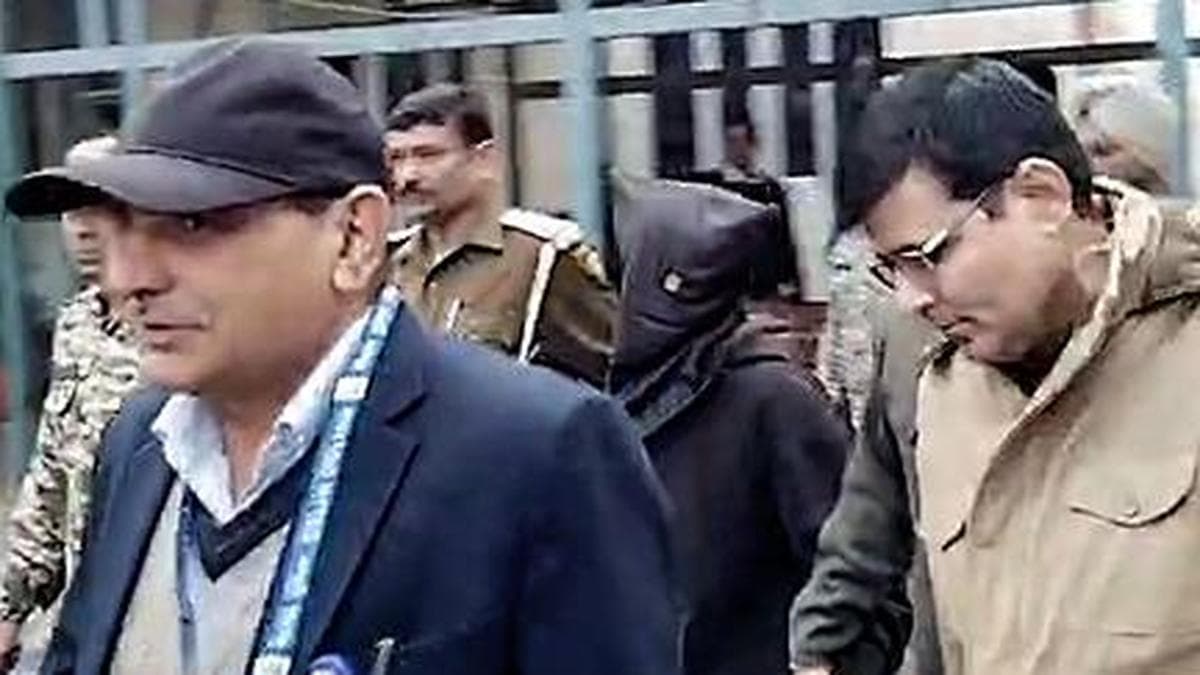
NIA arrests Yasir Dar in Delhi car bombing case, linked to Umar-Un-Nabi and Mufti Irfan.
Summary
The National Investigation Agency (NIA) has arrested Yasir Dar, a key accused in a Delhi car bombing case. Dar was allegedly in close contact with other accused, including Umar-Un-Nabi and Mufti Irfan. This development is significant as it highlights the ongoing efforts by central agencies like the NIA to combat terrorism and maintain national security, making it relevant for current affairs sections in competitive exams.
Key Points
- 1The arrest was made by the National Investigation Agency (NIA).
- 2The individual arrested is identified as Yasir Dar.
- 3Yasir Dar is a key accused in a Delhi car bombing case.
- 4Dar was allegedly in close contact with co-accused Umar-Un-Nabi.
- 5Dar was also allegedly in close contact with co-accused Mufti Irfan.
In-Depth Analysis
The recent arrest of Yasir Dar by the National Investigation Agency (NIA) in connection with a Delhi car bombing case underscores India's unwavering commitment to combating terrorism and safeguarding national security. This incident, while seemingly a single arrest, is a crucial piece in the larger mosaic of India's internal security challenges and its robust response mechanisms. To truly grasp its significance, we must delve into the background, the roles of key players, and its broader implications.
India has a long and painful history of grappling with terrorism, ranging from cross-border incursions to indigenous radicalization and urban terror attacks. Major cities, being economic and political hubs, have often been targets. The devastating Mumbai 26/11 attacks in 2008, which exposed significant gaps in India's counter-terrorism architecture, served as a pivotal moment. It directly led to the establishment of the National Investigation Agency (NIA) in January 2009, through the National Investigation Agency Act, 2008. The NIA was conceptualized as a specialized federal agency to investigate and prosecute offenses affecting the sovereignty, security, and integrity of India, including acts of terrorism, bomb blasts, hijacking, and attacks on nuclear installations. Its mandate allows it to operate across states without requiring prior permission from state governments, making it a powerful tool in a federal structure.
In this specific case, Yasir Dar has been arrested as a key accused in a Delhi car bombing case. The details emerging suggest his alleged close contacts with co-accused individuals, Umar-Un-Nabi and Mufti Irfan. This network-based operation highlights the clandestine nature of terror plots, often involving multiple individuals coordinating across different locations. Such arrests are not merely about apprehending one individual; they are about dismantling entire terror modules, severing their logistical and communication links, and preventing future attacks. The 'car bombing' aspect itself signifies a common tactic used by terrorist groups to inflict maximum casualties and create widespread panic, making the pre-emption or investigation of such plots critically important.
The key stakeholders in this scenario are manifold. Firstly, the **National Investigation Agency (NIA)** stands at the forefront. As India's premier counter-terrorism agency, its efficiency and investigative prowess are vital. The NIA operates under the Ministry of Home Affairs (MHA) and is empowered by specific laws like the Unlawful Activities (Prevention) Act (UAPA), 1967, which allows for stringent measures against individuals and organizations involved in terrorist activities. Secondly, the **Ministry of Home Affairs (MHA)** provides the policy framework and oversight for agencies like the NIA, ensuring a coordinated national response to internal security threats. Thirdly, the **accused individuals** – Yasir Dar, Umar-Un-Nabi, and Mufti Irfan – are central to the investigation, with their alleged roles being crucial for uncovering the full extent of the conspiracy. Finally, the **Indian Judiciary** will play a critical role as the case proceeds, ensuring that justice is delivered within the constitutional framework, balancing national security interests with individual rights, particularly Article 21, which guarantees the right to life and personal liberty.
This arrest carries immense significance for India. From a national security perspective, it demonstrates the continuous vigilance and proactive measures taken by security agencies to neutralize terror threats. It reinforces public confidence that agencies are actively working to maintain peace and order. Politically, such actions showcase the government's firm stance against terrorism, both domestically and internationally. Economically, preventing terror attacks is crucial for maintaining investor confidence and ensuring uninterrupted economic activity. Socially, it helps in preserving communal harmony and preventing the spread of fear and radicalization. The legal framework, particularly the **Unlawful Activities (Prevention) Act (UAPA), 1967**, significantly amended over the years (notably in 2004, 2008, and 2019), provides the legal teeth for such investigations. UAPA defines 'terrorist act' and 'terrorist organisation' broadly and gives powers for arrest, detention, and attachment of property related to terrorism. The **National Investigation Agency Act, 2008**, provides the jurisdictional and functional powers to the NIA.
Looking ahead, this arrest is likely to lead to further investigations, potentially uncovering more individuals involved in the network and revealing their operational methodologies, funding sources, and ideological motivations. It underscores the perpetual need for enhanced intelligence gathering, inter-agency coordination, and international cooperation to counter cross-border elements of terrorism. The outcome of the trial will also be significant, as successful prosecutions reinforce the rule of law and deter future acts of terrorism. This incident is a reminder that internal security is a dynamic challenge, requiring constant adaptation and robust enforcement of laws, guided by constitutional principles and the collective resolve of the nation to protect its citizens and its democratic fabric.
Constitutionally, the Union Parliament has the power to legislate on matters of national security, including criminal law and terrorism, as per **Article 246** and entries in the Union List (List I) of the Seventh Schedule, specifically Entry 1 (Defence of India) and Entry 2A (Deployment of any armed force of the Union or any other force subject to the control of the Union or any contingent or unit thereof in any State in aid of the civil power). The NIA Act and UAPA are manifestations of this legislative power, aimed at protecting the integrity and security of the nation.
Exam Tips
This topic falls under General Studies Paper III (Internal Security) for UPSC CSE, and General Awareness/Current Affairs for SSC, State PSC, and Defence exams. Focus on the structure, mandate, and powers of the NIA and related anti-terror laws.
Study the National Investigation Agency Act, 2008, and the Unlawful Activities (Prevention) Act (UAPA), 1967 (and its key amendments). Understand the definitions of 'terrorist act' and 'terrorist organisation' under UAPA and the powers granted to investigating agencies.
Prepare for questions on the role of central agencies in maintaining internal security, challenges faced by these agencies, and the balance between national security and individual rights (e.g., Article 21). Be ready to discuss the effectiveness and criticisms of laws like UAPA.
Familiarize yourself with the historical context of counter-terrorism legislation in India, especially post-26/11 reforms. Questions might ask about the evolution of India's anti-terror framework.
Understand the difference between NIA and other intelligence agencies like IB and RAW in terms of their mandate and functions. NIA is primarily an investigative and prosecuting agency for terror-related crimes.
Related Topics to Study
Full Article
Yasir Dar was allegedly in close contact with the other accused in the case, including Umar-Un-Nabi, as well as Mufti Irfan