



Relevant for Exams
Tamil Nadu sees fewer heart and lung transplants despite more donors due to viability and preservation issues.
Summary
Tamil Nadu is experiencing a concerning decline in heart and lung transplants, despite an increase in organ donors. This critical issue stems from organ-specific challenges, notably stringent viability thresholds and limited preservation windows for these delicate organs. This highlights systemic bottlenecks in the organ transplantation ecosystem, crucial for competitive exams focusing on public health, governance, and state-specific healthcare challenges.
Key Points
- 1Heart and lung transplants are lagging in Tamil Nadu.
- 2The decline in transplants occurs despite an increase in organ donors.
- 3A primary reason for the lag is organ-specific challenges.
- 4Specific challenges include stringent viability thresholds for organs.
- 5Another key challenge is the limited preservation windows for hearts and lungs.
In-Depth Analysis
The recent trend in Tamil Nadu, where heart and lung transplants are declining despite an increase in organ donors, presents a critical case study for understanding the complexities of public health infrastructure and governance in India. Tamil Nadu has historically been a trailblazer in organ donation and transplantation, often cited for its robust framework and high donation rates, particularly after the establishment of the Transplant Authority of Tamil Nadu (TRANSTAN) in 2008. This authority, operating under the Transplantation of Human Organs Act, 1994 (THOA), was instrumental in streamlining the process of deceased organ donation and allocation, making Tamil Nadu a model state.
The current challenge, however, points to systemic bottlenecks rather than a lack of donor willingness. The core issue lies with 'organ-specific challenges': stringent viability thresholds and limited preservation windows for hearts and lungs. Unlike kidneys or corneas, hearts and lungs are extremely delicate organs with very short ischemic times (the period an organ can remain viable outside the body). For a heart, this window can be as short as 4-6 hours, and for lungs, 6-8 hours. This demands impeccable coordination, rapid transport, and precise surgical expertise. Even if a donor is available, if the organ's condition doesn't meet strict medical criteria for transplantation, or if it cannot be transported to the recipient in time, it cannot be utilized. This leads to a tragic paradox: willing donors, but wasted organs.
Key stakeholders in this intricate process include the patients and their families, who endure prolonged suffering and uncertainty while awaiting life-saving transplants; the donor families, whose altruistic decision to donate organs is hampered by systemic inefficiencies; and the medical community, comprising transplant surgeons, intensivists, transplant coordinators, and paramedical staff, who work tirelessly under immense pressure. Government bodies like TRANSTAN at the state level and the National Organ and Tissue Transplant Organisation (NOTTO) at the national level are crucial for policy formulation, regulation, and coordination. Additionally, logistical support providers, including ambulance services and potentially air transport, play a vital role in ensuring timely organ delivery.
This situation holds significant implications for India. Firstly, it underscores a critical gap in public health infrastructure and coordination. While donor numbers are rising, the inability to effectively utilize these organs reflects shortcomings in organ retrieval, preservation technology, and logistical networks. This impacts the 'Right to Health,' implicitly guaranteed under Article 21 (Right to Life and Personal Liberty) of the Indian Constitution, as citizens are denied access to life-saving treatment despite available resources. Secondly, it raises ethical concerns about the efficient use of donated organs and potentially erodes public trust in the organ donation system if donations are perceived to be going to waste. Thirdly, the economic burden on patients and the healthcare system due to prolonged illness and repeated hospitalizations for those awaiting transplants is substantial. The Directive Principles of State Policy, particularly Article 47, which mandates the State to improve public health, highlight the government's responsibility to address such challenges.
Historically, India's organ transplantation journey began with the Transplantation of Human Organs Act (THOA) in 1994, which primarily focused on regulating live organ donations. The significant amendment in 2011 was pivotal, expanding the scope to deceased organ donation and establishing a regulatory framework through NOTTO and SOTTOs (State Organ and Tissue Transplant Organisations). Tamil Nadu, with TRANSTAN, became a frontrunner in implementing these provisions. The current scenario suggests that while the legal and awareness frameworks have improved, the operational and technological aspects, especially for highly sensitive organs, need urgent attention.
Looking ahead, future implications demand a multi-pronged approach. There is an urgent need for investment in advanced organ preservation technologies, such as machine perfusion, which can extend the viability window for hearts and lungs beyond traditional cold storage. Improving inter-hospital and inter-state logistics, possibly through dedicated green corridors and air transport facilities, is crucial. Enhancing training for medical professionals in organ retrieval, assessment, and transplant procedures, especially in smaller centers, can broaden the pool of viable organs. Policy reforms might be needed to streamline allocation processes, potentially allowing for broader geographical sharing of organs in critical cases. Public awareness campaigns also need to shift focus from just encouraging donation to highlighting the entire journey and addressing any misconceptions about organ wastage. This challenge in Tamil Nadu serves as a crucial learning point for the entire nation, emphasizing that a robust organ donation program requires continuous innovation and systemic strengthening beyond just increasing donor numbers.
Exam Tips
This topic falls under General Studies Paper II (Governance, Social Justice, Health) for UPSC and State PSC exams. For SSC, it can appear in General Awareness/Current Affairs.
Study related topics like the National Health Mission, Ayushman Bharat, ethical issues in medicine (e.g., organ trafficking, brain death certification), and the role of public-private partnerships in healthcare.
Common question patterns include analytical questions on challenges in healthcare delivery, policy implementation gaps, ethical dilemmas in organ donation, and the role of constitutional provisions like Article 21 and DPSPs in public health. Expect questions on the Transplantation of Human Organs Act (THOA) and bodies like NOTTO/SOTTO/TRANSTAN.
Related Topics to Study
Full Article
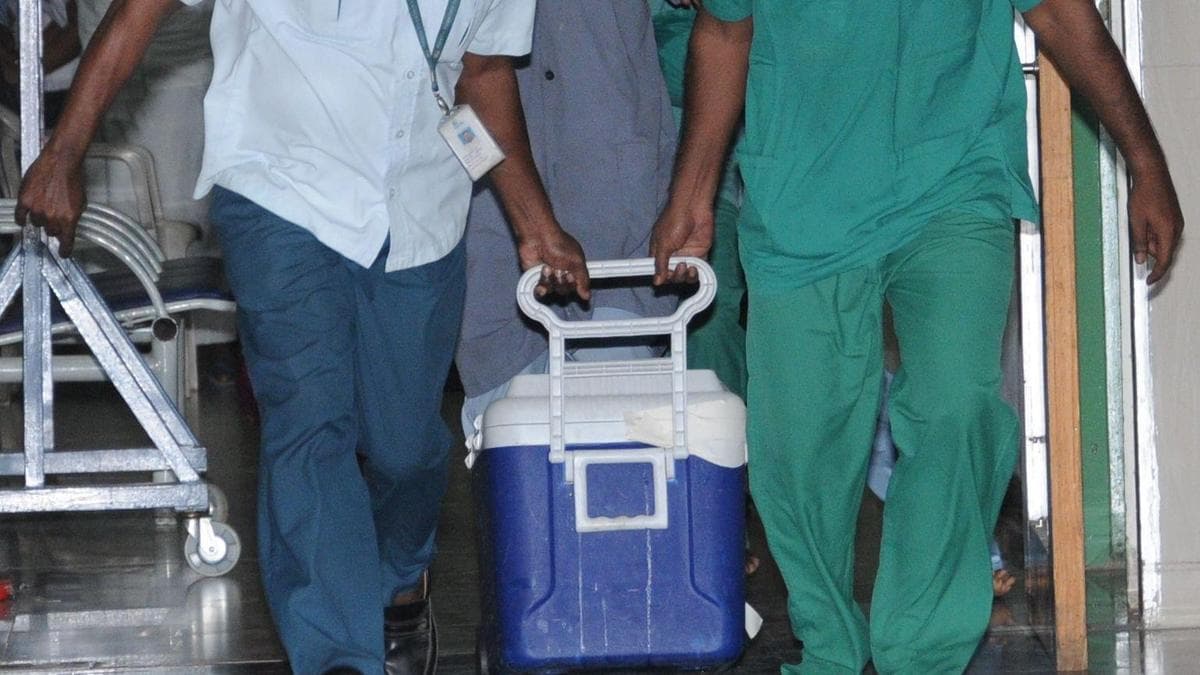
Heart and lung transplants lag due to organ-specific challenges such as viability thresholds and limited preservation windows