



Relevant for Exams
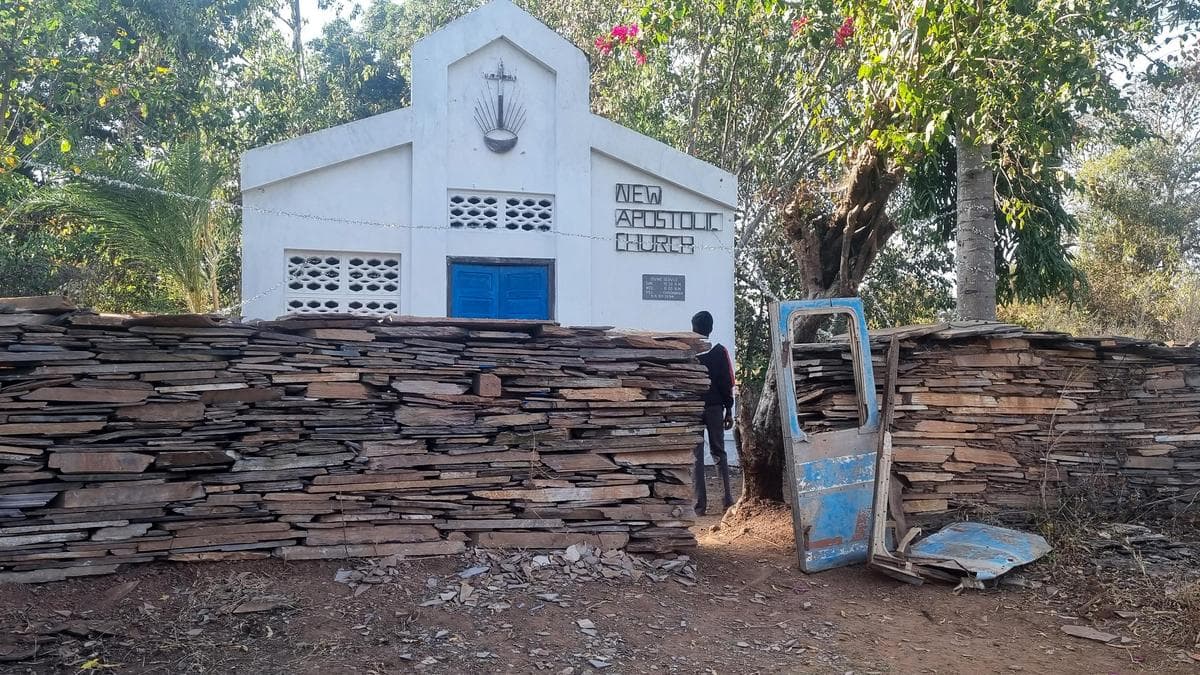
Mob vandalizes prayer hall over Christian burial dispute in Bastar; police injured in clashes.
Summary
A mob vandalized a prayer hall in Kanker village, Bastar, following opposition to Christian burial rites, leading to clashes where police personnel were injured. This incident highlights ongoing issues of religious freedom and communal harmony in the region, making it relevant for understanding social dynamics and law and order challenges for competitive exams.
Key Points
- 1The incident of mob vandalization occurred in Kanker village, located in the Bastar division.
- 2The clashes erupted due to opposition from locals regarding Christian burial rites.
- 3A prayer hall was specifically targeted and vandalized by the mob during the dispute.
- 4Police personnel sustained injuries while attempting to control the mob fury and restore order.
- 5The event underscores challenges related to religious freedom and maintaining communal harmony in the region.
In-Depth Analysis
The recent incident in Kanker village, Bastar, where a mob vandalized a prayer hall following opposition to Christian burial rites, is a stark reminder of the simmering tensions around religious identity and communal harmony in India, particularly in tribal-dominated regions. This event, resulting in injuries to police personnel, underscores complex societal challenges crucial for competitive exam aspirants to understand.
**Background Context and What Happened:**
Bastar, a region predominantly inhabited by various tribal communities in Chhattisgarh, has a unique socio-cultural fabric. Historically, tribal religions have coexisted with elements of Hinduism. However, in recent decades, there has been an increasing presence of Christian missionaries, leading to religious conversions. This trend has often been met with resistance from dominant religious groups and sections of the tribal population who perceive it as an erosion of their traditional culture and identity. The incident in Kanker is a direct manifestation of this underlying tension. A local Christian family sought to perform burial rites for a deceased member, which was opposed by some villagers. This opposition escalated into mob fury, leading to the vandalization of a prayer hall and clashes in which law enforcement personnel were injured while trying to restore order. Such disputes over burial grounds or religious practices are not new in tribal areas, often fueled by competing claims over land and community identity.
**Key Stakeholders Involved:**
Several stakeholders are central to understanding this incident. Firstly, the **Christian community** in Kanker, whose right to practice their religious rites, including burial, was challenged. Secondly, the **local villagers** (presumably from other religious or tribal groups) who opposed the Christian burial, reflecting concerns about religious conversions and cultural shifts. Thirdly, the **Chhattisgarh Police** and **local administration** are critical stakeholders, responsible for maintaining law and order, protecting fundamental rights, and ensuring communal peace. Their actions (or inactions) in preventing and managing such disputes are under scrutiny. Beyond the immediate parties, various **religious organizations** and **civil society groups** often become involved, either advocating for religious freedom or for the protection of traditional tribal cultures, further complicating the dynamics.
**Significance for India:**
This incident holds profound significance for India's constitutional values and social cohesion. It directly challenges the principle of **religious freedom**, guaranteed under Article 25 of the Indian Constitution, which ensures the freedom of conscience and the right to freely profess, practice, and propagate religion. The opposition to burial rites infringes upon a community's right to manage its religious affairs (Article 26) and the right to a dignified burial, which courts have often linked to Article 21 (Right to Life and Personal Liberty). The event also highlights the fragility of **communal harmony**, especially in sensitive tribal belts. Such clashes can quickly escalate, creating deep fissures within society and impacting the secular fabric of the nation. From a **governance** perspective, it exposes the challenges faced by state authorities in upholding the rule of law, protecting minorities, and mediating inter-religious disputes effectively. The failure to prevent such incidents can lead to a breakdown of trust in the administration and law enforcement agencies.
**Historical Context and Broader Themes:**
The history of religious conversions in India, particularly in tribal regions, dates back centuries but gained momentum during the colonial era with missionary activities. Post-independence, debates around conversions have intensified, leading to the enactment of 'Freedom of Religion Acts' (colloquially known as anti-conversion laws) in various states, including Chhattisgarh. The Chhattisgarh Freedom of Religion Act, 2000 (which has seen proposals for amendments over time), seeks to regulate conversions. These laws are often debated for balancing individual religious freedom with concerns about 'forcible' or 'induced' conversions. The Bastar incident links to broader themes of **identity politics**, **cultural preservation versus individual choice**, and the **role of the state in religious matters**. It also reflects the challenges of **internal security** and maintaining peace in regions already grappling with socio-economic disparities and, historically, issues like Naxalism, though the immediate cause here is religious.
**Future Implications:**
The Kanker incident, if not addressed effectively, could lead to further communal polarization in the Bastar region and other tribal areas. It necessitates a proactive approach from the state government to foster inter-community dialogue, ensure strict enforcement of law against perpetrators of violence, and uphold constitutional rights for all citizens. There is a need for sensitive handling of issues related to religious conversion and burial grounds, perhaps through local mediation committees or clear administrative guidelines. The judiciary also plays a crucial role in interpreting constitutional provisions related to religious freedom and ensuring justice. For India, such incidents underscore the continuous need to strengthen its secular foundations, promote religious tolerance, and ensure that fundamental rights are not just enshrined in the Constitution but are practically guaranteed for every individual, irrespective of their faith or location.
**Related Constitutional Articles, Acts, or Policies:**
* **Article 25**: Freedom of Conscience and Free Profession, Practice and Propagation of Religion.
* **Article 26**: Freedom to Manage Religious Affairs.
* **Article 21**: Protection of Life and Personal Liberty (interpreted to include the right to a dignified burial).
* **Article 14**: Equality before Law.
* **Indian Penal Code (IPC)**: Sections related to rioting (e.g., 147, 148), unlawful assembly (149), promoting enmity between different groups (153A), injuring or defiling place of worship with intent to insult the religion of any class (295), deliberate and malicious acts intended to outrage religious feelings (295A).
* **Chhattisgarh Freedom of Religion Act, 2000**: Relevant to the broader context of religious conversions in the state.
* **Criminal Procedure Code (CrPC)**: Powers of executive magistrates to maintain public order.
Exam Tips
This topic falls under GS Paper I (Indian Society - Communalism, Salient features of Indian Society), GS Paper II (Polity & Governance - Fundamental Rights, Secularism, Law & Order, Role of State), and indirectly GS Paper III (Internal Security - Challenges to internal security through communal violence).
When studying, focus on the constitutional provisions related to religious freedom (Articles 25-28), their limitations, and various state anti-conversion laws. Understand the difference between religious freedom and communalism.
Common question patterns include: analytical essays on challenges to secularism in India, case studies on communal violence and the role of the state, direct questions on fundamental rights (e.g., 'Discuss the scope of Article 25'), and objective questions on specific IPC sections or state acts related to religious disputes.
Relate the incident to the role of local administration and police in maintaining law and order. Analyze the socio-economic factors that often exacerbate religious tensions in tribal areas.
Related Topics to Study
Full Article
Clashes in Kanker village follow opposition to Christian burial rites; police personnel among those injured in mob fury