



Relevant for Exams
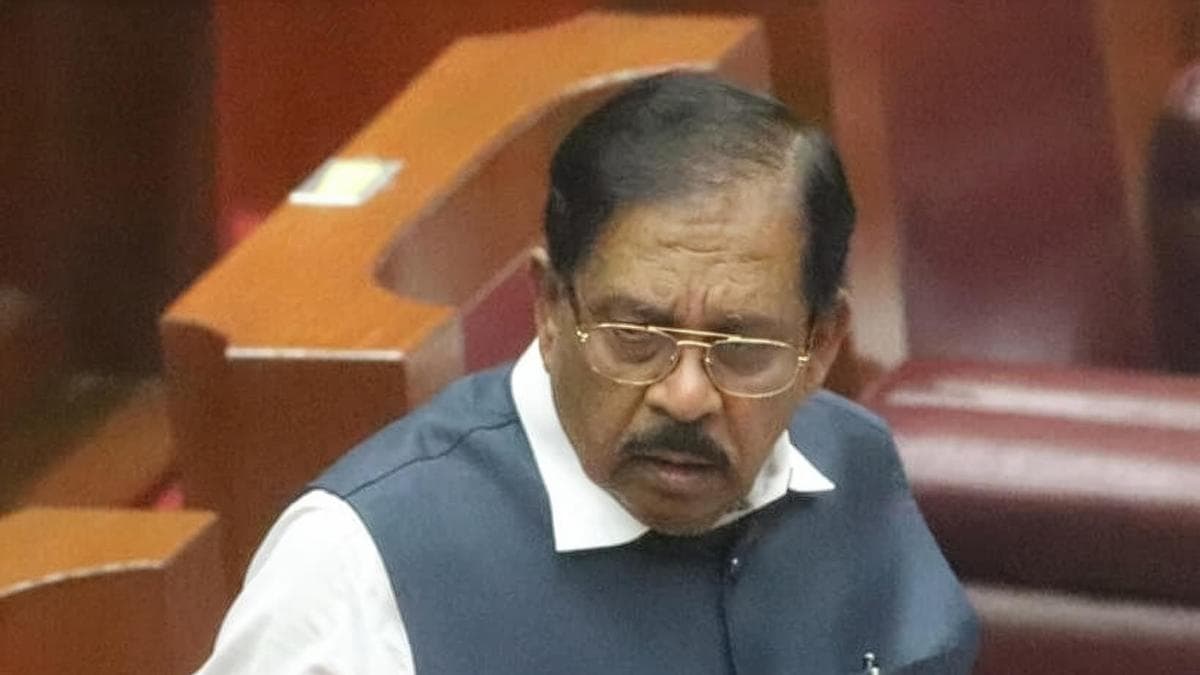
Legislative Assembly passes hate speech bill amid BJP protest over Byrathi Suresh's remark.
Summary
A Legislative Assembly passed a hate speech bill, a significant legislative action on a sensitive topic. The passage occurred amidst protests from BJP members, who also objected to a remark made by Byrathi Suresh concerning MLAs from coastal Karnataka. This event highlights the legislative process and political dynamics, making it relevant for understanding governance and legal developments for competitive exams.
Key Points
- 1A 'hate speech bill' was passed by a Legislative Assembly.
- 2The bill's passage occurred without discussion involving BJP members.
- 3BJP members protested against the bill and a remark made by Byrathi Suresh.
- 4Byrathi Suresh's controversial remark concerned 'MLAs from coastal Karnataka'.
- 5The legislative action reflects ongoing efforts to address hate speech through legal frameworks.
In-Depth Analysis
The passage of a 'hate speech bill' by a Legislative Assembly, amid protests from opposition BJP members, marks a significant development in India's ongoing struggle to balance freedom of speech with the need to maintain public order and social harmony. This event, characterized by procedural contention and specific political remarks, offers a rich case study for understanding legislative processes, constitutional principles, and the challenges of governance in a diverse democracy.
**Background Context and What Happened:**
India has witnessed a concerning rise in instances of hate speech, often fueled by communal tensions, political polarization, and the pervasive reach of social media. This phenomenon poses a direct threat to the country's secular fabric and democratic values. Existing laws, primarily under the Indian Penal Code (IPC), such as Sections 153A (promoting enmity between different groups on grounds of religion, race, place of birth, residence, language, etc., and doing acts prejudicial to maintenance of harmony), 295A (deliberate and malicious acts, intended to outrage religious feelings of any class by insulting its religion or religious beliefs), and 505 (statements conducing to public mischief), have been utilized to address hate speech. However, their enforcement has often been criticized for being inadequate, inconsistent, or even misused. This backdrop often prompts state governments to consider more specific legislation.
In the reported incident, a Legislative Assembly passed a hate speech bill. What is particularly noteworthy is the manner of its passage: without the involvement of BJP members in the discussion, leading to their protest. This procedural aspect is crucial as it underscores the importance of legislative debate and the role of the opposition in scrutinizing proposed laws. The BJP members also specifically protested a remark made by Byrathi Suresh concerning 'MLAs from coastal Karnataka,' indicating that the legislative action was intertwined with specific political statements and regional dynamics, potentially highlighting issues of regional representation or political targeting.
**Key Stakeholders Involved:**
* **The Legislative Assembly and the Ruling Party/State Government:** As the legislative body, they initiated and passed the bill, reflecting their commitment to curbing hate speech and potentially addressing specific social or political challenges within the state. Their actions demonstrate the state's power to legislate on subjects within the Concurrent List (Entry 1: Criminal Law, Entry 2: Criminal Procedure) and State List (Entry 1: Public Order, Entry 2: Police) of the Seventh Schedule.
* **BJP Members (Opposition):** Their protest against both the bill's passage without discussion and Byrathi Suresh's remark highlights their role as the opposition – to question the government's procedural conduct and specific policy decisions. This underscores the adversarial yet essential nature of parliamentary democracy.
* **Byrathi Suresh:** As the individual whose remark sparked controversy, he represents a political figure whose statements can significantly influence legislative proceedings and inter-party relations.
* **Citizens and Civil Society:** Ultimately, the law is intended to impact citizens. They are both potential victims of hate speech and subjects of the new law. Civil society organizations often play a crucial role in advocating for or against such legislation.
* **Judiciary:** The courts, particularly the High Court and Supreme Court, serve as potential arbiters if the new law is challenged on constitutional grounds, ensuring it adheres to fundamental rights.
**Significance for India and Constitutional Provisions:**
This development is highly significant for India. It brings to the forefront the delicate balance between **Article 19(1)(a)**, which guarantees freedom of speech and expression, and **Article 19(2)**, which permits the state to impose 'reasonable restrictions' on this freedom in the interests of, among other things, public order, decency, morality, and incitement to an offence. Any hate speech law must carefully navigate this constitutional tightrope, ensuring it does not become a tool for stifling legitimate dissent or criticism.
Historically, the Law Commission of India, in its 267th Report on Hate Speech (2017), recommended specific amendments to the IPC by inserting new sections like 153C and 505A to define and penalize hate speech more comprehensively. This shows a long-standing recognition of the gap in existing legislation. The passage of a state-level bill could be seen as a response to this perceived inadequacy and the Supreme Court's various observations on curbing hate speech.
**Future Implications:**
The immediate future will likely involve close scrutiny of the newly passed bill's provisions. Legal experts and civil liberties advocates will examine its definition of hate speech, the penalties prescribed, and the mechanisms for enforcement. There is a high probability that such a bill could face judicial challenges, with petitioners arguing that it is vague, overbroad, or infringes upon fundamental rights. The Supreme Court's previous rulings on free speech, such as *Shreya Singhal v. Union of India (2015)*, which struck down Section 66A of the IT Act, will serve as important precedents.
Furthermore, the successful implementation of such a law depends on fair and unbiased enforcement. The potential for misuse against political opponents or marginalized communities remains a concern. If effective, this state's initiative could set a precedent, encouraging other states to enact similar legislation, leading to a patchwork of hate speech laws across the country. Conversely, if it faces significant legal hurdles or proves ineffective, it could highlight the complexities of legislating on such a sensitive subject and prompt calls for a comprehensive central law.
This incident underscores broader themes of governance, federalism, the evolution of criminal law, and the continuous struggle to uphold constitutional values in the face of contemporary social challenges. It reinforces the dynamic nature of India's legal and political landscape.
Exam Tips
This topic falls under 'Indian Polity & Governance' (UPSC GS-II, State PSCs) and 'Current Affairs'. Focus on the Fundamental Rights (Article 19), Directive Principles of State Policy, Legislative Process, and the role of the Judiciary.
Study related topics like the powers of state legislatures (Seventh Schedule), the concept of 'reasonable restrictions' on fundamental rights, and the various sections of the IPC related to public order and communal harmony (e.g., 153A, 295A, 505).
Expect questions on the balance between freedom of speech and public order, the constitutional validity of hate speech laws, the role of opposition in legislative processes, and case studies related to free speech and its limitations. Be prepared for both objective and subjective questions.
Understand the difference between a state law and a central law on a subject like hate speech (which touches upon 'Criminal Law' in the Concurrent List). Analyze the implications of state-specific legislation versus a uniform national law.
Familiarize yourself with the recommendations of the Law Commission of India on hate speech and relevant Supreme Court judgments on freedom of speech, such as *Shreya Singhal v. Union of India*.
Related Topics to Study
Full Article
The members of the BJP were in a surprise as the Bill was passed, without them being able to join the discussion