



Relevant for Exams
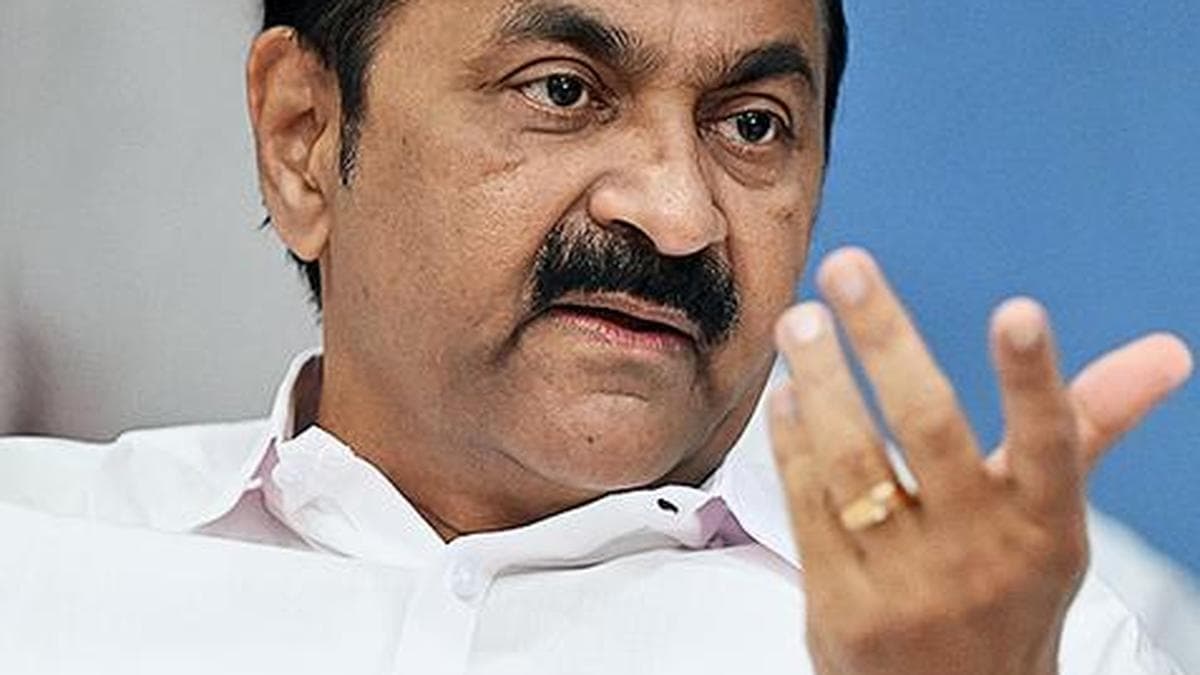
Kochi Mayor selection won't be based on caste/religion, says Satheesan amid UDF indecision.
Summary
Leader of Opposition V.D. Satheesan stated that the Kochi Mayor will not be chosen based on caste or religious equations, amidst reports of perceived indecision within the United Democratic Front (UDF). This development pertains to local body politics in Kochi, Kerala, and highlights the criteria for candidate selection within a major political front. It is primarily relevant for state-level competitive exams focusing on local governance and political affairs in Kerala.
Key Points
- 1V.D. Satheesan, the Leader of Opposition, made the statement regarding the Kochi Mayor selection.
- 2The statement pertained to the selection of the Mayor for Kochi city in Kerala.
- 3Satheesan affirmed that the selection would not be based on caste or religious equations.
- 4The political front involved in the mayoral candidate selection is the United Democratic Front (UDF).
- 5Deepthy Mary Varghese, V.K. Minimol, and Shiny Mathew are identified as top contenders for the Kochi Mayor post.
In-Depth Analysis
The statement by V.D. Satheesan, the Leader of Opposition in Kerala, asserting that the Kochi Mayor will not be chosen based on caste or religious equations, delves into the fundamental principles of Indian democracy, local self-governance, and the persistent challenge of identity politics. This seemingly localized political development in Kochi, Kerala, offers a rich lens through which to examine broader themes crucial for competitive exam aspirants.
**Background Context and What Happened:**
Local body elections in India form the bedrock of democratic decentralization. Mayoral positions, especially in major urban centers like Kochi, are critical as they head the Municipal Corporations responsible for urban planning, infrastructure, sanitation, and public services. The United Democratic Front (UDF), a prominent political coalition in Kerala, was reportedly facing indecision regarding its mayoral candidate for Kochi. This indecision likely stemmed from internal lobbying, calculations based on demographic representation, and the need to balance various factional interests. In this context, Satheesan's statement serves as an attempt to elevate the discourse, emphasizing merit and broader appeal over narrow identity-based considerations. He explicitly stated that the selection would not be based on caste or religious equations, amidst reports identifying Deepthy Mary Varghese, V.K. Minimol, and Shiny Mathew as top contenders.
**Key Stakeholders Involved:**
1. **V.D. Satheesan (Leader of Opposition, UDF):** As the Leader of Opposition, his statement carries significant weight. He is attempting to project the UDF as a progressive, inclusive front that prioritizes good governance over divisive identity politics. His role is to guide the party's narrative and strategy.
2. **United Democratic Front (UDF):** This major political coalition in Kerala, comprising various parties including the Indian National Congress, is the primary decision-maker. The internal deliberations highlight the complexities of coalition politics and candidate selection within a diverse political entity.
3. **Potential Mayoral Candidates:** Deepthy Mary Varghese, V.K. Minimol, and Shiny Mathew are the individuals whose aspirations are at stake. Their profiles, experience, and perceived ability to lead would ideally be the primary criteria, as advocated by Satheesan.
4. **Voters of Kochi:** The ultimate beneficiaries or sufferers of local governance. Their expectations include efficient administration, sustainable urban development, and representation that transcends narrow divisions.
5. **Other Political Parties (e.g., LDF, BJP):** These parties keenly observe the UDF's internal processes and public statements, ready to capitalize on any perceived missteps or inconsistencies.
**Why This Matters for India:**
This issue holds significant implications for India's political and social fabric. Firstly, it touches upon the **principle of secularism**, enshrined in the Preamble of the Indian Constitution. Satheesan's statement is an affirmation of this principle in candidate selection, advocating for a politics free from religious or caste-based discrimination. Secondly, it highlights the ongoing tension between **identity politics and meritocracy** in Indian elections. While caste and religion have historically played a significant role in electoral calculations, a growing aspiration exists for politics to move beyond these divisions towards performance and developmental agendas. Thirdly, it underscores the importance of **good governance at the local level**. A mayor chosen for their administrative capabilities and vision, rather than their identity, is crucial for the effective functioning of a metropolitan city like Kochi, which faces complex challenges related to urbanization, infrastructure, and environmental sustainability.
**Constitutional Provisions and Acts:**
This discussion directly relates to several constitutional tenets:
* **The Preamble:** Explicitly declares India a "Sovereign Socialist Secular Democratic Republic." Satheesan's statement aligns with the secular ideal.
* **Article 14 (Equality before law), Article 15 (Prohibition of discrimination on grounds of religion, race, caste, sex or place of birth), and Article 16 (Equality of opportunity in matters of public employment):** While these articles primarily apply to the State's actions, the spirit of non-discrimination is expected to permeate all political processes, including candidate selection by political parties, especially when seeking public office.
* **74th Constitutional Amendment Act, 1992:** This landmark amendment institutionalized Urban Local Bodies (ULBs) like Municipal Corporations. It mandated regular elections, defined their powers and responsibilities, and provided for reservations for Scheduled Castes (SCs), Scheduled Tribes (STs), and women (Article 243T). While the Constitution *mandates* reservations for certain disadvantaged groups, Satheesan's statement is about *not* using caste or religion as the primary *selection criterion* for a general seat or beyond these mandated reservations, promoting a broader, inclusive approach.
**Future Implications:**
If the UDF genuinely adheres to this stated principle, it could set a positive precedent for candidate selection in other local bodies and even state-level elections. It could strengthen the party's image as a progressive force and encourage other political entities to re-evaluate their own candidate selection processes. Conversely, if the selection ultimately reveals identity-based compromises, it could expose political hypocrisy and reinforce public cynicism. For Kochi, a mayor chosen purely on merit could potentially lead to more effective urban governance and development, fostering an environment where talent and vision are prioritized over traditional identity markers. This move, if successful, could signify an evolving phase in Indian politics, where performance and inclusive representation gain precedence over divisive identity politics.
Exam Tips
This topic falls under General Studies Paper II (Polity & Governance) for UPSC and State PSC exams. Focus on the 73rd and 74th Constitutional Amendment Acts, the role of Urban Local Bodies (ULBs), principles of decentralization, and electoral reforms.
Study related topics such as the functions and powers of a Mayor, the structure of Municipal Corporations, the financial autonomy of ULBs, and the role of the State Election Commission. Also, understand the debate around identity politics vs. developmental politics in India.
Expect questions on the constitutional provisions related to ULBs (e.g., 'Which articles deal with Municipalities?'), the process of mayoral elections (direct vs. indirect), challenges faced by urban governance, and the constitutional principles of secularism and equality in the context of political party functioning.
Be prepared for analytical questions that require you to link a specific event (like candidate selection criteria) to broader constitutional ideals and governance challenges. For instance, 'How does the selection of a Mayor reflect the principles of democratic decentralization and secularism in India?'
Related Topics to Study
Full Article
His statement comes in the wake of reports of perceived indecision over the UDF’s mayoral candidate in Kochi; three candidates — Deepthy Mary Varghese, V.K. Minimol, and Shiny Mathew — are seen as top contenders for the post