



Relevant for Exams
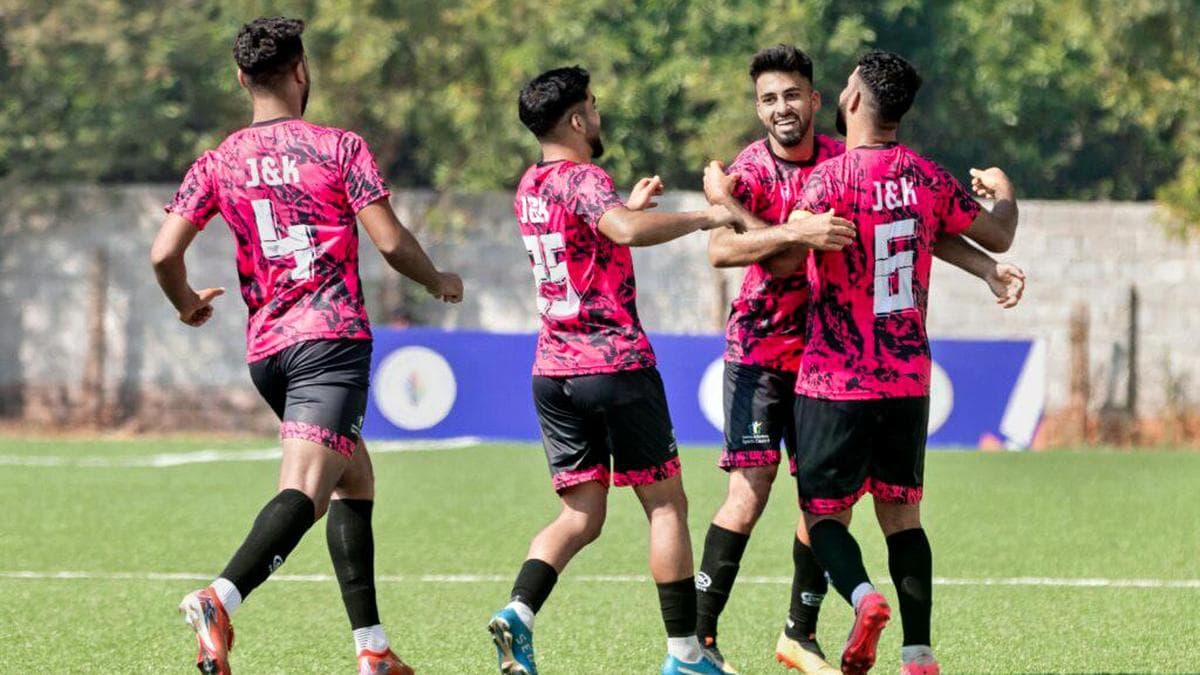
J&K forms panel to probe alleged discrimination in Santosh Trophy team selection after BJP's complaint.
Summary
The Jammu & Kashmir government has formed a panel to investigate alleged discrimination in the selection process for the Santosh Trophy football team. This inquiry was initiated after the BJP raised concerns about bias against players from the Jammu region. J&K Sports Minister Satish Sharma assured a time-bound and impartial probe, highlighting regional governance and fairness issues relevant for state-level competitive exams.
Key Points
- 1The Jammu & Kashmir (J&K) government has set up a panel to inquire into the team selection process.
- 2The inquiry specifically targets the selection process for the Santosh Trophy football team.
- 3Allegations of discrimination were made against the Jammu region during the selection process.
- 4The Bharatiya Janata Party (BJP) lodged the complaint regarding the alleged bias.
- 5J&K Sports Minister Satish Sharma assured a time-bound and impartial inquiry into the matter.
In-Depth Analysis
The news about the Jammu & Kashmir government establishing a panel to investigate alleged discrimination in the selection process for the Santosh Trophy football team brings to the forefront critical issues of regional balance, fair governance, and the practical application of fundamental rights in India. This incident, while seemingly confined to sports, carries significant implications for the delicate socio-political fabric of Jammu & Kashmir and sets precedents for transparency in public institutions.
**Background Context: The Santosh Trophy and J&K's Unique Dynamics**
The Santosh Trophy is one of India's premier football tournaments, featuring state teams and government institutions. It's a significant platform for aspiring footballers to showcase their talent and potentially move to professional leagues. For a region like Jammu & Kashmir, sports can be a powerful tool for youth engagement, development, and integration. However, J&K has historically been characterized by distinct regional identities – the Kashmir Valley, the Jammu region, and the Ladakh region (now a separate Union Territory). These regions have diverse linguistic, cultural, and political aspirations, often leading to allegations of bias or neglect from one region towards another, particularly in resource allocation, administrative appointments, and opportunities. The abrogation of Article 370 in August 2019 and the subsequent reorganisation of the state into two Union Territories (J&K and Ladakh) further intensified these regional dynamics, with both Jammu and Kashmir regions navigating a new political and administrative landscape.
**The Incident: Allegations and Inquiry**
The immediate trigger for the inquiry was a complaint lodged by the Bharatiya Janata Party (BJP), alleging discrimination against players from the Jammu region during the selection for the prestigious Santosh Trophy. This suggests a perceived imbalance in representation or unfair evaluation criteria that disadvantaged players from one specific geographical area within the Union Territory. The J&K Sports Minister, Satish Sharma, promptly assured a time-bound and impartial inquiry, signaling the government's commitment to addressing such grievances and ensuring fairness in public processes, especially in a sensitive sector like sports where youth aspirations are high.
**Key Stakeholders and Their Roles**
Several key stakeholders are involved. The **J&K Government**, through its Sports Ministry, is the primary authority responsible for governance and ensuring fair play. Its decision to form an inquiry panel demonstrates a commitment to accountability. The **Bharatiya Janata Party (BJP)**, as the complainant, plays a crucial role in bringing these allegations to light, acting as a political voice for the aggrieved region. The **Jammu & Kashmir Football Association (JKFA)**, the body responsible for organizing and overseeing football selections in the UT, is directly under scrutiny. Its procedures and practices will be the subject of the investigation. Most importantly, the **players from the Jammu and Kashmir regions** are at the heart of the matter, as their careers and aspirations are directly impacted by fair or unfair selection processes. Finally, the **All India Football Federation (AIFF)**, while not directly involved in the inquiry, provides the overarching framework and guidelines for state-level football associations, and its standards of governance would ideally be upheld.
**Why This Matters for India: Upholding Equality and Good Governance**
This incident is significant for India for several reasons. Firstly, it underscores the importance of **good governance**, transparency, and accountability in all public-facing institutions, including sports bodies. Allegations of discrimination, if proven true, erode public trust and fuel regional discontent. Secondly, it directly implicates fundamental constitutional principles. **Article 14** of the Indian Constitution guarantees equality before the law and equal protection of the laws. More specifically, **Article 15** prohibits discrimination on grounds of religion, race, caste, sex, or place of birth. While sports selection isn't public employment, the spirit of non-discrimination based on 'place of birth' (or region) is highly relevant here. Similarly, **Article 16**, which ensures equality of opportunity in matters of public employment, reinforces the broader principle of fairness in opportunities. In a multi-cultural and diverse country like India, ensuring regional balance and preventing discrimination is vital for national integration and social harmony, particularly in a politically sensitive region like J&K. The inquiry's outcome will reflect on the government's commitment to these constitutional values.
**Historical Context: J&K's Political Landscape**
The historical context of J&K is crucial. For decades, regional imbalances and perceptions of favoritism towards one region over another have been a recurring theme in J&K's politics. Post-Article 370 abrogation, the Union Territory administration has been keen to demonstrate equitable development and governance across all regions. Allegations of discrimination, therefore, pose a challenge to this narrative and highlight the continued need for vigilance against regional biases. The J&K Reorganisation Act, 2019, fundamentally altered the administrative structure, and ensuring fair practices across the new UT setup is paramount for its stability and progress.
**Future Implications**
The outcome of this inquiry will have several future implications. If discrimination is found, it could lead to significant reforms in the selection procedures of the J&K Football Association and potentially other sports bodies in the UT, emphasizing transparency, meritocracy, and unbiased evaluation. It could also set a precedent for how similar allegations of regional bias in other sectors are handled. Politically, a fair and impartial resolution will strengthen public trust in the administration and help mitigate regional grievances, contributing to greater stability in J&K. Conversely, a perceived whitewash could exacerbate regional tensions. This incident serves as a reminder that even in seemingly apolitical domains like sports, the principles of equality and justice must be rigorously upheld to foster a truly inclusive society.
Exam Tips
This topic falls under **Indian Polity & Governance** (UPSC GS-II, State PSCs) and **Current Affairs**. Focus on the institutional mechanisms for grievance redressal and the role of fundamental rights.
Study **Fundamental Rights**, especially Articles 14, 15, and 16, and their practical application in cases of alleged discrimination. Understand the concept of 'equality before law' and 'equal protection of laws'.
Prepare for questions on **regionalism and federalism** in India, particularly in the context of Jammu & Kashmir. Understand the historical and contemporary issues leading to regional disparities and demands for equitable treatment. Factual questions on the Santosh Trophy itself (its history, format) are also possible for SSC/Railway exams.
Related Topics to Study
Full Article
Sports Minister Satish Sharma assured a time-bound and impartial enquiry into the team selection after the BJP alleged discrimination against the Jammu region