



Relevant for Exams
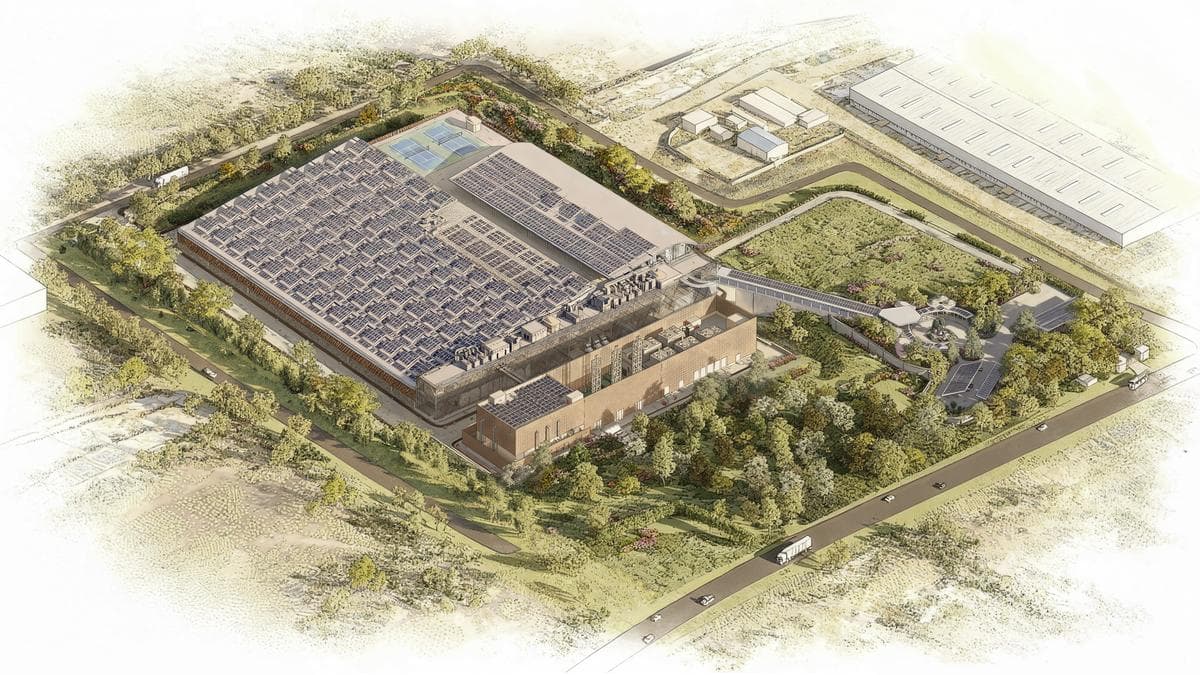
India's sustainable PCB factory in Sehore, MP, designed by Studio Saar, blends green design.
Summary
India is set to establish a sustainable Printed Circuit Board (PCB) factory in Sehore, Madhya Pradesh, designed by Studio Saar. This project is notable for its integration of passive design, rewilding, and regional architecture principles. The factory's development signifies a crucial step towards promoting green manufacturing practices and sustainable industrial growth within India, aligning with environmental conservation and regional economic development goals.
Key Points
- 1India's upcoming sustainable Printed Circuit Board (PCB) factory is located in Sehore, Madhya Pradesh.
- 2The factory's design has been developed by Studio Saar.
- 3The design incorporates principles of passive design for sustainability.
- 4Rewilding techniques are integrated into the factory's architectural plan.
- 5The factory's structure also blends elements of regional architecture.
In-Depth Analysis
The establishment of India's upcoming sustainable Printed Circuit Board (PCB) factory in Sehore, Madhya Pradesh, designed by Studio Saar, marks a pivotal moment in the nation's industrial and environmental journey. This project, which ingeniously blends passive design, rewilding, and regional architecture, is more than just a manufacturing unit; it's a blueprint for the future of green manufacturing in India.
**Background Context: The Imperative for Sustainable Electronics Manufacturing**
India's burgeoning economy and digitisation drive have led to an exponential increase in demand for electronics. This has historically resulted in significant import dependence and, more critically, a substantial environmental footprint from manufacturing processes. Traditional electronics manufacturing is energy-intensive, resource-depleting, and often generates hazardous waste. Globally, there's a growing consensus on the urgent need to transition towards sustainable industrial practices to combat climate change and resource scarcity. India, being a signatory to the Paris Agreement and committed to achieving Net Zero emissions by 2070, is actively seeking ways to decarbonise its industrial sector while simultaneously boosting domestic production under initiatives like 'Make in India' and 'Atmanirbhar Bharat'. The PCB, being the backbone of nearly all electronic devices, makes its sustainable production a critical component of this national strategy.
**The Sehore Project: A Blueprint for Green Industry**
Located in Sehore, Madhya Pradesh, this factory represents a significant stride towards integrating environmental consciousness with industrial growth. Studio Saar's design approach is multifaceted. 'Passive design' principles are employed to minimise energy consumption, utilising natural ventilation, daylighting, and thermal mass to regulate indoor temperatures, thereby reducing reliance on artificial heating and cooling. 'Rewilding' involves restoring an area to its natural uncultivated state, promoting biodiversity, and enhancing ecosystem services within the factory premises. This could include native plant species, water bodies, and green spaces that contribute to air quality improvement and microclimate regulation. The incorporation of 'regional architecture' ensures that the factory not only harmonises with its local environment but also potentially uses locally sourced materials and construction techniques, reducing embodied carbon and supporting local economies.
**Key Stakeholders and Their Roles**
The primary stakeholders include the manufacturing entity investing in the factory, which demonstrates a commitment to sustainable practices. Studio Saar, as the design firm, plays a crucial role in translating sustainability principles into tangible architectural and engineering solutions. The Government of Madhya Pradesh and local authorities are key in providing land, clearances, and fostering an enabling environment for such green industries. At the national level, ministries such as the Ministry of Electronics and Information Technology (MeitY) and the Ministry of Environment, Forest and Climate Change (MoEFCC) are instrumental in formulating policies (like the National Policy on Electronics, 2019) and regulations (like the E-Waste (Management) Rules, 2016) that encourage and govern such projects.
**Significance for India: A Multi-faceted Impact**
This project holds immense significance for India. Economically, it strengthens the domestic electronics manufacturing ecosystem, reducing reliance on imports and fostering job creation, aligning perfectly with the 'Make in India' and 'Atmanirbhar Bharat' visions. Environmentally, it serves as a model for green manufacturing, contributing to India's climate goals and Sustainable Development Goals (SDGs), particularly SDG 9 (Industry, Innovation, and Infrastructure), SDG 12 (Responsible Consumption and Production), and SDG 13 (Climate Action). By demonstrating that industrial growth can be achieved with minimal environmental impact, it encourages other industries to adopt similar sustainable practices. Socially, it promotes regional development in Sehore, bringing economic opportunities and potentially inspiring local skill development in green technologies.
**Historical Context and Policy Frameworks**
India's journey towards environmental protection gained significant momentum after the Bhopal Gas Tragedy in 1984, leading to the enactment of the Environment (Protection) Act, 1986. This act provides a comprehensive framework for environmental protection. Later, the National Green Tribunal Act, 2010, established a specialised body for expeditious disposal of environmental cases. On the electronics front, policies like the National Policy on Electronics (NPE) have been crucial in promoting domestic manufacturing. The Production Linked Incentive (PLI) Scheme, launched in 2020, further incentivises large-scale electronics manufacturing, including components like PCBs, by offering financial rewards. This factory is a tangible outcome of these converging policy efforts.
**Constitutional Provisions and Broader Themes**
Several constitutional provisions underpin India's commitment to environmental protection. Article 48A, a Directive Principle of State Policy, mandates the State to 'endeavour to protect and improve the environment and to safeguard the forests and wildlife of the country'. Furthermore, Article 51A(g), a Fundamental Duty, enjoins every citizen 'to protect and improve the natural environment including forests, lakes, rivers and wildlife, and to have compassion for living creatures'. This project aligns with these constitutional directives by promoting sustainable industrial development. It also connects to broader themes of good governance (through policy implementation), circular economy principles (through sustainable design), and global climate action.
**Future Implications: Paving the Way for a Green Industrial Revolution**
The Sehore PCB factory can serve as a lighthouse project, inspiring other manufacturing units across various sectors to adopt sustainable design and operational practices. Its success could lead to the replication of such models, accelerating India's transition towards a green industrial revolution. It will also contribute to India's energy efficiency targets outlined in the India Cooling Action Plan (ICAP) and its broader climate commitments. This factory exemplifies how technological innovation, coupled with environmental consciousness, can drive both economic prosperity and ecological well-being, paving the way for a more resilient and sustainable future for India's industrial landscape.
Exam Tips
This topic falls under GS Paper III (Economy, Environment & Ecology, Science & Technology) for UPSC CSE. Focus on the intersection of industrial policy, sustainable development, and environmental protection.
Study related government initiatives like 'Make in India', 'Atmanirbhar Bharat', Production Linked Incentive (PLI) Scheme for electronics, National Policy on Electronics, and E-Waste Management Rules. Also, understand the principles of green building and circular economy.
Common question patterns include: (a) Factual questions on location (Sehore, MP) or key design principles (passive design, rewilding). (b) Analytical questions on the significance of green manufacturing for India's economy and environment. (c) Policy-based questions asking about relevant constitutional articles (48A, 51A(g)) or environmental acts (Environment Protection Act, NGT Act).
Related Topics to Study
Full Article
The upcoming factory in Sehore, Madhya Pradesh, blends passive design, rewilding and regional architecture