



Relevant for Exams
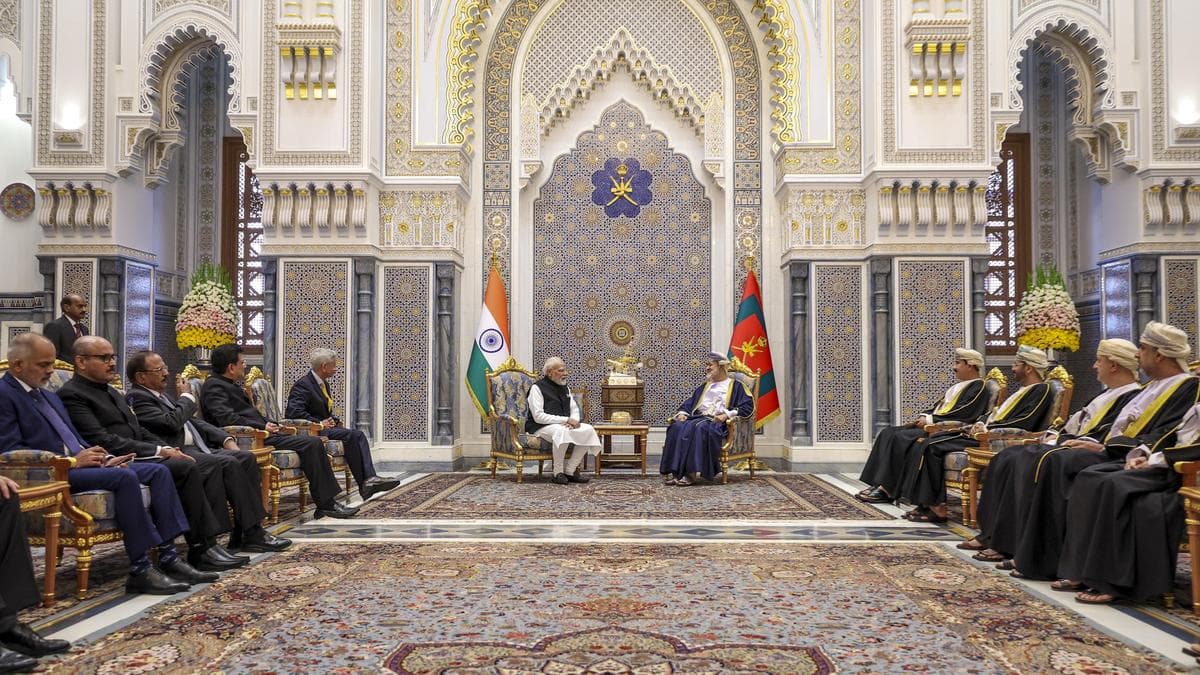
India signs FTA with Oman, securing zero-duty access for 99% of its exports.
Summary
India has signed a Free Trade Agreement (FTA) with Oman, which grants zero-duty access for 99% of its exports to the Gulf nation. This significant agreement aims to bolster bilateral trade relations and economic cooperation. In 2024-25, India's exports to Oman were $4.06 billion, while imports stood at $6.5 billion, making this FTA crucial for enhancing India's trade footprint in West Asia and diversifying its export markets.
Key Points
- 1India has signed a Free Trade Agreement (FTA) with Oman.
- 2The FTA provides India with zero-duty access on 99% of its exports to Oman.
- 3India's merchandise exports to Oman in 2024-25 totaled $4.06 billion.
- 4These exports constituted 0.93% of India's total exports in 2024-25.
- 5India's imports from Oman in 2024-25 amounted to $6.5 billion.
In-Depth Analysis
India's recent Free Trade Agreement (FTA) with Oman marks a significant milestone in its economic diplomacy and pursuit of global trade integration. This agreement, providing zero-duty access for 99% of India's exports to Oman, is not just a commercial pact; it's a strategic move reflecting India's 'Look West' policy and its broader ambition to diversify trade partnerships and strengthen its economic footprint in West Asia. To truly grasp its importance, let's delve into the layers of this development.
**Background Context: India's FTA Push and West Asia's Significance**
For years, India has been strategically pursuing Free Trade Agreements (FTAs) to boost its manufacturing sector, enhance export competitiveness, and integrate into global supply chains. This renewed focus on FTAs, often termed 'CEPA' (Comprehensive Economic Partnership Agreement) or 'ECTA' (Economic Cooperation and Trade Agreement), gained significant momentum post-pandemic. Recent successes include the India-UAE CEPA (signed February 2022) and the India-Australia ECTA (signed April 2022). The Gulf region, with its energy resources, strategic location, and significant Indian diaspora, has always been crucial for India. Oman, a stable and historically friendly nation in the Gulf Cooperation Council (GCC), presents a vital gateway to the broader West Asian and African markets. Negotiations for an FTA with Oman have been ongoing, reflecting a mutual desire to deepen economic ties beyond traditional energy trade.
**What Happened: A Gateway to Zero-Duty Access**
The signing of the FTA with Oman signifies a commitment from both nations to liberalize and facilitate trade. The core provision—zero-duty access for 99% of India's exports to Oman—is a game-changer. It means a vast array of Indian goods, from agricultural products and textiles to engineering goods and pharmaceuticals, will face no tariffs, making them more competitive in the Omani market. The reported trade figures for 2024-25 highlight the existing robust relationship: India exported $4.06 billion worth of merchandise to Oman (0.93% of India’s total exports) and imported $6.5 billion (0.91% of India’s total imports). While India currently runs a trade deficit with Oman, largely due to oil and gas imports, this FTA is expected to significantly narrow this gap by boosting Indian exports.
**Key Stakeholders Involved**
Several entities play crucial roles. The **Indian Ministry of Commerce & Industry**, led by the Union Minister, has been the primary driver from the Indian side, negotiating the terms and ensuring India's strategic interests are met. Similarly, the **Omani Ministry of Commerce, Industry and Investment Promotion** has represented Oman. **Indian businesses and exporters** are direct beneficiaries, gaining enhanced market access and cost advantages. This includes sectors like pharmaceuticals, textiles, machinery, electronics, and agricultural products. **Omani importers and consumers** will benefit from a wider variety of competitively priced Indian goods. Furthermore, the **Indian diaspora in Oman**, numbering over 600,000, acts as a crucial bridge for business and cultural exchange, fostering a conducive environment for such agreements.
**Why This Matters for India: Economic and Geopolitical Significance**
This FTA holds immense significance for India. Economically, it directly supports the **'Make in India' initiative** by providing a ready market for Indian manufactured goods. It will boost export growth, potentially creating jobs and contributing to India's GDP. By diversifying its export markets, India reduces its reliance on a few key destinations, enhancing economic resilience. Geopolitically, the agreement strengthens India's strategic partnership with Oman, a stable and influential player in the Gulf. This aligns with India's broader engagement in the region, including initiatives like the I2U2 (India, Israel, UAE, USA) and the proposed India-Middle East-Europe Economic Corridor (IMEC), which seeks to enhance connectivity. Oman is also a critical partner for India's energy security, and stronger economic ties can lead to greater collaboration in this vital sector.
**Historical Context and Future Implications**
India and Oman share a rich history of maritime trade and cultural exchange dating back millennia. This historical bond provides a strong foundation for contemporary economic cooperation. In modern times, India has consistently emphasized its 'Look West' policy, recognizing the strategic and economic importance of the Gulf. This FTA is a natural progression of these deep-rooted ties. Looking ahead, the FTA is expected to not only boost merchandise trade but also facilitate greater cooperation in services, investment, and technology transfer. It could pave the way for joint ventures, particularly in areas like renewable energy, infrastructure, and digital technologies. The agreement could also serve as a template for future FTAs with other GCC nations, contributing to India's ambition to become a $5 trillion economy by fostering robust international trade.
**Related Constitutional Articles, Acts, or Policies**
The power to enter into international treaties and agreements, including FTAs, rests with the executive branch of the Indian government. However, the implementation of such agreements often requires legislative action. **Article 253 of the Indian Constitution** grants Parliament the power to make any law for implementing any treaty, agreement, or convention with any other country or any decision made at any international conference, association, or other body. This article provides the constitutional basis for enacting domestic legislation to give effect to international trade agreements, for instance, by amending customs duties. The **Foreign Trade (Development and Regulation) Act, 1992**, provides the legal framework for India's foreign trade policy, while the **Customs Act, 1962**, governs the levy and collection of customs duties, which will be directly impacted by the zero-duty provisions of this FTA. This agreement also aligns with the broader objectives of India's **Foreign Policy**, which prioritizes economic diplomacy and strengthening bilateral relations with key global partners.
Exam Tips
This topic falls under GS Paper-III (Indian Economy and International Trade) and GS Paper-II (International Relations - Bilateral, Regional and Global Groupings and Agreements involving India and/or affecting India’s interests) for UPSC. For SSC/Banking/Railway exams, focus on direct facts like 'zero-duty access on X% of exports', 'trade figures', and 'signatory countries'.
When studying for UPSC, connect this FTA to India's broader trade policy, its 'Look West' strategy, energy security, and regional connectivity initiatives like I2U2 and IMEC. Understand the economic rationale behind FTAs (comparative advantage, market access, export promotion).
Common question patterns include: direct questions on the provisions and benefits of the India-Oman FTA; analytical questions on the significance of West Asia for India's economy and foreign policy; and comparative questions on India's various FTAs (e.g., with UAE, Australia, EFTA). Be prepared to discuss the pros and cons of FTAs in general.
Related Topics to Study
Full Article
India exported $4.06 billion worth of merchandise to Oman in 2024-25, which made up 0.93% of India’s total exports that year. It imported $6.5 billion worth of goods from Oman, comprising 0.91% of India’s total imports in 2024-25.