



Relevant for Exams
PM Modi: India-Oman Free Trade Pact to bring historic energy to bilateral ties.
Summary
Prime Minister Narendra Modi emphasized the transformative potential of the proposed India-Oman Free Trade Pact (FTA). He stated it would infuse new energy into bilateral relations and be a "historic decision" with long-term implications. This development is crucial for understanding India's economic diplomacy and strategic partnerships in the Middle East for competitive exams, highlighting deepening economic ties.
Key Points
- 1The news highlights a proposed Free Trade Pact (FTA) between India and Oman.
- 2Indian Prime Minister Narendra Modi made the statement regarding the pact's significance.
- 3PM Modi stated the FTA would give "new energy to bilateral relations" between the two countries.
- 4He described the upcoming agreement as a "historic decision" with an impact expected for "many decades to come."
- 5The statement underscores the strategic importance of strengthening economic ties between India and Oman.
In-Depth Analysis
Prime Minister Narendra Modi's statement regarding the proposed Free Trade Pact (FTA) with Oman signals a pivotal moment in India's engagement with the West Asian region. This isn't just about trade numbers; it's a strategic move designed to deepen economic integration, enhance energy security, and solidify India's geopolitical standing in the Indian Ocean region. The "new energy" PM Modi referred to underscores a comprehensive approach to bilateral relations, moving beyond traditional buyer-seller dynamics to a more intertwined partnership.
Historically, India and Oman share millennia-old ties rooted in maritime trade and cultural exchange. Evidence of this ancient connection can be found in archaeological discoveries and historical texts. Modern diplomatic relations were formally established in 1955, and since then, the relationship has evolved into a strategic partnership. Oman holds immense importance for India due to its strategic location at the mouth of the Strait of Hormuz, a critical global oil transit choke point. India's 'Look West' policy specifically targets strengthening ties with West Asian nations, with Oman being a cornerstone of this outreach. Bilateral trade has consistently been robust, exceeding $10 billion in recent years, demonstrating a strong foundation upon which an FTA can build.
An FTA typically involves reducing or eliminating tariffs and non-tariff barriers on a wide range of goods and services between signatory countries. For India, this means greater market access for its exports, including machinery, electronics, food products, and pharmaceuticals, into the Omani market. Conversely, India can benefit from easier access to Omani petrochemicals, fertilizers, and crude oil, which are crucial for its industrial and energy needs. The pact is also expected to facilitate investment flows, encouraging Omani sovereign wealth funds to invest in India's infrastructure, technology, and manufacturing sectors, while also providing opportunities for Indian companies to expand their footprint in Oman, particularly in the Duqm Special Economic Zone.
Key stakeholders in this proposed FTA include the respective governments of India and Oman, specifically their Ministries of Commerce and External Affairs. On the Indian side, businesses, particularly exporters, importers, and investors, stand to gain significantly from reduced trade barriers and enhanced market predictability. The vast Indian diaspora in Oman, which constitutes the largest expatriate community there, also forms an indirect but important stakeholder, as economic prosperity often translates into better opportunities and welfare for expatriates. For Oman, the FTA offers diversification of its economy away from hydrocarbons, attracting foreign investment, and gaining access to India's vast consumer market and skilled workforce. Given Oman's membership in the Gulf Cooperation Council (GCC), this bilateral agreement could also set a precedent or inform a broader India-GCC FTA, which is also under negotiation.
This FTA matters profoundly for India across multiple dimensions. Economically, it promises to boost bilateral trade and investment, creating jobs and fostering economic growth in both nations. Strategically, Oman's geographic position is vital for India's maritime security. Cooperation with Oman, including access to its ports like Duqm, enhances India's naval reach and surveillance capabilities in the Indian Ocean, aligning with India's 'Security and Growth for All in the Region' (SAGAR) vision. For energy security, a stronger relationship with Oman, a significant oil and gas producer, contributes to India's efforts to diversify its energy sources and ensure stable supplies, especially as India is the world's third-largest energy consumer. Politically, it strengthens India's influence and partnerships in a geopolitically crucial region, contributing to regional stability.
From a constitutional perspective, the power to enter into and implement such international treaties and agreements primarily rests with the Union Parliament. **Article 253** of the Indian Constitution specifically empowers Parliament to make laws for implementing any international treaty, agreement, or convention. This article, read with **Entry 14 of List I (Union List)** in the Seventh Schedule, which covers "Entering into treaties and agreements with foreign countries and implementing of treaties, agreements and conventions with foreign countries," provides the legal framework for ratifying and enacting an FTA. The Union Government's executive power, under **Article 73**, also extends to matters with respect to which Parliament has the power to make laws, including international agreements.
Looking ahead, the India-Oman FTA could serve as a template for India's engagement with other West Asian countries. It signifies a shift towards deeper economic integration and strategic alignment, moving beyond transactional relationships. Future implications include increased investment in infrastructure and logistics, greater people-to-people exchanges, and enhanced cooperation in defense and counter-terrorism. The 'historic decision' alluded to by PM Modi thus encapsulates a long-term vision for a robust, multi-faceted partnership that will undoubtedly shape India's foreign policy and economic trajectory for decades to come, reinforcing its role as a significant player in the global economic and geopolitical landscape.
Exam Tips
This topic falls under GS Paper-II (International Relations) and GS Paper-III (Indian Economy) for UPSC CSE. For SSC, Banking, Railway, and State PSC exams, it's relevant for General Awareness, Current Affairs, and International Organizations sections.
Study related topics such as India-GCC relations, India's energy security strategy, the geopolitics of the Indian Ocean, major international trade agreements (WTO, RCEP, etc.), and India's 'Look West' policy. Understand the difference between FTA, CEPA, and Customs Union.
Common question patterns include: MCQs on facts (e.g., 'Which two countries are negotiating a new FTA?', 'What is the strategic significance of Oman for India?'), and descriptive questions (for UPSC Mains) asking to analyze the economic and strategic implications of India's FTAs or its 'Look West' policy.
Pay attention to the specific constitutional articles (like Article 253) and policies (like Look West policy, SAGAR vision) mentioned, as they are frequently tested in competitive exams. Understand their implications for India's foreign policy and trade.
Related Topics to Study
Full Article
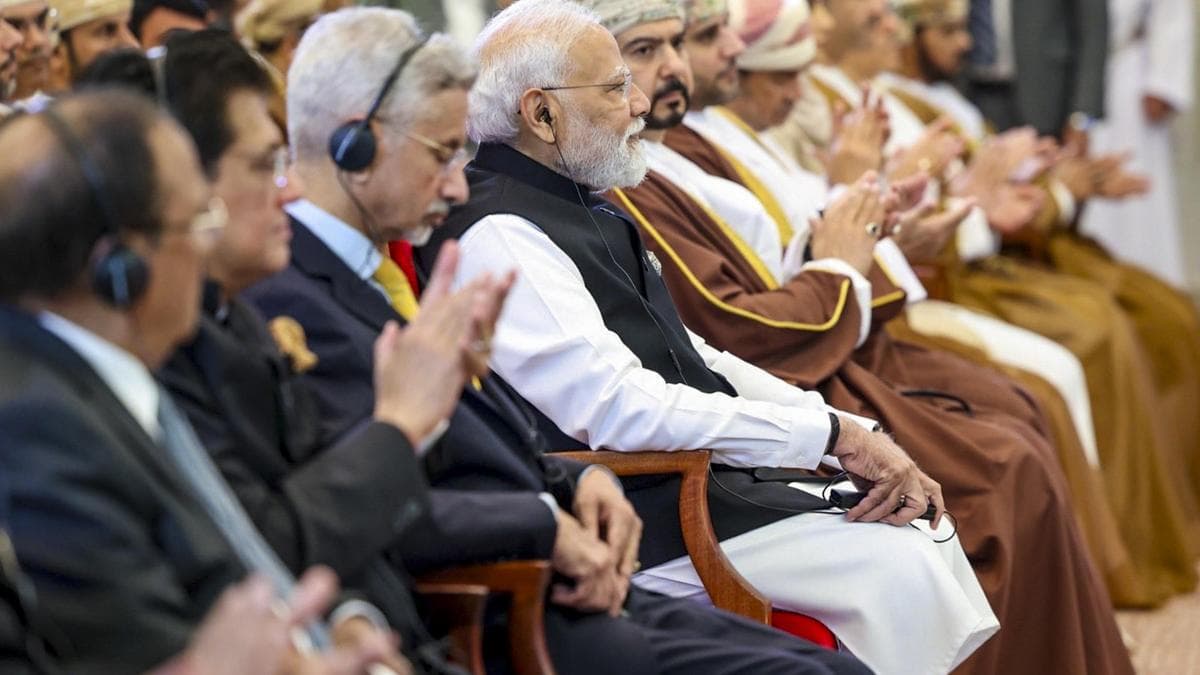
‘We are taking such a historic decision, the echo of which will be heard for many decades to come,’ said PM Modi