



Relevant for Exams
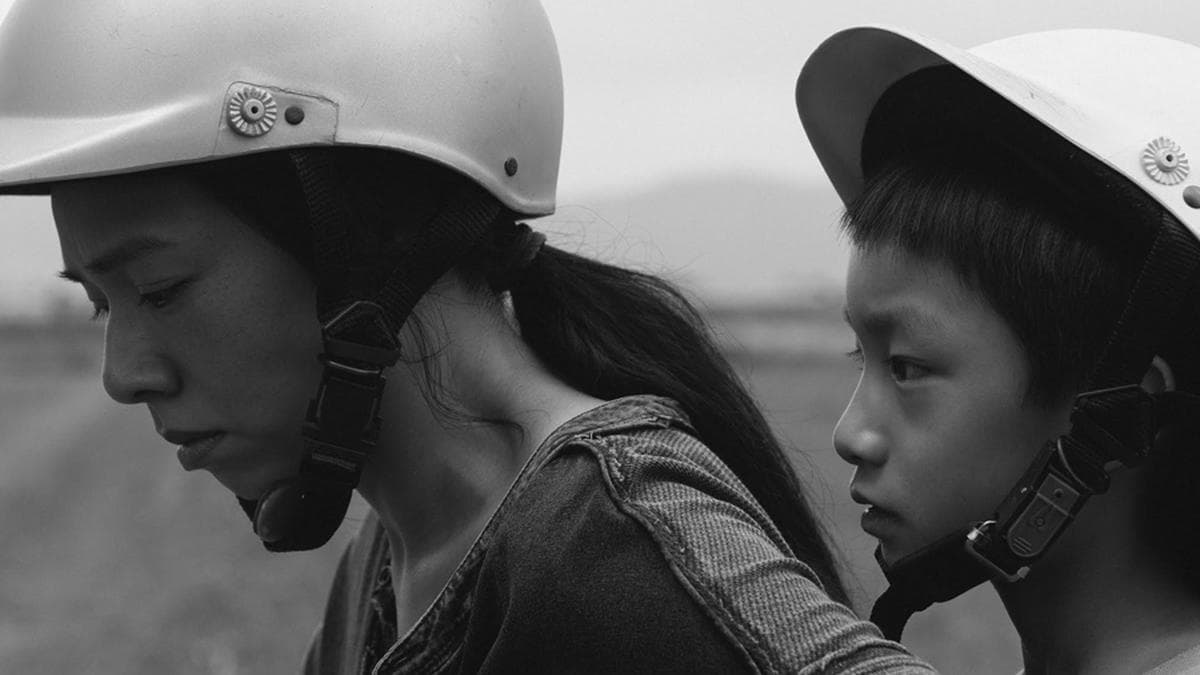
Taiwanese film "Yen and Ai-Lee" by Tom Shu-yu Lin screened at IFFK 2025, exploring abusive relationships.
Summary
The Taiwanese film "Yen and Ai-Lee," directed by Tom Shu-yu Lin, was featured at the International Film Festival of Kerala (IFFK) 2025. This black and white movie delves into the complex theme of individuals persisting in abusive relationships, despite the personal harm. While specific film plots are generally low relevance, IFFK is a significant cultural event, and knowing key films or directors from such festivals can be relevant for general awareness sections in competitive exams, especially state-level ones.
Key Points
- 1The film featured at IFFK 2025 is titled "Yen and Ai-Lee."
- 2"Yen and Ai-Lee" is a Taiwanese film.
- 3The director of "Yen and Ai-Lee" is Tom Shu-yu Lin.
- 4The film "Yen and Ai-Lee" is presented in black and white format.
- 5IFFK stands for the International Film Festival of Kerala.
In-Depth Analysis
The International Film Festival of Kerala (IFFK) 2025, featuring the Taiwanese film "Yen and Ai-Lee" directed by Tom Shu-yu Lin, serves as an excellent case study for understanding India's vibrant cultural landscape, its role in international cultural exchange, and the broader implications for competitive exam aspirants. While the specific plot of "Yen and Ai-Lee" — a black and white film exploring abusive relationships — might not be directly examinable, the festival itself and its significance are highly relevant.
**Background Context: India's Cultural Diplomacy and Film Festivals**
India, with its rich cultural heritage and a thriving film industry (often dubbed 'Bollywood' but encompassing diverse regional cinemas), has long recognized the power of cinema as a tool for cultural diplomacy and soft power. Film festivals like IFFK are crucial platforms in this endeavor. The International Film Festival of Kerala (IFFK), established in 1996, has grown to become one of India's most significant film festivals, celebrated for its focus on Asian, African, and Latin American cinema, as well as its strong emphasis on independent and art-house films. It is organized by the Kerala State Chalachitra Academy on behalf of the Department of Cultural Affairs, Government of Kerala. Its genesis lies in the state's deep appreciation for cinema and its commitment to fostering a progressive cultural environment.
**What Happened: A Glimpse into IFFK 2025**
The article highlights that the Taiwanese film "Yen and Ai-Lee" by Tom Shu-yu Lin was screened at IFFK 2025. The film's theme, though specific, underscores the festival's commitment to showcasing diverse narratives and thought-provoking content from around the globe. The selection of a Taiwanese film also reflects IFFK's international outlook and its role in bridging cultures. Such screenings provide Indian audiences with exposure to global cinematic trends and offer international filmmakers a platform in India.
**Key Stakeholders Involved**
Several key stakeholders are involved in the success and impact of events like IFFK. Foremost are the **Government of Kerala** and the **Kerala State Chalachitra Academy**, which provide the organizational and financial backbone. **Filmmakers**, both Indian and international (like Tom Shu-yu Lin from Taiwan), are central figures, bringing their artistic visions to the festival. The **audience** – film enthusiasts, critics, and students – forms the vibrant community that engages with the cinema. Beyond this, the **Ministry of Information & Broadcasting, Government of India**, plays an overarching role in film policy and cultural promotion. International cultural bodies and embassies also act as facilitators for cross-border film exchanges.
**Why This Matters for India: Soft Power, Economy, and Culture**
1. **Cultural Diplomacy and Soft Power:** Festivals like IFFK are prime examples of India's soft power projection. By hosting international films and filmmakers, India showcases its openness, cultural vibrancy, and ability to engage with global narratives. This aligns with India's foreign policy objective of promoting international understanding and goodwill, as enshrined in **Article 51** of the Constitution, which directs the State to 'foster respect for international law and treaty obligations' and 'encourage settlement of international disputes by arbitration'. While not directly a treaty, cultural exchange contributes to this spirit of global cooperation.
2. **Economic Impact:** IFFK boosts local tourism and the hospitality sector in Kerala, generating revenue and employment. It positions Kerala as a cultural hub, attracting visitors and investment related to arts and entertainment.
3. **Promotion of Art and Culture:** These festivals nurture film appreciation, expose local filmmakers to global trends, and encourage discussions on significant social themes, thereby enriching India's cultural fabric. They provide a vital platform for independent and regional cinema, often overlooked by mainstream commercial ventures.
4. **International Relations:** Showcasing films from diverse nations, including those with whom India shares complex diplomatic relations (like Taiwan, with whom India does not have formal diplomatic ties due to the 'One China' policy but maintains robust cultural and economic engagement), helps in building people-to-people connections and fostering mutual understanding.
**Historical Context and Broader Themes**
India has a long history of cinema, dating back to the late 19th century. Post-independence, cinema became a powerful tool for nation-building and social commentary. The establishment of institutions like the National Film Development Corporation (NFDC) in 1975 and prominent festivals like the International Film Festival of India (IFFI) in Goa (which began in 1952) underscores the government's commitment to promoting quality cinema. The **Cinematograph Act, 1952**, and its subsequent amendments, govern film exhibition and certification, highlighting the regulatory framework for cinema in India. IFFK, in this historical trajectory, represents the decentralization of cultural initiatives and the rise of regional cultural powerhouses.
**Future Implications**
The continued success and growth of IFFK suggest a promising future for cultural exchange and the independent film circuit in India. It is likely to further cement Kerala's reputation as a global cultural destination. Such festivals will continue to provide critical platforms for emerging filmmakers, foster international collaborations, and contribute to a more nuanced understanding of global issues through the medium of cinema. For India, this means a stronger soft power presence on the global stage, richer cultural dialogues, and continued growth in its diverse film industry.
Exam Tips
This topic falls under the 'Art & Culture' and 'Current Affairs (National & International)' sections of the UPSC Civil Services Exam (Prelims & Mains GS Paper I), State PSCs, and SSC exams. Be prepared for questions on major film festivals in India (IFFK, IFFI Goa, MAMI), their locations, founding years, and significant awards.
Study related topics like India's cultural diplomacy, soft power initiatives, the role of government bodies like the Ministry of Information & Broadcasting, NFDC, and the Kerala State Chalachitra Academy. Also, be aware of significant international film festivals (Cannes, Berlin, Venice) and their importance.
Common question patterns include direct factual questions (e.g., 'IFFK is held in which state?', 'Which body organizes IFFK?'), questions linking cultural events to India's soft power, or questions about prominent films/directors that win major awards at these festivals (though the film's plot itself is less important than its recognition).
Understand the constitutional provisions related to culture and international relations, such as Article 51 (Promotion of international peace and security) and the Directive Principles of State Policy (DPSP) concerning the promotion of art and culture, as these provide the broader framework for such events.
Related Topics to Study
Full Article
The black and white film directed by Tom Shu-yu Lin explores people’s tendency to pursue abusive relationships and stay in them, despite it hurting them and affecting their personal relationships