



Relevant for Exams
Aravalli protection: key to preventing desertification; uniform definition, CEC, and SC mining bans crucial.
Summary
The Aravalli range's protection is crucial for India's environmental security, as it prevents the desertification of the Indo-Gangetic plain. The article delves into recommendations by the Central Empowered Committee and the necessity of a uniform definition for the Aravalli hills, highlighting the Supreme Court's role in regulating mining. This topic is vital for competitive exams, covering environmental geography, legal provisions, and conservation efforts.
Key Points
- 1The Aravalli Range is one of the oldest fold mountain systems, extending approximately 692 km from Gujarat to Delhi.
- 2It acts as a critical natural barrier, preventing the eastward spread of the Thar Desert into the fertile Indo-Gangetic Plains.
- 3The Central Empowered Committee (CEC) was constituted by the Supreme Court in 2002 to monitor environmental protection and forest conservation.
- 4A uniform definition of 'Aravalli hills' and 'forest' is essential for effective conservation and to curb illegal mining and encroachment.
- 5The Supreme Court has issued various directives and bans on illegal mining activities in the Aravalli region, particularly in states like Haryana and Rajasthan.
In-Depth Analysis
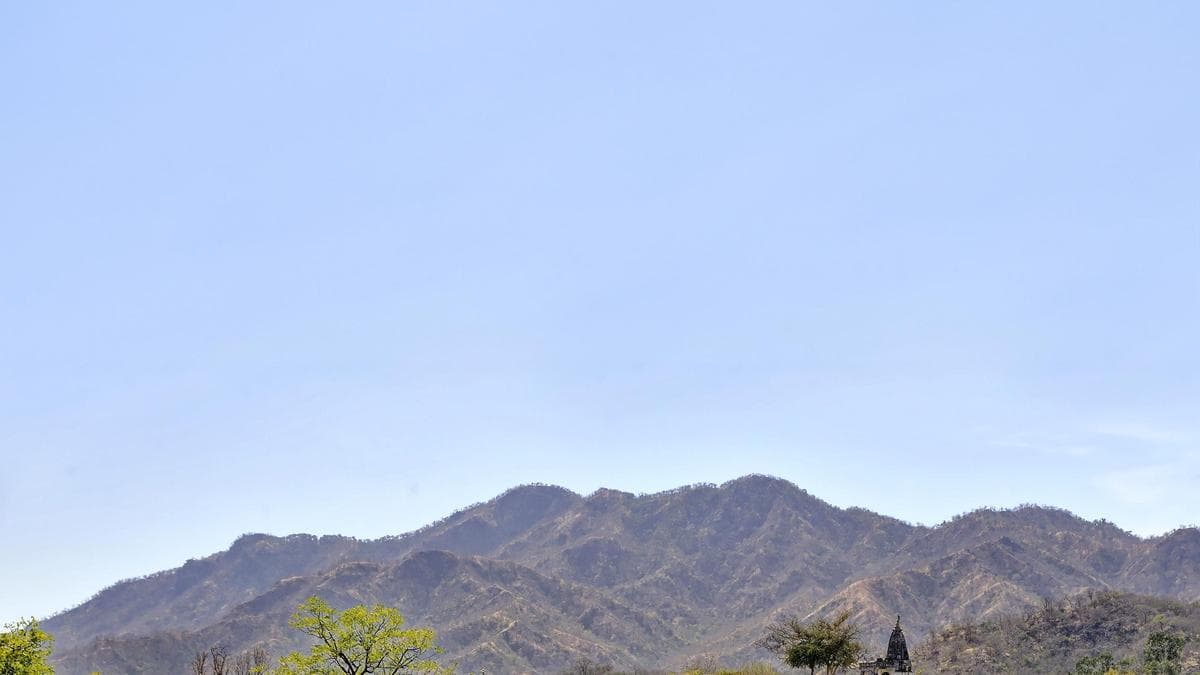
The Aravalli Range, one of the world's oldest fold mountain systems, stands as a silent sentinel guarding India's environmental security. Stretching approximately 692 kilometers from Gujarat, through Rajasthan and Haryana, to Delhi, this ancient range plays a pivotal role in preventing the eastward march of the Thar Desert into the fertile Indo-Gangetic Plains. Its protection is not merely an environmental concern but a critical aspect of India's long-term agricultural productivity, water security, and ecological balance.
Historically, the Aravallis have been a source of minerals, leading to extensive mining activities for decades. However, unchecked and often illegal mining, coupled with encroachment for urbanization and infrastructure projects, has severely degraded the range. This degradation threatens its ecological functions, including groundwater recharge, biodiversity conservation, and its crucial role as a climate regulator. The depletion of the Aravalli's green cover and geological structure exacerbates the risk of desertification, impacting the livelihoods of millions dependent on the agricultural bounty of the plains.
The urgency of protecting the Aravallis gained significant judicial attention, culminating in various interventions by the Supreme Court of India. A key development was the constitution of the Central Empowered Committee (CEC) in 2002. The CEC, established by the Supreme Court, serves as a watchdog, monitoring the implementation of environmental laws and forest conservation efforts across the country. In the context of the Aravallis, the CEC highlighted the rampant illegal mining and encroachment, recommending stringent measures to curb these activities. A major challenge identified by the CEC and subsequently reiterated by the Supreme Court was the lack of a uniform and clear definition of 'Aravalli hills' and 'forest land' across the states. This ambiguity created loopholes that allowed illegal activities to thrive, as authorities struggled to enforce protection measures on areas not explicitly classified as protected.
Key stakeholders in this complex issue include the Central Government (Ministry of Environment, Forest and Climate Change - MoEFCC), the state governments of Rajasthan, Haryana, Gujarat, and Delhi, which administer different sections of the range, local communities whose livelihoods are intertwined with the Aravallis, mining companies, real estate developers, and environmental activists and NGOs. The Supreme Court and the National Green Tribunal (NGT) also act as crucial judicial stakeholders, issuing directives and judgments to enforce environmental laws. Local communities often face a dilemma between immediate economic gains from mining or development and the long-term ecological benefits of conservation.
The significance of the Aravalli protection for India is multi-faceted. Environmentally, it is indispensable for preventing desertification, maintaining groundwater levels, and preserving a unique biodiversity hotspot. Economically, its degradation directly impacts agriculture in the Indo-Gangetic plains, potentially leading to food insecurity. The Aravallis also contribute to regional climate regulation, influencing monsoon patterns. Socially, the health and well-being of communities residing near mining areas are severely affected by pollution and resource depletion. The issue also touches upon governance, highlighting challenges in inter-state coordination and effective enforcement of environmental regulations.
Constitutional provisions underpin the efforts to protect the Aravallis. Article 48A of the Directive Principles of State Policy mandates that 'The State shall endeavor to protect and improve the environment and to safeguard the forests and wildlife of the country.' Furthermore, Article 51A(g) lists it as a Fundamental Duty of every citizen 'to protect and improve the natural environment including forests, lakes, rivers and wildlife, and to have compassion for living creatures.' These articles provide the constitutional mandate for legislative actions like the Forest Conservation Act, 1980, and the Environment Protection Act, 1986, which are crucial tools in the legal battle to save the Aravallis. The Supreme Court's consistent interventions reflect judicial activism aimed at upholding these constitutional principles.
The future implications are profound. A clear, uniform definition of the Aravalli region, coupled with robust enforcement mechanisms, could lead to more effective conservation. This includes stricter bans on illegal mining, reforestation efforts, and sustainable land-use planning. The ongoing legal battles and the push for a precise definition underscore a broader theme of balancing development with environmental sustainability. The success or failure in protecting the Aravallis will set a precedent for environmental governance in other ecologically sensitive regions of India, influencing policy decisions on resource management, climate change adaptation, and biodiversity conservation for generations to come. It's a test case for India's commitment to sustainable development and its ability to safeguard its natural heritage against relentless anthropogenic pressures.
Exam Tips
This topic falls under GS Paper I (Geography - Physical Geography of India, Environmental Geography) and GS Paper III (Environment & Ecology - Conservation, Environmental Pollution & Degradation, Environmental Impact Assessment).
Familiarize yourself with the geographical extent of the Aravallis, its ecological role (especially regarding desertification), and the specific states it covers. Understand the legal framework, including the Forest Conservation Act, 1980, Environment Protection Act, 1986, and relevant Supreme Court judgments.
Common question patterns include: direct questions on the Aravalli's importance, challenges to its conservation, the role of the Supreme Court/CEC, and policy implications. Also, be prepared for analytical questions linking Aravalli degradation to desertification, water scarcity, and sustainable development.
Pay attention to the constitutional articles (48A, 51A(g)) and their significance in environmental protection. Questions might ask about the constitutional basis for environmental laws or the role of DPSP and Fundamental Duties.
Be ready to discuss the conflict between economic development (mining, urbanization) and environmental conservation, offering balanced arguments and potential solutions like sustainable mining practices or eco-tourism.
Related Topics to Study
Full Article
How do the Aravalli hills and ranges prevent the desertification of the Indo-Gangetic plain? What were the recommendations of the Central Empowered Committee? Why was it necessary to arrive at a uniform definition of the Aravalli hills? Has the Supreme Court completely banned mining in the ranges?