



Relevant for Exams
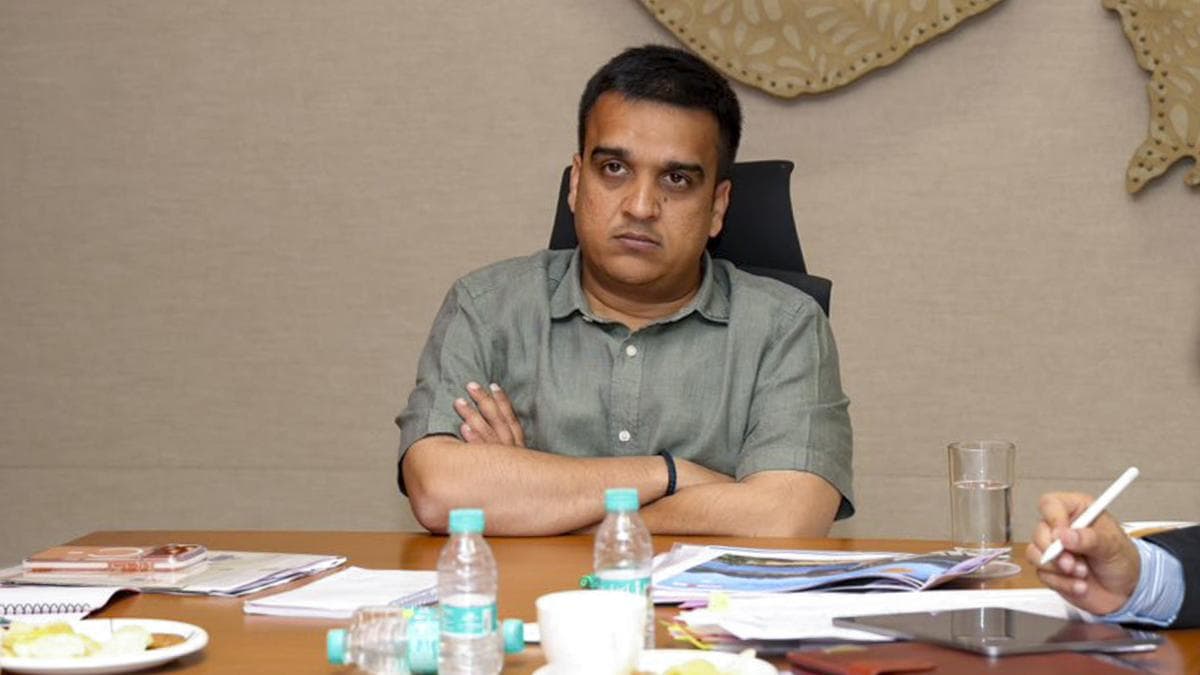
Gujarat Dy CM Harsh Sanghavi launches Ahmedabad Rural Police projects: ADR-Shield, Blue Circuit, Abhayyatri.
Summary
Gujarat Deputy CM and Home Minister Harsh Sanghavi inaugurated several key projects for Ahmedabad Rural Police, including ADR-Shield, Blue Circuit, and Abhayyatri. These initiatives aim to bolster law enforcement infrastructure and enhance public safety in the region. This development is significant for understanding state-level administrative actions and police modernization efforts, particularly for State PSC exams.
Key Points
- 1Gujarat Deputy CM and Home Minister Harsh Sanghavi inaugurated the projects.
- 2The inauguration event took place for the Ahmedabad Rural Police.
- 3One of the key projects launched was named ADR-Shield.
- 4The Blue Circuit project was also among the inaugurated initiatives.
- 5The Abhayyatri project and the office of the Aslali Divisional Police Officer were also inaugurated.
In-Depth Analysis
The inauguration of several key projects by Gujarat Deputy Chief Minister and Home Minister Harsh Sanghavi for the Ahmedabad Rural Police marks a significant step in the ongoing efforts towards police modernization and strengthening law enforcement at the state level. This event, featuring the launch of initiatives like ADR-Shield, Blue Circuit, Abhayyatri, and a new Divisional Police Officer's office in Aslali, underscores a proactive approach to addressing contemporary policing challenges and enhancing public safety.
**Background Context and What Happened:**
Historically, policing in India has been a complex domain, often grappling with issues inherited from its colonial past, such as an emphasis on order maintenance rather than community policing, resource constraints, and an image deficit. In recent decades, there has been a growing recognition of the need for comprehensive police reforms, driven by various commissions and judicial pronouncements. The current initiatives in Ahmedabad Rural are a manifestation of this broader reform agenda at the state level. While specific details of each project (ADR-Shield, Blue Circuit, Abhayyatri) are not fully elaborated in the summary, their names suggest a focus on technological integration, improved response mechanisms, and enhanced safety for specific vulnerable groups. For instance, 'ADR-Shield' could imply a system for Alternative Dispute Resolution or advanced digital record-keeping and data analysis for crime prevention. 'Blue Circuit' might refer to a sophisticated surveillance network or enhanced patrolling routes, leveraging GPS and communication technologies. 'Abhayyatri' likely points towards initiatives aimed at ensuring the safety of commuters, particularly women, in public transport or public spaces, possibly involving panic buttons, dedicated helplines, or increased police presence. The establishment of a new Divisional Police Officer's office signifies an expansion of administrative infrastructure, aiming to bring police services closer to the populace and improve local oversight.
**Key Stakeholders Involved:**
The primary stakeholders in this development are the **Gujarat Government**, particularly the **Home Department** led by Deputy CM Harsh Sanghavi, which conceptualizes, funds, and oversees these projects. The **Gujarat Police**, specifically the **Ahmedabad Rural Police**, are the direct implementers and beneficiaries, as these projects aim to equip them with better tools and infrastructure. Ultimately, the **citizens of Ahmedabad Rural** are the end-beneficiaries, experiencing improved law and order, quicker response times, and enhanced safety. Additionally, **technology providers and private sector entities** might be indirect stakeholders, involved in developing and supplying the technological components of these modern policing solutions.
**Significance for India and Broader Themes:**
This development is highly significant for India, especially in the context of **internal security, governance, and federalism**. Police and public order fall under Entry 2 of the State List in the Seventh Schedule of the Indian Constitution (Article 246), granting states significant autonomy in managing their police forces. Gujarat's initiatives align with national goals of 'Smart Policing' (SMART: Sensitive, Modern, Alert, Reliable, Tech-savvy), a concept advocated by Prime Minister Narendra Modi. These projects contribute to strengthening the state's capacity to maintain law and order, which is crucial for economic development and social stability. By leveraging technology and improving infrastructure, states can enhance their ability to combat crime, including emerging forms like cybercrime, and improve citizen-police interactions. This also sets a precedent for other states to emulate similar modernizing efforts, fostering a competitive spirit in good governance practices across the country.
**Historical Context and Future Implications:**
The push for police modernization traces back to various committees and commissions, such as the National Police Commission (1977-81) and the Padmanabhaiah Committee (2000), which highlighted systemic deficiencies and recommended reforms. The landmark 2006 Supreme Court judgment in **Prakash Singh v. Union of India** further mandated specific reforms to insulate the police from undue political interference and enhance accountability and efficiency. Gujarat's projects, while specific to a region, are a continuation of this national reform narrative. Looking ahead, the successful implementation of these projects could lead to a reduction in crime rates, faster resolution of cases, and increased public trust in the police force. It also signals a move towards more data-driven and technology-enabled policing, which is essential in an increasingly digitized society. The challenge, however, will lie in sustained funding, effective training of personnel, and continuous evaluation to ensure these initiatives remain relevant and effective in the long term. Replication of such models across other rural and urban areas within Gujarat and in other states would be a positive future implication, contributing to a more secure and well-governed nation.
**Related Constitutional Articles, Acts, or Policies:**
1. **Seventh Schedule, State List, Entry 2:** Explicitly places 'Police' and 'Public Order' under the legislative and executive domain of the state governments.
2. **Article 246:** Defines the subject matters on which the Parliament and State Legislatures can make laws, reinforcing the state's role in policing.
3. **Police Act, 1861:** The central legislation governing police forces in India, though many states have enacted their own Police Acts (e.g., Gujarat Police Act) to modernize and localize police administration.
4. **Code of Criminal Procedure (CrPC), 1973 & Indian Penal Code (IPC), 1860:** These are the primary legal frameworks within which the police operate, defining their powers, duties, and the procedures for investigation and prosecution.
5. **Directive Principles of State Policy (DPSP):** While not directly enforceable, principles like Article 38 (to secure a social order for the promotion of welfare of the people) and Article 39A (equal justice and free legal aid) underscore the broader objectives that police reforms aim to achieve by ensuring fair and effective law enforcement for all citizens.
Exam Tips
This topic falls under 'Indian Polity & Governance' and 'Internal Security' for UPSC Civil Services Exam (Mains GS-II & GS-III) and 'State Administration' for State Public Service Commission exams. For SSC/Railway exams, focus on general awareness about police modernization and the role of the Home Ministry.
Study related topics like 'Police Reforms in India' (e.g., Prakash Singh judgment, various police commissions), 'Smart Policing (SMART) initiatives', 'Centre-State relations concerning law and order', and 'E-Governance in public services'.
Common question patterns include: Direct questions on constitutional provisions related to police, conceptual questions on the need for police modernization and challenges, or scenario-based questions on the role of state governments in maintaining law and order and leveraging technology for public safety.
Related Topics to Study
Full Article
Also the Home Minister of Gujarat, Harsh Sanghavi inaugurated ADR-Shield, Blue Circuit project, Abhayyatri project, and the office of the Aslali Divisional Police Officer