



Relevant for Exams
Delhi enforces GRAP-IV: No fuel without PUC, 50% WFH mandatory from Dec 18 to combat pollution.
Summary
Delhi implemented stringent GRAP-IV anti-pollution measures starting December 18, mandating that vehicles without a valid Pollution Under Control (PUC) certificate cannot refuel at petrol pumps. Additionally, all private and government offices in the capital must enforce a mandatory 50% work-from-home policy. These tough steps are critical for combating severe air pollution in Delhi and demonstrate a significant governmental response to environmental challenges, making them highly relevant for competitive exam preparation on environmental policies and governance.
Key Points
- 1GRAP-IV (Graded Response Action Plan Stage IV) measures were implemented in Delhi.
- 2The toughest anti-pollution measures under GRAP-IV commenced on Thursday, December 18.
- 3Vehicles without a valid Pollution Under Control (PUC) certificate are prohibited from refueling at petrol pumps in Delhi.
- 4All private and government offices in Delhi are mandated to follow a 50% work-from-home policy.
- 5GRAP-IV represents the most severe stage of anti-pollution measures to tackle critical air quality levels in the Capital.
In-Depth Analysis
Delhi's perpetual struggle with severe air pollution has reached critical levels, leading to the frequent activation of the Graded Response Action Plan (GRAP). The implementation of GRAP-IV, the most stringent stage, on December 18, signifies a drastic governmental response to an alarming public health crisis. This stage mandates tough measures like prohibiting vehicles without a valid Pollution Under Control (PUC) certificate from refueling and enforcing a 50% work-from-home policy for all offices, underscoring the severity of the situation.
**Background Context and Historical Perspective:**
Delhi's air quality typically deteriorates significantly during the winter months, a phenomenon exacerbated by a combination of meteorological factors, geographical conditions, and anthropogenic activities. Stubble burning in neighboring states (Punjab, Haryana, Uttar Pradesh), vehicular emissions, industrial pollution, construction dust, and domestic burning contribute to a toxic cocktail of pollutants, primarily PM2.5 and PM10. The problem isn't new; it has been a recurring concern for decades, prompting numerous interventions. The Air (Prevention and Control of Pollution) Act, 1981, was one of the earliest legislative attempts to address air quality. However, the complexity and scale of Delhi's pollution necessitated more dynamic and coordinated efforts. The Supreme Court of India has played a pivotal role, consistently intervening and issuing directives to various governmental bodies to tackle this issue. This judicial activism eventually led to the formulation of GRAP in 2017, a set of emergency measures categorized into four stages based on the Air Quality Index (AQI).
**What Happened (GRAP-IV Implementation):**
GRAP-IV is triggered when the AQI crosses the 'severe plus' category, indicating a public health emergency. The measures implemented on December 18, 2023, were designed to drastically reduce emissions. The prohibition on refueling vehicles without a valid PUC certificate directly targets vehicular pollution, a major contributor. A PUC certificate ensures that a vehicle's emissions are within prescribed limits. The 50% work-from-home mandate for both private and government offices aims to reduce the number of vehicles on the road, thereby curbing traffic congestion and associated emissions. Other measures under GRAP-IV often include banning construction activities, entry of non-essential trucks, and even odd-even schemes, though the immediate focus was on PUC and WFH.
**Key Stakeholders Involved:**
Numerous entities are involved in combating Delhi's air pollution. The **Commission for Air Quality Management in National Capital Region and Adjoining Areas (CAQM)**, established by an Act of Parliament in 2021, is the primary body responsible for planning, executing, and monitoring measures to improve air quality in the NCR. It replaced the Environment Pollution (Prevention & Control) Authority (EPCA). The **Central Pollution Control Board (CPCB)** provides technical guidance and monitors air quality. The **Delhi Government** (through its Environment Department and Delhi Pollution Control Committee - DPCC) is responsible for local implementation. **Neighboring state governments** (Punjab, Haryana, UP, Rajasthan) are crucial due to the transboundary nature of pollution, especially stubble burning. **Citizens**, as commuters and consumers, are direct stakeholders, affected by and contributing to the problem. The **private sector** (industries, construction companies, transport operators) must adhere to regulations, and their cooperation is essential for effective implementation.
**Significance for India:**
Delhi's air pollution crisis has far-reaching implications for India. **Health impacts** are severe, leading to respiratory illnesses, cardiovascular diseases, and premature deaths, placing a huge burden on the public health system. **Economic costs** include lost productivity due to illness, reduced tourism, and increased healthcare expenditure. The crisis also highlights **governance challenges**, particularly the need for inter-state coordination and effective enforcement mechanisms. It impacts India's **international image** and its commitments to global environmental goals, such as the Sustainable Development Goals (SDGs), particularly SDG 3 (Good Health and Well-being) and SDG 11 (Sustainable Cities and Communities). The measures taken in Delhi often serve as a blueprint or warning for other polluted Indian cities, underscoring the national scope of the problem.
**Constitutional Provisions and Policies:**
Several constitutional articles underpin India's environmental protection efforts. **Article 21** (Right to Life and Personal Liberty) has been interpreted by the Supreme Court to include the right to a clean environment. **Article 48A** (Directive Principles of State Policy) mandates that the State shall endeavor to protect and improve the environment and to safeguard the forests and wildlife of the country. **Article 51A(g)** (Fundamental Duties) makes it a duty of every citizen to protect and improve the natural environment. Key legislative frameworks include the **Air (Prevention and Control of Pollution) Act, 1981**, and the broader **Environment (Protection) Act, 1986**, which empower the central government to take measures for environmental protection. The **Commission for Air Quality Management in National Capital Region and Adjoining Areas Act, 2021**, specifically created the CAQM to address this regional challenge comprehensively. The **National Clean Air Programme (NCAP)**, launched in 2019, aims for a 20-30% reduction in PM2.5 and PM10 concentrations by 2024, compared to 2017 levels, across 131 non-attainment cities, including Delhi.
**Future Implications:**
The recurring nature of GRAP activations suggests that emergency measures, while necessary, are not long-term solutions. Future efforts must focus on systemic changes: transitioning to cleaner energy sources, improving public transport infrastructure, promoting electric vehicles, implementing stringent industrial emission standards, managing agricultural waste effectively (e.g., in-situ crop residue management), and encouraging sustainable urban planning. The role of technology in monitoring and forecasting air quality, as well as in developing innovative solutions, will be crucial. Ultimately, a sustained reduction in pollution requires a concerted, multi-sectoral approach involving all levels of government, industry, and citizens, moving beyond reactive emergency responses to proactive, preventative strategies for a healthier, more sustainable future for India's urban centers.
Exam Tips
This topic falls under the 'Environment & Ecology' section (GS Paper III for UPSC, General Awareness for SSC/Banking/Railways) and 'Governance' (GS Paper II for UPSC). Focus on the structure and functions of GRAP, CAQM, and relevant constitutional articles.
Study related topics like the National Clean Air Programme (NCAP), Air Quality Index (AQI) and its parameters (PM2.5, PM10, NOx, SO2, CO, O3, NH3, Pb), sources of air pollution, and the health and economic impacts of pollution. Understand the difference between GRAP stages.
Common question patterns include factual questions (e.g., 'When was GRAP implemented?', 'Which body replaced EPCA?'), analytical questions (e.g., 'Critically analyze the effectiveness of GRAP measures in Delhi'), and policy-oriented questions (e.g., 'Suggest long-term solutions for Delhi's air pollution crisis'). Be prepared to discuss inter-state cooperation challenges.
Related Topics to Study
Full Article
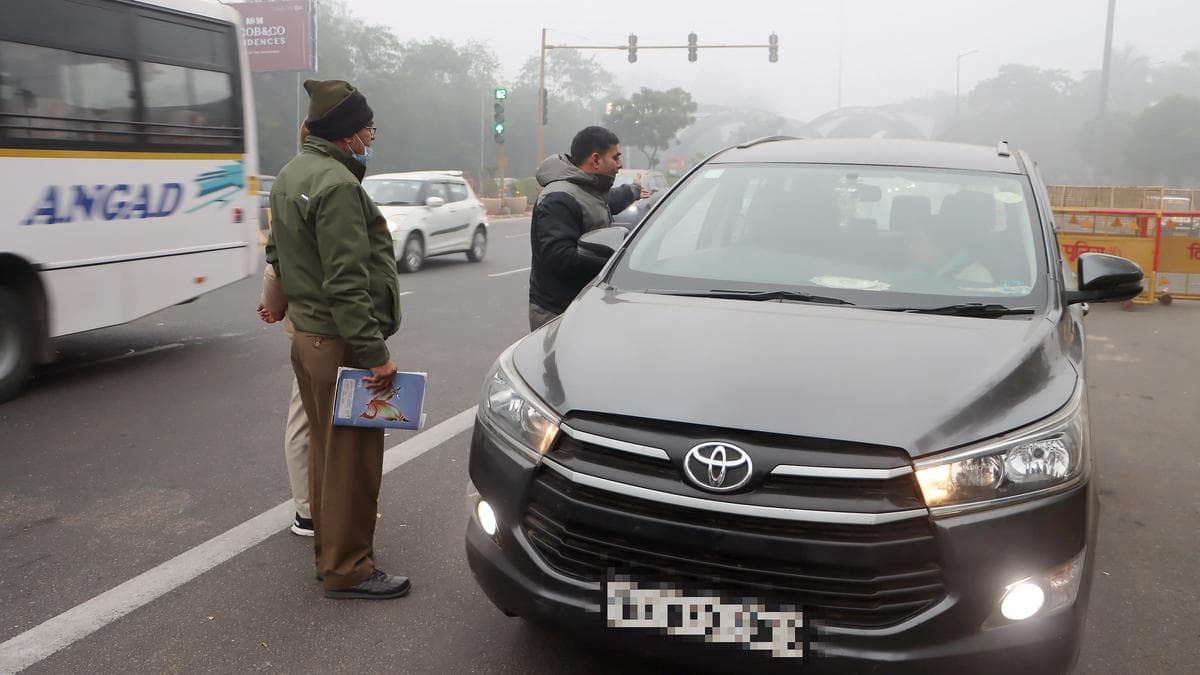
Starting Thursday (December 18), vehicles without a valid Pollution Under Control (PUC) certificate will not be allowed to refuel at petrol pumps; all private, government offices must follow mandatory 50% work from home