

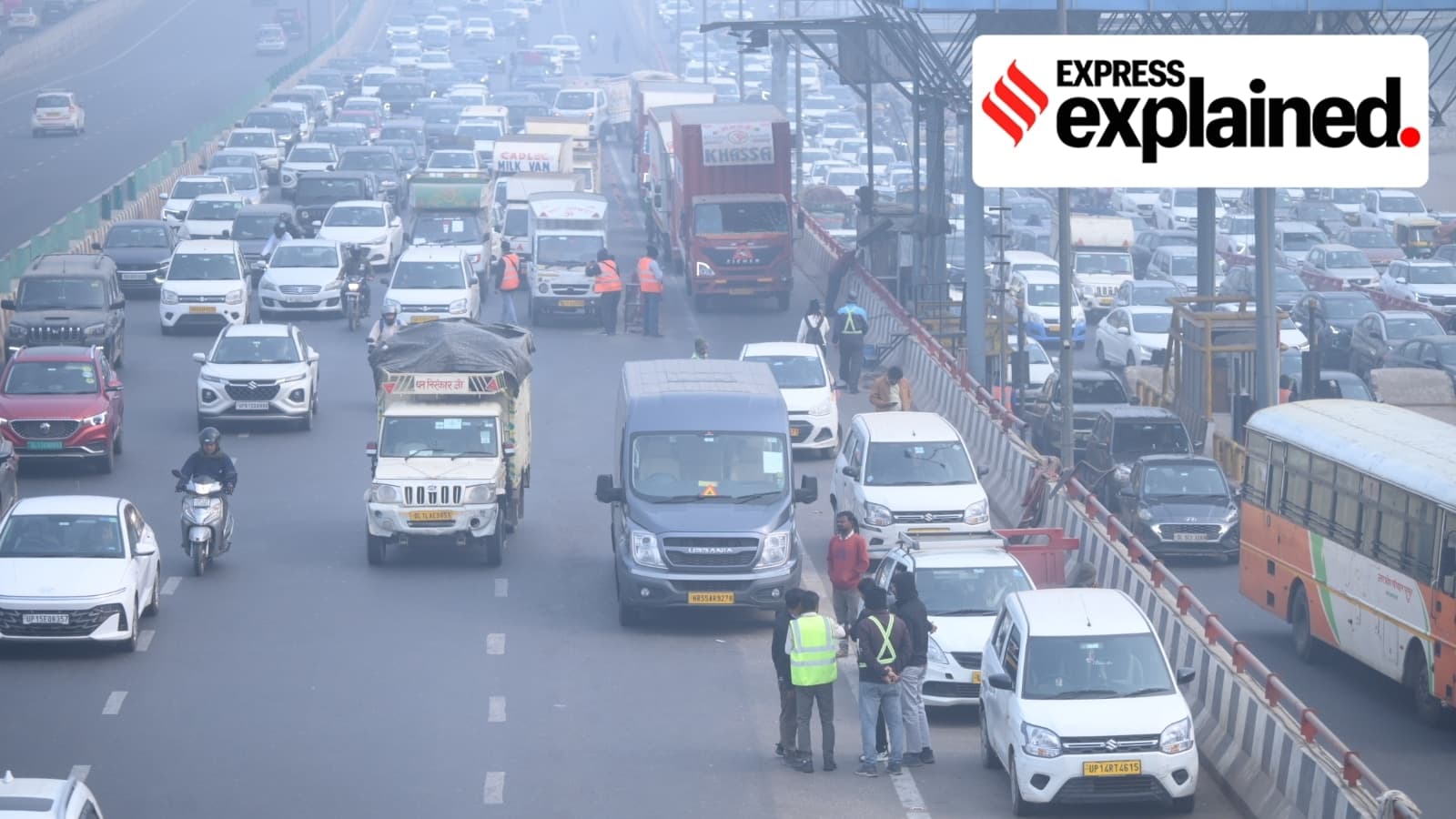


Content missing: Cannot extract exam-relevant facts on BS VI vehicle separation.
Summary
No content was provided for analysis. Therefore, a detailed summary explaining what happened, why it matters, or its significance for competitive exam preparation cannot be generated. Specific facts, dates, names, numbers, and constitutional/legal provisions are unavailable to extract.
Key Points
- 1Content for analysis is unavailable, preventing extraction of specific facts.
- 2No information provided to identify methods for separating BS VI-compliant vehicles.
- 3Specific dates, names, numbers, or percentages related to BS VI norms cannot be identified.
- 4The significance of the topic for competitive exams cannot be determined without article content.
- 5Key points suitable for MCQ questions are not extractable from the given input.
In-Depth Analysis
The transition to Bharat Stage (BS) VI emission norms for private vehicles in India, implemented from April 1, 2020, marked a significant leap in the country's efforts to combat air pollution. This move was not merely a technical upgrade but a crucial policy decision with far-reaching implications for public health, the automotive industry, and India's environmental commitments.
**Background Context: The Imperative for Cleaner Air**
India has long grappled with severe air pollution, particularly in its urban centers. Factors such as rapid industrialization, increasing vehicle population, reliance on fossil fuels, and agricultural practices contribute to alarmingly high levels of particulate matter (PM2.5, PM10) and noxious gases (NOx, SOx). These pollutants are directly linked to respiratory diseases, cardiovascular problems, and premature deaths. Recognizing this escalating crisis, India adopted its own emission standards, known as Bharat Stage (BS) norms, mirroring the European Union's 'Euro norms'. The journey began with BS I in 2000, gradually progressing to BS IV by 2017. However, the severity of India's pollution problem necessitated a more aggressive approach.
**What Happened: The Leap to BS VI**
In a landmark decision in 2016, the Indian government announced that it would skip BS V norms entirely and directly transition from BS IV to BS VI by April 1, 2020. This accelerated timeline was unprecedented globally. BS VI norms are significantly stricter than BS IV. Key differences include a drastic reduction in nitrogen oxides (NOx) by 70% for diesel engines and 25% for petrol engines, and a substantial decrease in particulate matter (PM) by 80% for diesel engines. Furthermore, BS VI mandates the use of advanced technologies like Diesel Particulate Filters (DPF) for diesel vehicles and Selective Catalytic Reduction (SCR) technology, which uses a urea-based fluid (AdBlue) to convert NOx into harmless nitrogen and water. Petrol vehicles also require more sophisticated catalytic converters. Crucially, BS VI vehicles are designed to operate with fuel containing a maximum of 10 parts per million (ppm) sulfur, a significant reduction from the 50 ppm sulfur content in BS IV fuel. This required a massive upgrade in fuel refining infrastructure by oil marketing companies across the country.
**Key Stakeholders Involved**
Several key players were instrumental in this transition. The **Government of India**, primarily the Ministry of Road Transport and Highways (MoRTH) and the Ministry of Environment, Forest and Climate Change (MoEFCC), formulated and enforced these stringent norms. **Automotive Manufacturers (OEMs)** faced the daunting challenge of redesigning their entire product portfolios, investing heavily in research and development, and retooling their manufacturing plants within a tight deadline. This involved significant capital expenditure. **Oil Marketing Companies (OMCs)** like Indian Oil, Bharat Petroleum, and Hindustan Petroleum undertook a massive infrastructure upgrade to produce and distribute BS VI-compliant fuel nationwide, a project costing tens of thousands of crores. **Consumers** were also a critical stakeholder, as the new vehicles were generally more expensive due to advanced technology. Finally, **environmental advocacy groups and the judiciary (including the National Green Tribunal)** played a crucial role in pushing for stricter environmental regulations and ensuring their implementation.
**Why This Matters for India**
The shift to BS VI holds immense significance for India. Environmentally, it is expected to significantly improve air quality, especially in urban areas, leading to better public health outcomes and reduced healthcare burdens. Economically, while it incurred substantial costs for manufacturers and OMCs, it also spurred technological advancements within the Indian automotive industry, making it more globally competitive. It aligns India with international best practices in emission control. Socially, cleaner air translates to a better quality of life for citizens, particularly vulnerable populations. The move also demonstrated India's commitment to global climate action and sustainable development goals.
**Historical Context and Future Implications**
India's emission norms have historically lagged behind developed nations. The decision to leapfrog BS V was a bold move to catch up and address the severe pollution crisis more rapidly. This expedited transition highlighted the government's resolve. Looking ahead, the success of BS VI implementation paves the way for even stricter norms, potentially BS VII, in the future. It also accelerates the push towards alternative fuels and electric vehicles (EVs). The policy framework around BS VI has laid the groundwork for a more environmentally conscious automotive sector. The government's focus on policies like the National Clean Air Programme (NCAP) and the FAME India Scheme (Faster Adoption and Manufacturing of Hybrid and Electric Vehicles) complements the BS VI transition, indicating a holistic approach towards sustainable mobility and cleaner environment.
**Related Constitutional Articles, Acts, or Policies**
This initiative is deeply rooted in India's legal and policy framework. The **Environment (Protection) Act, 1986**, provides the overarching legal mandate for the central government to take measures for improving environmental quality and preventing, controlling, and abating environmental pollution. The **Motor Vehicles Act, 1988**, and its subsequent amendments, empower the government to regulate vehicle standards, including emission norms. The **National Green Tribunal Act, 2010**, establishes the NGT, which has been instrumental in issuing directions to enforce environmental norms. The **National Clean Air Programme (NCAP)**, launched in 2019, aims for a 20-30% reduction in PM2.5 and PM10 concentrations by 2024, with BS VI being a critical component of this strategy. Additionally, Article 21 of the Indian Constitution, guaranteeing the 'Right to Life and Personal Liberty', has been interpreted by the Supreme Court to include the 'Right to a Clean Environment', providing a fundamental constitutional basis for such environmental protection measures.
Exam Tips
This topic falls under 'Environment & Ecology' and 'Science & Technology' in the UPSC Civil Services Exam syllabus (General Studies Paper III) and various State PSC exams. It's also relevant for 'Indian Economy' (impact on industry).
Study the specific differences between BS IV and BS VI norms (e.g., sulfur content in fuel, NOx/PM reduction percentages, DPF/SCR technologies). Also, understand the chronological evolution of Bharat Stage norms.
Common question patterns include MCQs on the implementation date of BS VI, the technologies used (DPF, SCR), the permissible sulfur content, and the environmental benefits. Descriptive questions might ask about the challenges faced by the automotive industry during the transition or the overall impact of BS VI on India's air quality and economy.
Relate BS VI norms to broader environmental policies like the National Clean Air Programme (NCAP) and India's commitments under international climate change agreements.
Pay attention to the role of different ministries and regulatory bodies (MoRTH, MoEFCC, NGT) in formulating and implementing such policies.