


Relevant for Exams
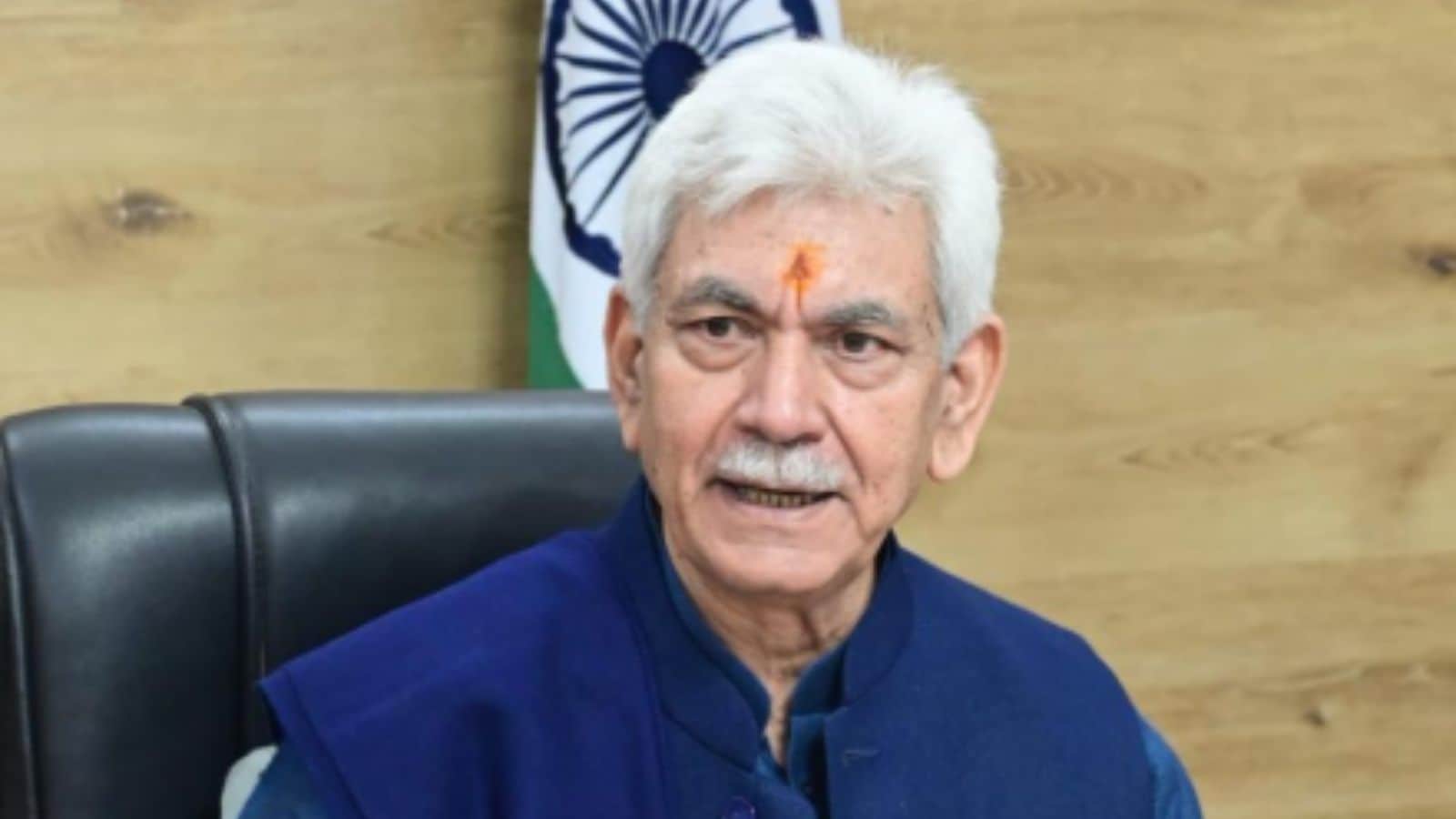
LG Sinha mandates complete neutralization of terrorists and supporters at J&K security meet.
Summary
Lieutenant Governor Manoj Sinha chaired a crucial security meeting in Jammu & Kashmir, emphasizing the need to neutralize all terrorists and their supporters. This directive highlights the persistent security challenges in the Union Territory and the government's firm commitment to eradicating terrorism. For competitive exams, this underscores the strategic importance of internal security, counter-terrorism policies, and the role of the LG in J&K's administration.
Key Points
- 1Lieutenant Governor Manoj Sinha presided over a high-level security review meeting in Jammu & Kashmir.
- 2The primary directive issued was the complete neutralization of every terrorist operating in the region.
- 3The mandate explicitly extends to neutralizing all 'supporters' of terrorism, indicating a comprehensive approach.
- 4The meeting's focus was on addressing the ongoing security challenges within the Union Territory of J&K.
- 5This reflects the administration's firm, zero-tolerance policy against terrorism and its ecosystem in the region.
In-Depth Analysis
Lieutenant Governor Manoj Sinha's directive to "neutralize every terrorist and supporter" in Jammu & Kashmir underscores India's unwavering commitment to eradicating terrorism from the Union Territory. This high-level security meeting and its pronouncements are not isolated events but are deeply rooted in the complex history and ongoing security challenges faced by J&K.
**Background Context and Historical Overview:**
Jammu & Kashmir has been a flashpoint since India's independence in 1947, marked by territorial disputes, cross-border infiltration, and a prolonged proxy war orchestrated by Pakistan. The region witnessed a significant escalation of militancy in the late 1980s, fueled by external support and internal grievances, leading to decades of violence, loss of life, and economic stagnation. A pivotal moment in J&K's recent history was the abrogation of Article 370 and Article 35A on August 5, 2019, by the Indian Parliament. This move effectively revoked J&K's special status and reorganized the erstwhile state into two Union Territories: Jammu & Kashmir (with a legislature) and Ladakh (without a legislature). The government's stated aim was to fully integrate J&K with the Indian mainstream, foster development, and eliminate terrorism and separatism. However, the security challenges persist, with continued attempts at infiltration, targeted killings, and efforts to radicalize local youth.
**What Happened and Key Stakeholders:**
LG Manoj Sinha, as the administrative head of the Union Territory of J&K, chaired a crucial security review meeting. His directive to neutralize not just terrorists but also their "supporters" signifies a broadened, comprehensive approach to counter-terrorism. This implies targeting the entire ecosystem that sustains terrorism, including over-ground workers (OGWs), financial facilitators, propagandists, and those who provide logistical support or shelter. Key stakeholders involved in this ongoing effort include:
1. **Government of India:** Through the Ministry of Home Affairs, it formulates and executes national security policy, providing resources and strategic direction.
2. **J&K Administration:** Led by the Lieutenant Governor, it is responsible for maintaining law and order, governance, and implementing central policies.
3. **Indian Army:** Deployed extensively for border security, counter-infiltration, and counter-insurgency operations.
4. **Central Armed Police Forces (CAPFs):** Such as CRPF and BSF, they play a crucial role in internal security, law enforcement, and border guarding.
5. **J&K Police:** The primary law enforcement agency, responsible for local intelligence, investigations, and maintaining public order.
6. **Intelligence Agencies:** Both central (e.g., IB, RAW) and state-level agencies are vital for gathering actionable intelligence.
7. **Terrorist Organizations:** Groups like Lashkar-e-Taiba (LeT), Jaish-e-Mohammed (JeM), and Hizbul Mujahideen, often operating with external support, are the primary targets.
8. **Pakistan:** India consistently accuses Pakistan of sponsoring and abetting cross-border terrorism, making it a critical external stakeholder.
**Significance for India and Broader Themes:**
This directive holds immense significance for India's national security, internal stability, and developmental aspirations. A secure J&K is crucial for India's territorial integrity and sovereignty. The elimination of terrorism is directly linked to restoring peace, promoting economic development, and attracting investment and tourism, which have historically suffered. The government's resolve reflects a zero-tolerance policy against terrorism, aligning with India's broader foreign policy stance against global terrorism. It also touches upon themes of governance, national integration, and the state's responsibility to protect its citizens. The concept of neutralizing 'supporters' highlights the challenge of identifying and dismantling the intricate networks that aid militancy, extending beyond armed combatants to those who enable their operations.
**Constitutional Provisions, Acts, and Future Implications:**
The legal framework underpinning these actions includes several key provisions and acts. While Article 370 and 35A are no longer directly operational in their previous form, their abrogation paved the way for the **Jammu and Kashmir Reorganisation Act, 2019**, which established the current administrative structure. The **Armed Forces (Special Powers) Act, 1958 (AFSPA)**, though controversial, remains in force in parts of J&K, granting special powers to armed forces personnel. The **Unlawful Activities (Prevention) Act, 1967 (UAPA)**, a stringent anti-terror law, is frequently invoked to deal with individuals and organizations involved in terrorist activities and their support networks. The role of the LG is defined by **Article 239** of the Constitution, which governs the administration of Union Territories by the President through an Administrator (LG).
Future implications involve intensified intelligence-led operations, a continued focus on choking terror financing, and potentially stricter measures against OGWs. There will be an ongoing push for development initiatives under schemes like the Prime Minister's Development Package (PMDP) to address socio-economic grievances and integrate the youth. The long-term goal remains to restore statehood to J&K and hold democratic elections, but this is contingent on a significant improvement in the security situation and the complete dismantling of the terror ecosystem. The challenge lies in balancing robust security operations with safeguarding human rights and ensuring that counter-terrorism efforts do not alienate the local population, which is crucial for lasting peace and stability.
Exam Tips
**UPSC Civil Services Exam (General Studies Paper II & III):** This topic falls under 'Internal Security' and 'Governance'. Focus on the historical context of J&K, the abrogation of Article 370/35A, the J&K Reorganisation Act, 2019, the role of the LG, and various counter-terrorism strategies. Questions often analyze the effectiveness of security policies, the challenges of cross-border terrorism, and the socio-economic impact of militancy.
**SSC CGL/CHSL & State PSCs (General Awareness):** Be prepared for factual questions on the date of Article 370 abrogation, the current LG of J&K, major anti-terror laws (UAPA, AFSPA), and the names of prominent terrorist organizations. Understand the basic administrative structure of J&K as a Union Territory.
**Defence Exams (CDS, NDA, AFCAT):** Emphasize the strategic importance of J&K, the role of the Indian Armed Forces in counter-insurgency, border management, and the geopolitical implications of the Kashmir conflict. Questions might test knowledge of specific operations or the challenges faced by security forces.
**Common Question Patterns:** Expect questions like 'Discuss the challenges to internal security in J&K and the government's response,' 'Analyze the impact of Article 370 abrogation on the security situation in J&K,' or 'Evaluate the role of various stakeholders in combating terrorism in J&K.' For objective exams, look for questions on specific acts, constitutional articles, or key figures.