



Relevant for Exams
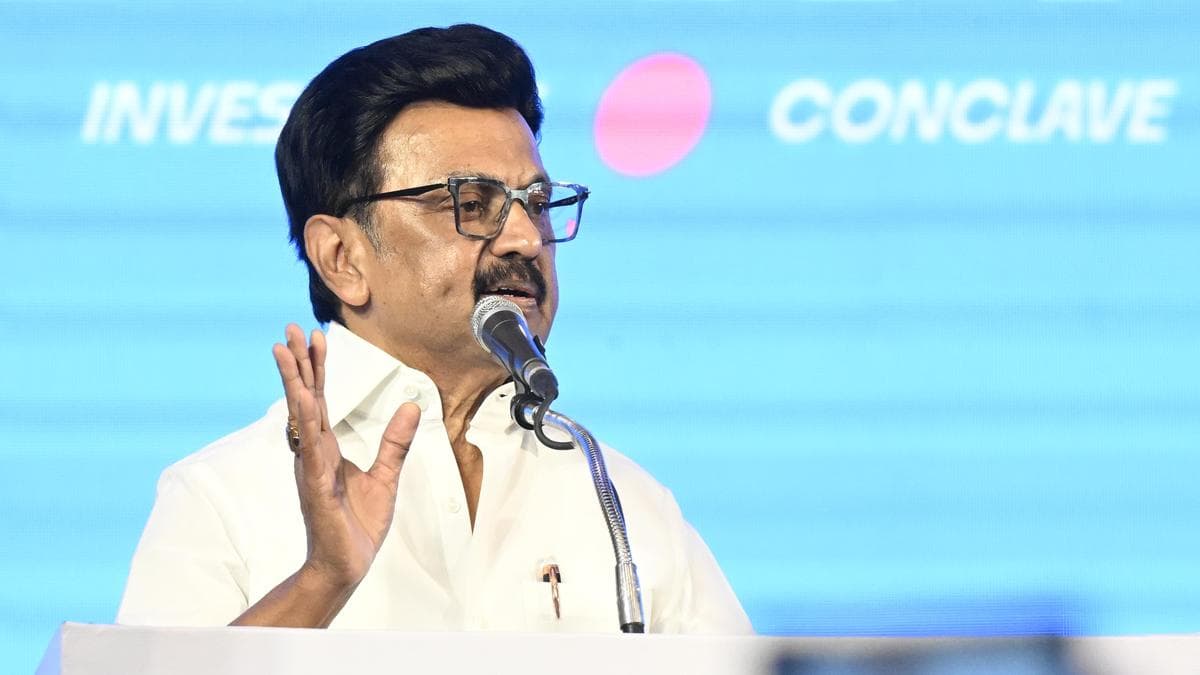
TN CM Stalin seeks PM Modi's intervention on U.S. tariffs causing ₹60 crore daily loss for state exporters.
Summary
Tamil Nadu CM M.K. Stalin has written to PM Modi, urging intervention to resolve issues arising from U.S. tariffs impacting the state's exports. These tariffs are causing a combined daily revenue loss of ₹60 crore for Tamil Nadu exporters. This highlights the federal government's role in addressing state-specific economic challenges stemming from international trade policies, crucial for understanding India's trade dynamics and centre-state relations for competitive exams.
Key Points
- 1Tamil Nadu Chief Minister M.K. Stalin wrote to Prime Minister Narendra Modi.
- 2The letter sought resolution regarding U.S. tariffs impacting Tamil Nadu's exports.
- 3These tariffs are causing a combined daily revenue loss of ₹60 crore for exporters.
- 4The affected exporters are located across various districts of Tamil Nadu.
- 5The issue underscores the impact of international trade policies on specific Indian states' economies.
In-Depth Analysis
The letter from Tamil Nadu Chief Minister M.K. Stalin to Prime Minister Narendra Modi, seeking intervention against U.S. tariffs impacting the state's exports, brings to the forefront critical aspects of India's federal structure, international trade dynamics, and the economic well-being of its states. This incident is not merely a state-specific economic concern but a significant illustration of how global trade policies can have direct, tangible impacts on local economies and necessitates a coordinated response from the federal government.
**Background Context and What Happened:**
Globally, trade relations have seen increased protectionist measures in recent years, with countries often imposing tariffs to protect domestic industries or address perceived unfair trade practices. The United States, under various administrations, has utilized tools like Section 301 of the Trade Act of 1974 to investigate and impose tariffs on goods from countries deemed to be engaging in unfair trade. While the specific tariffs impacting Tamil Nadu exports are not detailed in the summary, they likely stem from broader U.S. trade policies or specific anti-dumping/countervailing duty investigations targeting products like textiles, leather goods, auto components, or marine products, which are key exports from Tamil Nadu. The Chief Minister's letter highlights that these tariffs are translating into a "combined daily loss of ₹60 crore in revenue" for exporters across various districts of Tamil Nadu, indicating a significant economic blow to a crucial exporting state.
**Key Stakeholders Involved:**
1. **Tamil Nadu State Government (CM M.K. Stalin):** As the representative of the state, its primary concern is the economic prosperity and employment of its citizens. The CM's letter is an appeal to the federal government to protect the state's economic interests from external pressures.
2. **Central Government (PM Narendra Modi, Ministry of Commerce & Industry, Ministry of External Affairs):** The Union government holds the exclusive jurisdiction over foreign policy and international trade negotiations. Its role is to engage with the U.S. government, potentially through diplomatic channels or trade discussions, to resolve the tariff issues and protect Indian exporters.
3. **Tamil Nadu Exporters:** These are the direct victims of the tariffs, facing reduced competitiveness, revenue losses, and potential job cuts. Their concerns are channeled through the state government to the Centre.
4. **United States Government (USTR, Department of Commerce):** The U.S. government is the entity imposing these tariffs, driven by its own trade policy objectives, domestic industry protection, or international trade disputes.
**Significance for India:**
This issue holds immense significance for India. Economically, Tamil Nadu is a powerhouse, contributing significantly to India's GDP and exports, particularly in textiles, apparel, leather, and automotive sectors. A daily loss of ₹60 crore is substantial and can lead to job losses, reduced investments, and a broader economic slowdown in the state. Politically, it underscores the importance of cooperative federalism. While foreign policy and trade are Union subjects (Entry 10, 14, 41 of the Union List, Seventh Schedule), the economic ramifications directly affect states. The Centre must therefore act in consultation and cooperation with affected states to safeguard their interests. It also tests India's diplomatic prowess and its ability to negotiate favorable trade terms with major partners like the U.S., especially as India aims to become a global manufacturing hub through initiatives like 'Make in India'.
**Historical Context:**
India-U.S. trade relations have seen periods of both cooperation and friction. A notable historical context includes the U.S. withdrawal of India's Generalized System of Preferences (GSP) status in 2019, which had provided duty-free access for certain Indian products. While the current tariffs might be distinct from GSP withdrawal, they reflect a broader trend of trade disputes and the U.S.'s willingness to use tariffs as a tool in its trade policy. India has historically engaged in bilateral and multilateral trade negotiations (e.g., at the WTO) to address such issues.
**Future Implications and Constitutional Provisions:**
The immediate future will likely involve diplomatic engagements between India and the U.S. The Ministry of Commerce and Industry, in consultation with the Ministry of External Affairs, will be pivotal in advocating for Indian exporters. India might explore bilateral trade agreements or specific concessions to mitigate the impact of these tariffs. If the tariffs are deemed inconsistent with World Trade Organization (WTO) rules, India could also consider initiating a dispute settlement process at the WTO, though this is often a lengthy and complex process.
Constitutionally, the Centre's exclusive power over foreign affairs and international trade is enshrined in the Seventh Schedule. However, the impact on state economies highlights the spirit of cooperative federalism, where the Union government, while exercising its powers, must consider and address the concerns of the states. Article 256 and 257, which deal with the Centre's control over states in certain matters, also implicitly suggest a harmonious working relationship. Furthermore, the Foreign Trade (Development and Regulation) Act, 1992, empowers the Central Government to make provisions for the development and regulation of foreign trade, reinforcing its role in resolving such international trade issues. The government's Foreign Trade Policy (FTP) also plays a crucial role in providing a framework for responding to such challenges and promoting exports. The resolution of this issue will be a significant test of India's ability to navigate complex global trade dynamics while protecting its domestic economic interests and fostering stronger centre-state coordination.
Exam Tips
This topic falls under UPSC GS Paper II (Polity & International Relations - Centre-State Relations, India-U.S. Relations) and GS Paper III (Economy - Indian Economy, Trade Policy).
Study the Seventh Schedule of the Constitution, specifically the Union List entries related to foreign affairs, international trade, and commerce. Also, understand Articles 256 and 257 concerning Centre-State administrative relations.
Be prepared for questions on the impact of global trade protectionism on India, the role of the WTO in dispute resolution, and India's Foreign Trade Policy. Also, anticipate questions on the challenges faced by Indian exporters and government measures to support them.
Understand the various tools of trade policy (tariffs, non-tariff barriers, subsidies, anti-dumping duties) and their implications for developing economies like India.
Familiarize yourself with India's major export sectors and the key export hubs within India, such as Tamil Nadu, to understand the geographical impact of trade policies.
Related Topics to Study
Full Article
The tariffs have translated into a “combined daily loss of ₹60 crore in revenue” for exporters across various districts of Tamil Nadu, he said