



Relevant for Exams
Andhra Pradesh MP flags revenue deficit as hurdle for funding MGNREGA replacement.
Summary
An Andhra Pradesh MP highlighted the state's significant revenue deficit, stating it acts as a major hurdle to funding a proposed replacement for the Mahatma Gandhi National Rural Employment Guarantee Act (MGNREGA). This issue is critical for understanding fiscal federalism, state finances, and the implementation challenges of social welfare schemes in India, making it relevant for competitive exam preparation.
Key Points
- 1An unnamed Member of Parliament (MP) from Andhra Pradesh raised concerns regarding the state's financial health.
- 2The core issue highlighted by the MP was the persistent revenue deficit faced by the state of Andhra Pradesh.
- 3This revenue deficit is cited as a significant obstacle to securing funds for a scheme intended to replace MGNREGA.
- 4The Mahatma Gandhi National Rural Employment Guarantee Act (MGNREGA) is a flagship central government scheme for rural employment.
- 5The matter underscores challenges in fiscal federalism and state capacity to fund crucial social welfare programs.
In-Depth Analysis
The statement by an Andhra Pradesh MP highlighting the state's revenue deficit as a hurdle to funding a potential replacement for the Mahatma Gandhi National Rural Employment Guarantee Act (MGNREGA) brings into sharp focus critical aspects of India's fiscal federalism, state finances, and the challenges in implementing social welfare schemes. This issue is not merely about one state's financial health but reflects a broader structural challenge faced by many Indian states.
To understand this, let's first grasp the background. A **revenue deficit** occurs when the government's revenue expenditure (expenses on administration, salaries, interest payments, subsidies, etc.) exceeds its revenue receipts (tax and non-tax revenues). It indicates that the government is borrowing to meet its day-to-day running costs, which is unsustainable in the long run and can lead to a debt trap. Andhra Pradesh, post-bifurcation in 2014, inherited significant financial challenges. The **Andhra Pradesh Reorganisation Act, 2014**, led to the loss of Hyderabad, a major revenue-generating capital, to Telangana. This created a substantial revenue gap, which the state government has consistently struggled to bridge. Despite promises of a 'special package' or 'special category status' (SCS) from the Union government to compensate for this revenue loss, the full extent of financial support has been a contentious political issue, contributing significantly to the state's persistent revenue deficit.
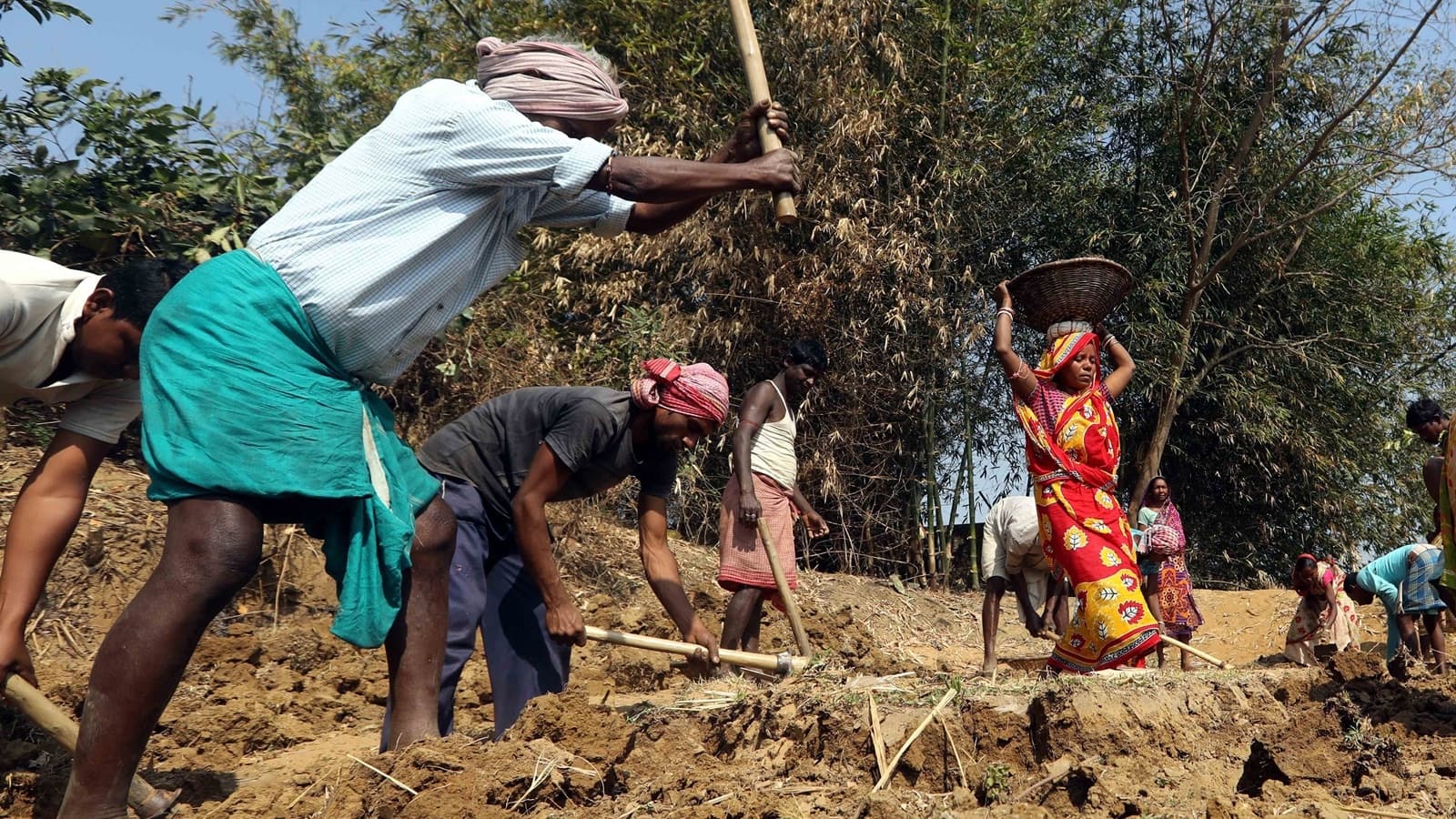
The **Mahatma Gandhi National Rural Employment Guarantee Act (MGNREGA), enacted in 2005**, is a flagship social welfare scheme aimed at guaranteeing 100 days of wage employment in a financial year to adult members of any rural household who volunteer to do unskilled manual work. It is a demand-driven scheme, primarily funded by the central government (wage component and 75% of material cost) with states contributing the remaining material cost, unemployment allowance, and administrative expenses. The scheme is crucial for rural livelihoods, poverty alleviation, and creating durable assets.
The MP's statement suggests that Andhra Pradesh might be contemplating a state-specific scheme to replace or supplement MGNREGA, or perhaps it implies a state's aspiration to take greater control over rural employment generation, potentially tailoring it to local needs more effectively. However, the existing revenue deficit makes it nearly impossible for the state to allocate significant funds for such a large-scale welfare program, especially one that would replace a centrally-funded scheme. This highlights the practical limitations imposed by fiscal constraints on state autonomy and policy innovation.
**Key stakeholders** in this scenario include the **Andhra Pradesh State Government**, which is grappling with its finances and the mandate to deliver welfare; the **Union Government**, which controls fiscal transfers, central schemes, and plays a vital role in fiscal federalism; and most importantly, the **rural beneficiaries** of such employment guarantee schemes, whose livelihoods depend on their effective implementation. Political parties at both state and national levels are also key stakeholders, as fiscal health and welfare delivery are significant electoral issues.
This situation is highly significant for India for several reasons. Firstly, it underscores the intricate dynamics of **fiscal federalism** outlined in the Indian Constitution, particularly Articles related to financial relations between the Union and states (e.g., **Articles 268 to 293**). The **Finance Commission (Article 280)** plays a crucial role in recommending the devolution of taxes and grants to states to ensure fiscal balance. However, even with these mechanisms, states like Andhra Pradesh often face severe fiscal stress. Secondly, it impacts the efficacy and future of **social welfare schemes**. If states cannot fund their share or initiate new programs due to deficits, the overall objective of poverty reduction and inclusive growth is hampered. Thirdly, it raises questions about the balance between central control and state autonomy in designing and implementing development policies. While centrally sponsored schemes like MGNREGA ensure uniform implementation across the country, states might desire more flexibility to address specific local challenges.
Historically, the issue of state finances has always been a cornerstone of Centre-State relations. The implementation of the **Goods and Services Tax (GST)**, while streamlining indirect taxes, has also altered states' revenue-generating capacities, making them more dependent on GST compensation and central transfers. The **Fiscal Responsibility and Budget Management (FRBM) Act, 2003** (and corresponding state FRBM Acts), aimed at enforcing fiscal discipline, often finds states struggling to meet targets, especially regarding revenue deficit elimination. Andhra Pradesh's situation is a stark reminder of these ongoing challenges.
Looking ahead, the **future implications** are profound. Persistent revenue deficits can lead to higher public debt, increased interest payments, and reduced allocations for capital expenditure, hindering long-term economic growth. It could also intensify demands for greater financial assistance from the Centre or renewed calls for special category status. For social welfare, it necessitates a critical re-evaluation of funding mechanisms for schemes like MGNREGA. States might need to explore innovative ways to enhance their own revenue generation and rationalize expenditure. Ultimately, this scenario calls for a cooperative federal approach, where both the Union and state governments work together to ensure fiscal stability and effective delivery of welfare, safeguarding the interests of the most vulnerable sections of society.
Exam Tips
This topic falls under UPSC GS Paper II (Polity & Governance - specifically Centre-State financial relations and social welfare schemes) and GS Paper III (Economy - Public Finance, Fiscal Policy, Rural Development).
Focus on understanding the concepts of revenue deficit, fiscal deficit, and primary deficit. Study the role of the Finance Commission (especially the 15th FC recommendations) and the provisions of the FRBM Act.
Be prepared for questions on the features and challenges of MGNREGA, the impact of bifurcation on state finances (e.g., AP Reorganisation Act, 2014), and the implications of fiscal federalism on social welfare delivery. Case studies like Andhra Pradesh's fiscal situation are often used to illustrate these concepts.
Practice analyzing how constitutional articles (like Article 280, 268-293) govern financial transfers and how policy instruments (like MGNREGA Act, FRBM Act) influence state fiscal space and welfare outcomes.
Expect both objective (prelims) questions on facts like the year MGNREGA was enacted or the role of the Finance Commission, and subjective (mains) questions requiring analytical answers on the challenges and solutions related to state finances and fiscal federalism.