



Relevant for Exams
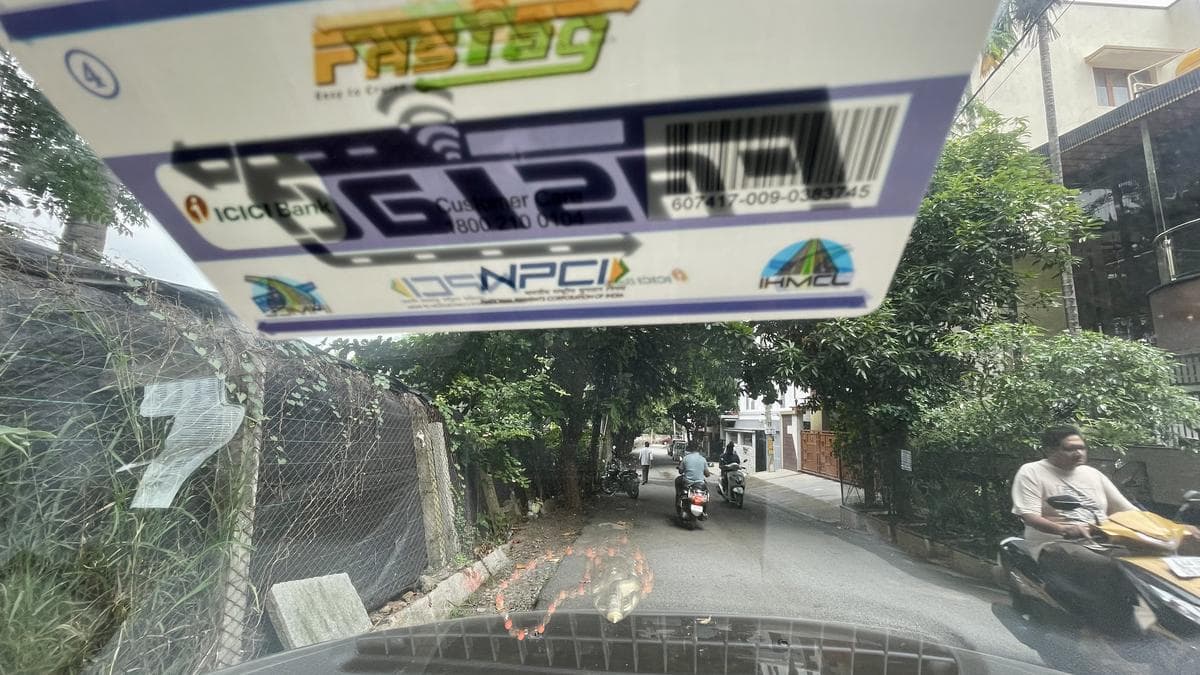
40 lakh annual FASTag passes issued; barrier-free toll collection targeted by 2026: Gadkari.
Summary
Union Minister Nitin Gadkari announced that 40 lakh annual FASTag passes have been issued since August, marking significant progress in digital toll collection. He also set an ambitious target for achieving barrier-free toll collection across India by 2026, which aims to enhance traffic flow and reduce congestion on national highways. This initiative is a crucial step in modernizing India's road infrastructure and digital payment systems, making it relevant for exams focusing on government policies and technological advancements.
Key Points
- 1A total of 40 lakh annual FASTag passes have been issued since August.
- 2Union Minister Nitin Gadkari announced the target for barrier-free toll collection by 2026.
- 3Annual FASTag passes for private cars are priced at ₹3,000 per year.
- 4These annual passes allow private cars to cross 200 toll plazas.
- 5The average cost per toll plaza for annual pass holders is ₹15.
In-Depth Analysis
The recent announcement by Union Minister Nitin Gadkari regarding 40 lakh annual FASTag passes issued since August and the ambitious target of barrier-free toll collection by 2026 marks a pivotal moment in India's journey towards modernizing its road infrastructure and digital payment ecosystem. This development is not merely about collecting tolls; it represents a significant leap in efficiency, transparency, and the overall digital transformation of the country.
**Background Context:**
For decades, India's national highways were plagued by manual toll collection systems. These systems led to massive traffic congestion at toll plazas, significant delays for commuters and commercial vehicles, fuel wastage, increased pollution, and a lack of transparency in revenue collection. The need for a more efficient, cashless, and seamless tolling system became paramount to support India's rapidly expanding road network and economic growth. This led to the conceptualization and eventual implementation of FASTag, an electronic toll collection system operated by the National Payments Corporation of India (NPCI) under the National Electronic Toll Collection (NETC) program. FASTag was gradually rolled out, becoming mandatory for all vehicles from December 15, 2019, leveraging Radio Frequency Identification (RFID) technology to enable direct deduction of toll charges while a vehicle is in motion.
**What Happened:**
Union Minister Nitin Gadkari announced that 40 lakh annual FASTag passes have been issued since August, indicating a growing adoption of this digital payment method for frequent commuters. More significantly, he unveiled the government's vision to achieve barrier-free toll collection across all national highways by 2026. This means moving away from physical toll booths and boom barriers to advanced systems like Automatic Number Plate Recognition (ANPR) or GPS-based tolling. The annual FASTag pass, priced at ₹3,000, allows private cars to cross 200 toll plazas over a year, effectively reducing the average cost per toll to a mere ₹15, making it an attractive option for regular users.
**Key Stakeholders Involved:**
Several entities play crucial roles in this initiative. The **Ministry of Road Transport and Highways (MoRTH)** is the primary policymaker, setting the vision and regulatory framework. The **National Highways Authority of India (NHAI)** is the implementing agency, responsible for managing the toll plazas and ensuring the operationalization of FASTag. The **National Payments Corporation of India (NPCI)** developed and manages the NETC platform, which is the technological backbone of FASTag. Various **issuing banks** facilitate the purchase and recharge of FASTags, while **acquiring banks** process transactions at toll plazas. Finally, **road users** are the direct beneficiaries and participants in this system, and **technology providers** are instrumental in developing and maintaining the hardware and software for RFID, ANPR, and potential GPS-based systems.
**Why This Matters for India:**
This initiative holds immense significance for India across multiple dimensions. **Economically**, it promises substantial savings in fuel and time, reducing logistics costs for goods transport, thereby boosting trade and industrial competitiveness. It contributes to a more transparent and efficient revenue collection system for the government. **Socially**, it offers unparalleled convenience to commuters, reduces driver fatigue, and significantly curbs vehicular emissions at toll plazas due to reduced idling, contributing to better air quality. From a **governance** perspective, it aligns perfectly with the 'Digital India' vision, promoting a cashless economy and showcasing the government's commitment to leveraging technology for public service delivery and infrastructure modernization. The move towards barrier-free tolling by 2026 also propels India's infrastructure into the future, making it comparable to advanced global systems.
**Historical Context:**
The journey to electronic toll collection in India began with scattered pilots and limited implementation. The push gained momentum with the increasing traffic volumes and the launch of initiatives like the Bharatmala Pariyojana, which aimed at significantly expanding the national highway network. The mandatory implementation of FASTag in 2019 was a landmark decision, marking a decisive shift from manual to electronic tolling nationwide. This progression demonstrates a consistent policy drive towards modernizing transport infrastructure.
**Future Implications:**
Achieving barrier-free toll collection by 2026 will transform highway travel. It implies the adoption of advanced technologies like ANPR, where cameras read number plates, or even GPS-based systems that charge users based on the distance traveled on toll roads. This will lead to truly seamless travel, further reducing congestion and potentially enabling dynamic pricing based on traffic conditions. While offering immense benefits, it also brings challenges related to data privacy, cybersecurity, and ensuring the accuracy and equity of the new charging mechanisms. This move is a crucial step towards developing 'smart highways' and integrating with broader 'Smart City' initiatives, enhancing overall urban and inter-city mobility solutions.
**Related Constitutional Articles, Acts, or Policies:**
While there isn't a specific constitutional article directly mandating FASTag, the government's power to levy tolls is derived from the **National Highways Act, 1956**, which empowers the Central Government to declare highways as national highways and levy fees (tolls) for their use. Amendments to the **Central Motor Vehicles Rules, 1989**, made FASTag mandatory for vehicle registration and fitness certificates. This initiative is also a key component of the broader **Digital India** program, aimed at transforming India into a digitally empowered society and knowledge economy, and aligns with the **National Infrastructure Pipeline (NIP)**, which outlines significant investments in infrastructure development, including roads and highways.
Exam Tips
This topic falls under GS Paper 3 (Economy, Infrastructure, Science & Technology) and GS Paper 2 (Governance, Government Policies) for UPSC. For SSC, Banking, Railway, and State PSC exams, it's relevant for General Awareness, Current Affairs, and Economy sections.
Study related topics like the National Payments Corporation of India (NPCI) and its role in digital payments (UPI, RuPay), the Bharatmala Pariyojana, National Infrastructure Pipeline, and the broader 'Digital India' initiative. Understand the technological aspects of RFID, ANPR, and GPS-based tolling.
Common question patterns include factual questions (e.g., 'When did FASTag become mandatory?', 'Which agency developed NETC?', 'What is the target year for barrier-free tolling?'), analytical questions (e.g., 'Discuss the economic benefits of FASTag', 'How does barrier-free tolling contribute to 'Digital India'?', 'What are the challenges in implementing GPS-based tolling?'), and policy-oriented questions (e.g., 'Evaluate the government's efforts in modernizing road infrastructure').
Related Topics to Study
Full Article
Mr. Gadkari said annual FASTag passes will allow private cars to cross 200 toll plazas at ₹3,000 a year, or an average of ₹15 per toll