



Relevant for Exams
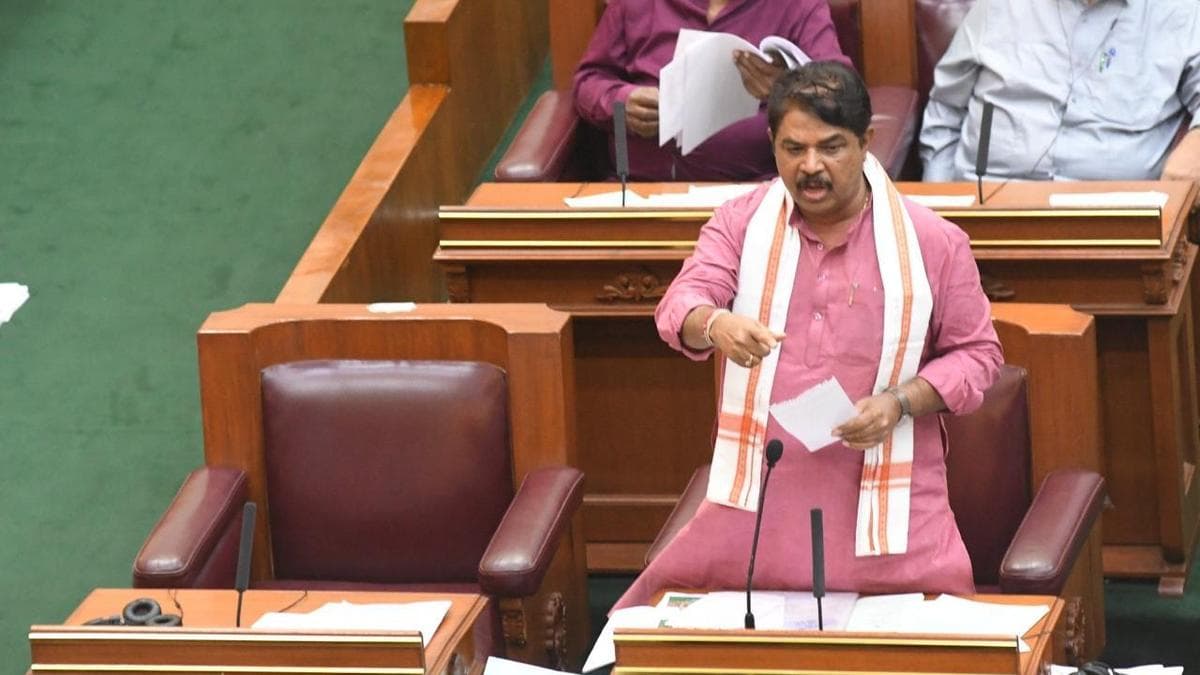
BJP alleges police transfer racket and criminal nexus, raising governance concerns.
Summary
The Bharatiya Janata Party (BJP) has raised concerns about an alleged 'transfer racket' within the Police Department, suggesting a potential 'police-criminal nexus'. This political allegation highlights critical issues of governance, transparency, and integrity within law enforcement. For competitive exams, it underscores the importance of understanding police administration, reforms, and ethical considerations, though specific details of the alleged racket are not provided in the article.
Key Points
- 1The Bharatiya Janata Party (BJP) has publicly questioned an alleged 'transfer racket' within the Police Department.
- 2The BJP's statement implies a potential 'police-criminal nexus' arising from these alleged transfers.
- 3The issue raises critical questions about transparency and accountability in police administration.
- 4Such allegations underscore the ongoing debate regarding police reforms and ethical governance in India.
- 5As per the provided article, specific details, dates, or involved individuals related to the alleged racket are not available.
In-Depth Analysis
The Bharatiya Janata Party's (BJP) allegation of a 'transfer racket' within the Police Department, coupled with the suggestion of a potential 'police-criminal nexus,' brings to the forefront critical issues of governance, transparency, and integrity within India's law enforcement agencies. While the specific details of this particular allegation are not available in the provided article, the underlying concerns are deeply rooted in the historical and ongoing challenges facing police administration in the country.
**Background and Historical Context:**
India's police force operates under a structure largely inherited from the colonial era, primarily governed by the Police Act of 1861. This act was designed by the British to maintain order and suppress dissent, creating a force that was often perceived as an instrument of the state rather than a service-oriented body. Post-independence, despite numerous calls for reform, the basic framework largely remained intact. Over the decades, political interference in police functioning, including transfers, postings, and investigations, has become a pervasive issue. This interference often compromises the operational autonomy and impartiality of the police, leading to a decline in public trust and efficiency. Allegations of 'transfer rackets' are not new; they typically involve illicit payments or political patronage influencing postings to lucrative or strategically important positions, which can then facilitate a 'police-criminal nexus' where law enforcement personnel collude with criminal elements for mutual benefit.
**The Allegation and its Implications:**
The BJP's questioning of 'which Indra' is controlling this alleged racket implies a high-level political involvement, suggesting that such activities are not merely isolated incidents but potentially systemic. A 'transfer racket' undermines the meritocratic principles of public service, demoralizes honest officers, and allows for the placement of pliable individuals in key positions. When this leads to a 'police-criminal nexus,' the consequences are severe: compromised investigations, selective enforcement of laws, protection of criminals, and a breakdown of law and order. This directly impacts the safety and security of citizens and erodes their faith in the justice delivery system. Such allegations highlight the urgent need for greater transparency and accountability in police administration.
**Key Stakeholders Involved:**
* **Political Parties (e.g., BJP, ruling party):** Political parties are central, both as accusers and, potentially, as perpetrators of interference. Allegations are often politically charged, used to target rival governments or score political points. However, they also serve to bring crucial issues into the public discourse. The ruling party, if implicated, faces questions of governance and integrity.
* **Police Department:** As the primary law enforcement agency, the police department is directly at the heart of the issue. Internal mechanisms for transfers, promotions, and disciplinary actions are scrutinized. The integrity of its personnel, from constables to senior officers, is under question.
* **Criminal Elements:** These are the beneficiaries of a 'police-criminal nexus,' gaining protection or leverage through corrupt police officials, allowing them to operate with impunity.
* **Public/Citizens:** The ultimate victims, citizens suffer from compromised law and order, lack of justice, and a general environment of insecurity and mistrust in state institutions.
* **Judiciary:** The courts, particularly the Supreme Court, have played a crucial role in pushing for police reforms, notably through the Prakash Singh judgment.
**Why This Matters for India:**
Such allegations strike at the core of India's democratic and constitutional framework. A corrupt police force undermines the **Rule of Law**, which is foundational to a just society. It impedes economic development by creating an uncertain and insecure environment for businesses and citizens. Socially, it fuels cynicism and disillusionment among the populace, particularly marginalized sections who are often most vulnerable to police excesses and corruption. The erosion of public trust in state institutions can have far-reaching consequences for social cohesion and stability. It also impacts India's standing globally, as a nation where law enforcement integrity is questioned.
**Constitutional and Legal Framework:**
Law and order, including the police, falls under the **State List** (Entry 2 of the Seventh Schedule) of the Indian Constitution, meaning state governments have primary legislative and executive powers over it. This often leads to variations in police administration across states and makes nationwide uniform reforms challenging. The foundational **Police Act of 1861** still governs many aspects of police functioning. However, the most significant legal push for reform came from the Supreme Court's landmark judgment in **Prakash Singh v. Union of India (2006)**. This judgment issued seven directives aimed at insulating the police from political interference, ensuring functional autonomy, and improving accountability. Key directives included establishing a State Security Commission, a Police Establishment Board for transfers and postings, and a Police Complaints Authority. The **Prevention of Corruption Act, 1988**, provides the legal framework to prosecute corrupt public servants, while the **Whistleblowers Protection Act, 2014**, aims to protect individuals reporting corruption.
**Broader Themes and Future Implications:**
This issue is intrinsically linked to broader themes of good governance, accountability, and ethical administration. The repeated surfacing of 'transfer racket' allegations underscores the failure to fully implement the **Prakash Singh judgment** and other reform recommendations. Future implications point towards a continued struggle for police autonomy and accountability. For India to strengthen its democratic institutions and ensure justice, it is imperative to implement comprehensive police reforms, establish independent oversight mechanisms, ensure transparent and merit-based transfer policies, and foster a culture of integrity within the police force. Strengthening anti-corruption bodies like the Central Vigilance Commission (CVC) and Lokpal, and ensuring their independence, is also crucial. Without these reforms, the police-criminal nexus will continue to undermine public trust and the very fabric of Indian society.
Exam Tips
This topic falls under GS Paper II (Polity & Governance - Police Reforms, Accountability & Transparency) and GS Paper IV (Ethics, Integrity & Aptitude - Public Service Values, Corruption). Be prepared to discuss the challenges of police administration and ethical dilemmas.
Study related topics such as the recommendations of various Police Commissions (National Police Commission, Padmanabhaiah Committee, Malimath Committee) and the specific directives of the Prakash Singh v. Union of India (2006) judgment. Understand the implications of the State List on police reforms.
Common question patterns include direct questions on police reforms, analytical questions on the causes and consequences of police corruption, case studies involving ethical dilemmas faced by police officers, and questions on the role of political interference in law enforcement.
Focus on understanding the constitutional provisions (e.g., Seventh Schedule) and key legal frameworks (Police Act, Prevention of Corruption Act) relevant to police functioning and accountability.
Practice writing answers that connect these issues to broader themes like rule of law, good governance, public trust, and social justice. Use specific examples or reforms mentioned in reports.