

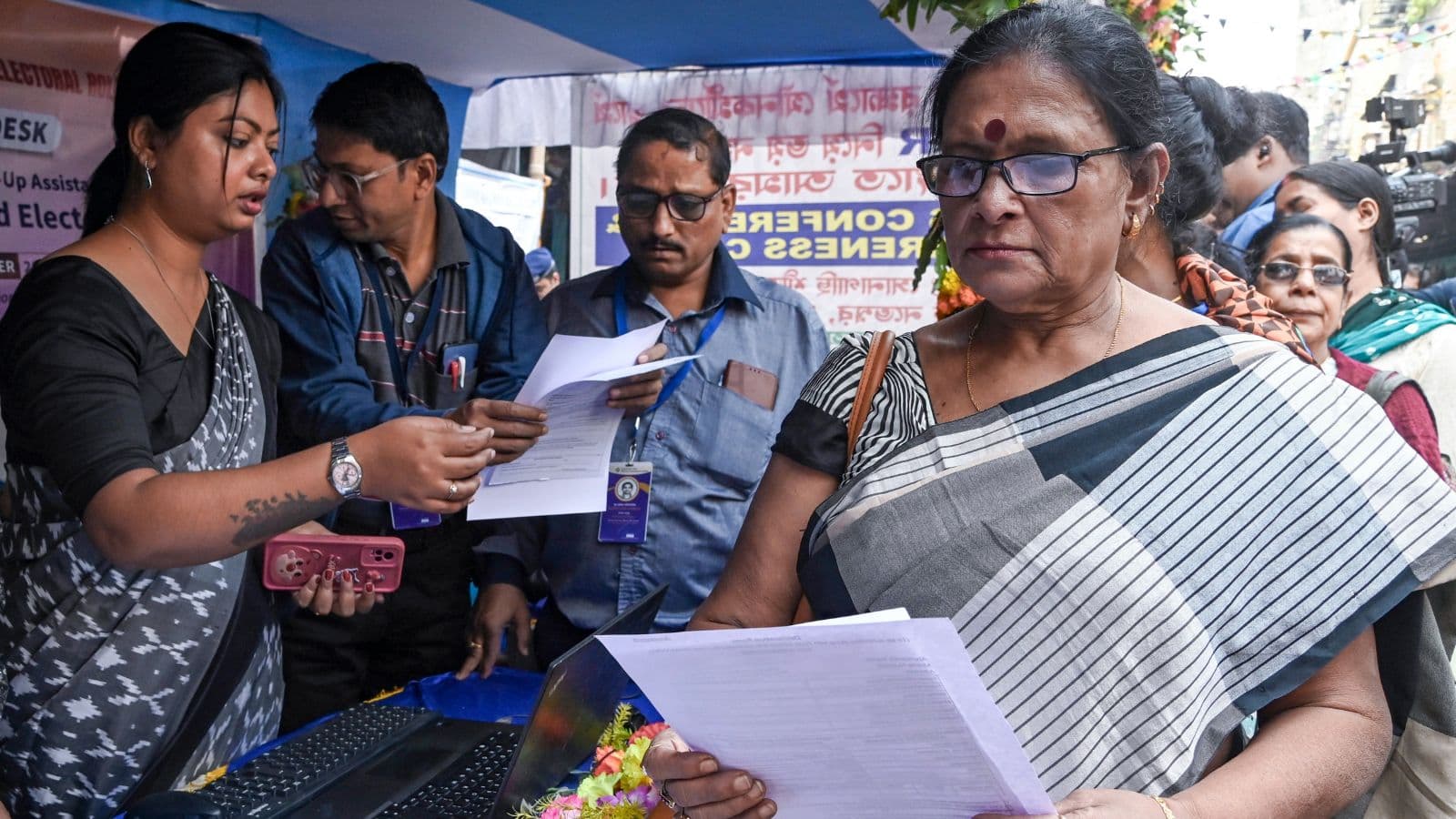


Content unavailable for analysis; unable to extract specific exam-relevant facts.
Summary
No content was provided for analysis, hence a detailed summary explaining specific events, their implications, and significance for competitive exams cannot be generated. The article title suggests a topic related to voter roll deletions and demographic patterns in West Bengal, which, if detailed content were available, could be relevant for governance, electoral processes, and demography in UPSC and State PSC exams. Without content, specific exam-focused insights are impossible to extract.
Key Points
- 1No article content was provided, preventing extraction of specific facts for MCQs.
- 2Unable to identify precise dates, names, numbers, or percentages from the article.
- 3Cannot detail 'what happened' regarding voter deletions in West Bengal.
- 4The significance for competitive exams cannot be assessed without content.
- 5The title suggests a topic on West Bengal voter rolls and demographic impact.
In-Depth Analysis
The article title, "West Bengal draft rolls: Seats with sizable Hindi speakers see high voter deletions, Muslim-dominated seats largely unaffected," points to a critical issue concerning electoral integrity, demographic politics, and the fairness of voter registration processes in India. While specific content from the article is unavailable, the title itself provides enough context to infer significant implications for competitive exam aspirants.
**1. Background Context: The Electoral Roll Process**
In India, the Election Commission of India (ECI) is the constitutional body responsible for the superintendence, direction, and control of the preparation of electoral rolls and the conduct of elections (Article 324). The process of preparing and revising electoral rolls is continuous, with periodic special summary revisions. This involves adding new eligible voters, deleting deceased or shifted voters, and correcting errors. The draft electoral roll is published for public scrutiny, allowing citizens and political parties to file claims and objections, after which the final roll is published. This meticulous process is crucial to ensure that only eligible citizens participate in elections, upholding the principle of 'one person, one vote'. West Bengal, a state known for its vibrant and often intense political landscape, exhibits significant linguistic and religious diversity, making the accuracy and impartiality of its voter rolls particularly sensitive.
**2. What Happened (Inferred from Title)**
The article title suggests an anomaly in the draft voter rolls for West Bengal. It indicates a disproportionately high number of voter deletions in constituencies where Hindi-speaking populations are significant. Conversely, constituencies predominantly inhabited by Muslims were 'largely unaffected' by such deletions. This differential impact, if confirmed by data, raises serious questions about the fairness and potential selective nature of the deletion process. It could imply either an administrative oversight that disproportionately affects one demographic group or, more controversially, a deliberate pattern that might have political implications.
**3. Key Stakeholders Involved**
* **Election Commission of India (ECI):** As the ultimate authority, the ECI is responsible for ensuring the accuracy and impartiality of the electoral rolls. Its state machinery, including Chief Electoral Officers (CEOs) and Electoral Registration Officers (EROs), directly implements the revision process.
* **Political Parties:** Major parties like the Trinamool Congress (TMC), Bharatiya Janata Party (BJP), and others operating in West Bengal are crucial stakeholders. They actively scrutinize draft rolls, file objections, and often raise concerns about alleged discrepancies, especially if such discrepancies appear to favour or disadvantage specific demographic groups or political rivals.
* **Voters:** The citizens, particularly those from Hindi-speaking communities whose names might have been deleted, are directly impacted. Their fundamental right to vote (derived from Article 326) is at stake. Muslim voters, apparently less affected, also have a stake in ensuring the overall integrity of the process.
* **Civil Society Organizations and Media:** These entities play a vital role in monitoring the electoral process, highlighting irregularities, and advocating for transparency and accountability.
**4. Why This Matters for India: Significance for Governance and Democracy**
This issue holds immense significance for India's democratic fabric. Firstly, **Electoral Integrity** is paramount. Any perceived bias or large-scale deletion of voters from specific communities undermines public trust in the electoral system and the ECI. Secondly, it highlights the persistent challenge of **Demographic Politics** in India. West Bengal has a history of identity-based political mobilization, and differential voter deletions along linguistic or religious lines can exacerbate communal tensions and deepen political polarization. Thirdly, it touches upon **Minority Rights and Representation**. If a significant section of a linguistic minority (Hindi speakers in West Bengal) faces deletion, it impacts their political voice and representation, raising concerns about equality before the law (Article 14) and non-discrimination (Article 15). Finally, it underscores the need for robust **Electoral Reforms** to ensure that voter registration and deletion processes are transparent, error-free, and resistant to manipulation.
**5. Historical Context**
Controversies surrounding electoral rolls are not new in India. There have been instances in various states where allegations of large-scale deletions, additions, or errors have been made by political parties. These often surface during periods leading up to significant elections. The ECI has consistently worked to improve the accuracy of rolls through initiatives like linking Aadhaar (though not mandatory for voting) and introducing Election Photo Identity Cards (EPICs). However, the sheer scale of the Indian electorate and administrative challenges mean that perfect rolls remain an ongoing endeavour.
**6. Future Implications**
The immediate implications would likely include heightened political debate and potential legal challenges. Political parties are expected to raise these concerns with the ECI, demanding investigations and rectifications. The ECI will face pressure to provide transparent explanations for the observed patterns and ensure that the final electoral rolls are accurate and inclusive. This issue could also influence voter behaviour and political narratives in upcoming elections, such as the 2024 Lok Sabha elections or the next West Bengal Assembly elections in 2026. Long-term, it reinforces the need for continuous vigilance and technological upgrades in maintaining voter rolls, along with stringent accountability mechanisms for officials involved in the process.
**7. Related Constitutional Articles, Acts, or Policies**
* **Article 324 (Constitution of India):** Vests the superintendence, direction, and control of elections, including the preparation of electoral rolls, in the Election Commission.
* **Article 326 (Constitution of India):** Guarantees adult suffrage, stating that elections to the House of the People and legislative assemblies of states shall be on the basis of adult suffrage.
* **Representation of the People Act, 1950:** This Act provides for the allocation of seats and the delimitation of constituencies for elections, and for the preparation of electoral rolls.
* **Representation of the People Act, 1951:** This Act provides for the conduct of elections, qualifications and disqualifications for membership of Parliament and State Legislatures, and corrupt practices and other election offenses.
* **Electoral Registration Officers (EROs):** These officials, appointed under the RPA, 1950, are crucial for the ground-level work of preparing and revising electoral rolls. Their actions are directly under scrutiny in such situations.
* **Article 14 (Equality before law) and Article 15 (Prohibition of discrimination):** If deletions are found to be discriminatory, these fundamental rights could be invoked.
This issue underscores the delicate balance between administrative efficiency, political fairness, and constitutional rights in India's vibrant democracy.
Exam Tips
This topic falls under 'Indian Polity and Governance' in the UPSC Civil Services Syllabus (GS Paper II) and State PSC exams. Specifically, focus on the Election Commission of India, Electoral Reforms, and the Representation of the People Acts (RPA, 1950 & 1951).
Study the powers and functions of the Election Commission of India, its independence, and challenges it faces. Understand the process of voter registration, revision of electoral rolls, and the role of Electoral Registration Officers (EROs).
Common question patterns include: 'Discuss the role of the ECI in ensuring free and fair elections, citing relevant constitutional provisions.' or 'Analyze the challenges to electoral integrity in India, with a focus on voter roll discrepancies.' Be prepared to write essays or answer analytical questions on electoral reforms and demographic impact on politics.