



Relevant for Exams
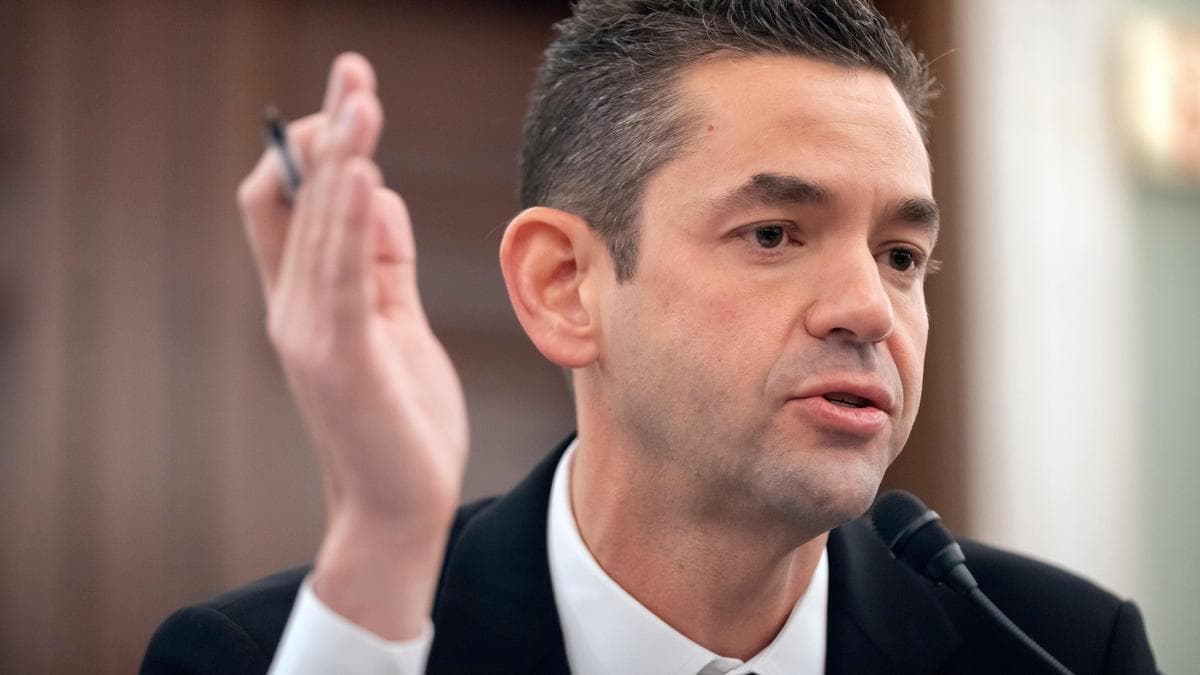
U.S. Senate confirms private astronaut Jared Isaacman as new NASA chief with 67-30 vote.
Summary
The U.S. Senate confirmed private astronaut Jared Isaacman as NASA chief with a 67-30 vote, two weeks after his second hearing. Isaacman, an ally of Elon Musk, emphasized the critical need for NASA to accelerate efforts to beat China back to the moon this decade. This appointment is significant for understanding global space policy, international competition, and the future direction of NASA.
Key Points
- 1Jared Isaacman, a private astronaut and Elon Musk ally, was confirmed as the new NASA chief.
- 2The U.S. Senate confirmed Isaacman's nomination with a vote of 67-30.
- 3Isaacman was previously removed and then renamed as NASA administrator nominee by Mr. Trump this year.
- 4During his second hearing, Isaacman stressed NASA's need to accelerate efforts to beat China back to the moon this decade.
- 5The confirmation marks a significant leadership change for NASA, focusing on the space race with China.
In-Depth Analysis
The confirmation of Jared Isaacman as the new NASA chief by the U.S. Senate marks a pivotal moment in global space exploration, signaling an intensified focus on lunar return and a heightened strategic competition with China. Isaacman, a prominent private astronaut and entrepreneur known for commanding the Inspiration4 mission (the first all-civilian spaceflight to orbit Earth), brings a unique blend of private sector dynamism and a clear competitive vision to the helm of America's premier space agency.
**Background Context and What Happened:**
NASA, established in 1958 during the height of the Cold War space race, has historically been at the forefront of human spaceflight and scientific discovery, from the Apollo moon landings to the International Space Station (ISS) program. In recent years, the agency has embarked on its ambitious Artemis program, aiming to return humans to the Moon by the mid-2020s, including the first woman and person of color. This renewed lunar focus coincides with China's rapid advancements in space, including successful robotic lunar missions (Chang'e series) and the construction of its own Tiangong space station, clearly positioning Beijing as a formidable competitor.
Jared Isaacman's journey to NASA chief is particularly interesting. Initially nominated by Mr. Trump, he was briefly removed before being renominated, reflecting the political currents often associated with high-profile appointments. His confirmation by a 67-30 vote in the U.S. Senate, following a second hearing, underscores a bipartisan recognition of the urgency in maintaining America's leadership in space. Crucially, Isaacman's testimony emphasized the critical need for NASA to "pick up the pace in beating China back to the moon this decade," setting a clear, competitive agenda for his tenure.
**Key Stakeholders Involved:**
1. **Jared Isaacman:** As the new chief, his leadership style, rooted in private sector efficiency and innovation, is expected to reshape NASA's operational strategies. His close association with Elon Musk and SpaceX highlights the growing influence of commercial space entities in government-led programs.
2. **NASA:** The agency itself is a primary stakeholder, tasked with executing ambitious missions under new leadership, balancing scientific discovery with national strategic imperatives.
3. **U.S. Senate:** Through its constitutional power of 'advice and consent' (Article II, Section 2, Clause 2 of the U.S. Constitution), the Senate plays a crucial oversight role in presidential appointments, ensuring a rigorous vetting process for such a critical position.
4. **China:** As the principal competitor, China's accelerating space program directly influences NASA's strategic direction and timeline. Its long-term goals of establishing a lunar research station and deep-space capabilities are a significant driver of the new space race.
5. **Private Space Companies (e.g., SpaceX, Blue Origin):** Isaacman's background signifies a deeper integration of private sector capabilities and ethos into NASA, potentially accelerating technology development and mission execution through public-private partnerships.
**Why This Matters for India:**
This development holds substantial significance for India, a rising space power with its own ambitious programs. India's space endeavors, spearheaded by ISRO, have achieved remarkable feats like Chandrayaan-3's lunar south pole landing and the ongoing Gaganyaan human spaceflight mission. The intensification of the U.S.-China space race has several implications for India:
* **Geopolitical Alignment and Strategic Choices:** India maintains robust space cooperation with both the U.S. and, to a lesser extent, with Russia and Europe. As a signatory to the U.S.-led Artemis Accords (signed in June 2023), India has committed to principles for peaceful and sustainable lunar exploration. Isaacman's appointment could strengthen U.S.-India space ties, potentially leading to increased collaboration in lunar missions, technology sharing, and joint research, aligning with India's foreign policy objectives of promoting international peace and security through cooperation (Article 51 of the Indian Constitution).
* **Technological Advancement and Commercial Opportunities:** An accelerated space race could spur rapid technological innovations, offering opportunities for Indian space startups and industries to integrate into global supply chains or develop niche capabilities. India's Space Policy 2023 actively encourages private sector participation, and a dynamic global landscape could provide fertile ground for companies like Skyroot Aerospace and Agnikul Cosmos.
* **Benchmarking and Competition:** The aggressive timelines set by NASA under Isaacman will serve as a benchmark for India's own space program, potentially influencing its pace and strategic planning for future lunar and interplanetary missions.
**Historical Context and Future Implications:**
The current scenario echoes the Cold War space race between the U.S. and the Soviet Union, albeit with new dimensions: the rise of multiple state actors, the significant role of commercial entities, and a focus on sustainable lunar presence rather than just flags and footprints. Isaacman's tenure is likely to see an aggressive push for technological breakthroughs, increased reliance on commercial partners, and potentially a more streamlined, results-oriented approach at NASA.
Future implications include a rapid acceleration of lunar infrastructure development, potential for resource utilization on the Moon, and intensified competition for strategic positions in cislunar space. This could also lead to discussions around international space governance and the interpretation of treaties like the Outer Space Treaty of 1967, which India is a party to, ensuring the peaceful use of celestial bodies. For India, navigating this evolving landscape will require astute diplomacy, continued investment in indigenous capabilities, and strategic international partnerships to safeguard its interests and advance its vision for space.
Exam Tips
This topic falls under 'International Relations' (specifically 'Global Groupings and Agreements involving India', 'Effect of Policies and Politics of Developed and Developing Countries on India's Interests') and 'Science & Technology' (Space Technology, Developments in Science & Technology) in the UPSC Civil Services syllabus. For SSC, Banking, Railway, and State PSC exams, it's crucial for Current Affairs.
Study related topics such as the Artemis Accords (India's participation, key principles), India's Space Policy 2023 (focus on private sector, international collaboration), major ISRO missions (Chandrayaan-3, Gaganyaan), and the capabilities/ambitions of other major space powers (China's lunar program, Tiangong station).
Common question patterns include direct factual questions (Who is the new NASA chief? What is the vote count for his confirmation?), analytical questions on the implications of the US-China space race for global geopolitics and India's space strategy, and questions on the role of private players in space exploration.
Related Topics to Study
Full Article
The vote on Mr. Isaacman, who Mr. Trump removed and then renamed as NASA administrator nominee this year, passed 67-30, two weeks after he told senators in his second hearing that NASA must pick up the pace in beating China back to the moon this decade.