



Relevant for Exams
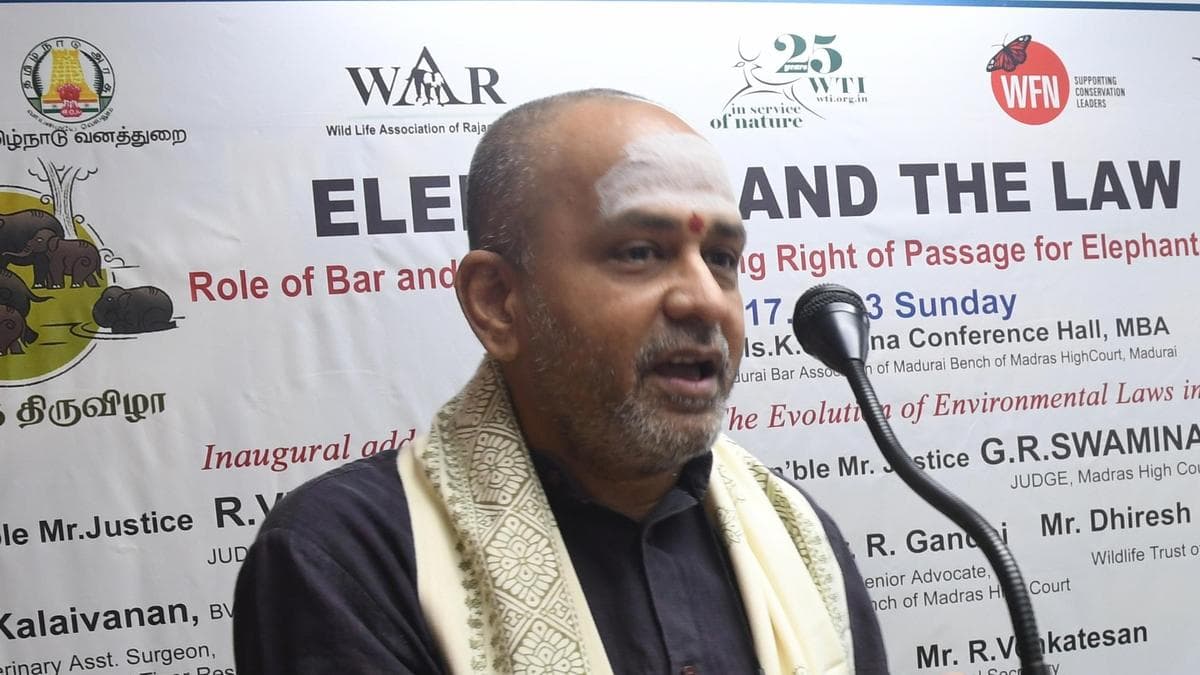
HC Justice G.R. Swaminathan: Law & order cannot justify flouting court orders, citing Thirupparankundram row.
Summary
Justice G.R. Swaminathan of the High Court firmly stated that law and order cannot be cited as a reason to disregard court orders. This assertion came during the hearing of contempt of court cases, notably involving the Thirupparankundram deepam row. The ruling reinforces the supremacy of judicial directives and the principle of rule of law, making it crucial for understanding India's legal framework for competitive exams.
Key Points
- 1Justice G.R. Swaminathan, a High Court judge, made the significant statement.
- 2He asserted that "Law and order cannot be cited to flout court orders."
- 3The judge was presiding over contempt of court cases during this pronouncement.
- 4One specific case mentioned in the context was the "Thirupparankundram deepam row."
- 5The ruling underscores the principle of judicial supremacy and the binding nature of court directives.
In-Depth Analysis
Justice G.R. Swaminathan's unequivocal statement that "Law and order cannot be cited to flout court orders" during the hearing of contempt of court cases, particularly referencing the Thirupparankundram deepam row, serves as a powerful reaffirmation of the rule of law and the supremacy of the judiciary in India. This pronouncement is not merely a judicial observation; it is a fundamental principle underpinning the democratic framework of the nation, crucial for competitive exam aspirants to grasp.
**Background Context: The Thirupparankundram Deepam Row**
Thirupparankundram is one of the six abodes of Lord Muruga (Arupadaiveedu) in Tamil Nadu, a site of immense religious significance. Every year, during the Karthigai Deepam festival, a grand lamp (Maha Deepam) is lit atop the Thirupparankundram hill. Over time, disputes have arisen concerning the conduct of this ritual, particularly regarding the number of lamps, the involvement of specific groups, access to the hill, and the environmental impact. These perennial disagreements often lead to petitions and interventions by various stakeholders, culminating in court orders that seek to regulate the event to ensure peace, safety, and adherence to tradition while balancing environmental concerns. The 'deepam row' essentially refers to the ongoing legal battles and administrative challenges in implementing these judicial directives.
**What Happened: A Stance on Judicial Supremacy**
Justice G.R. Swaminathan of the Madras High Court was presiding over contempt of court cases. Contempt of court arises when an individual or entity disobeys a court order, interferes with the administration of justice, or lowers the authority of the court. In this specific instance, it appears that certain orders issued by the court regarding the Thirupparankundram deepam festival were not fully complied with, with authorities potentially citing 'law and order' concerns as a justification for non-compliance. Justice Swaminathan's ruling firmly rejected this excuse, emphasizing that maintaining law and order is a duty of the executive, but it cannot be used as a pretext to disregard judicial pronouncements. This assertion underscores that court orders are binding and must be implemented, irrespective of perceived difficulties, reinforcing the principle that no authority is above the law.
**Key Stakeholders Involved**
1. **The Judiciary (Madras High Court, Justice G.R. Swaminathan):** As the arbiter of disputes, the High Court issues directives to ensure justice and uphold the law. Their role here is to ensure the enforcement of their own orders and maintain judicial authority.
2. **State Executive/Administration (Tamil Nadu Government, Police, District Administration, Hindu Religious and Charitable Endowments (HR&CE) Department):** These entities are responsible for implementing court orders and maintaining public order. Their actions (or inactions) in complying with the deepam-related orders led to the contempt proceedings.
3. **Religious Institutions/Temple Authorities:** The management of the Thirupparankundram Murugan Temple and various religious groups or devotees involved in the festival are direct parties to the original disputes and are expected to adhere to court directives.
**Why This Matters for India: Significance and Implications**
This ruling holds immense significance for India's democratic governance and constitutional framework:
* **Reinforcement of Rule of Law:** It reiterates that India is governed by laws, and no individual or institution, including the executive, can arbitrarily defy judicial orders. The rule of law is a basic feature of the Constitution, as established in the Kesavananda Bharati case (1973).
* **Judicial Independence and Supremacy:** The statement upholds the independence of the judiciary and its role as the ultimate interpreter and enforcer of the Constitution and laws. It safeguards against executive overreach and potential attempts to undermine judicial authority.
* **Checks and Balances:** This incident highlights the constitutional scheme of checks and balances, where the judiciary can hold the executive accountable for non-compliance with its directives.
* **Protection of Rights:** While not explicitly a fundamental rights case, the underlying dispute often involves the right to practice religion (Article 25) and the state's role in managing religious institutions. Ensuring compliance with court orders indirectly protects the rights of all citizens by upholding legal processes.
* **Governance and Accountability:** It sends a strong message to administrative authorities that they are accountable for implementing court orders and cannot use 'law and order' as a blanket excuse for dereliction of duty.
**Historical Context and Broader Themes**
Historically, there have been instances where the executive and judiciary have had friction over the implementation of court orders, particularly in sensitive matters involving public order or religious sentiments. Cases ranging from land acquisition to temple entry have seen such challenges. The judiciary's consistent stance has been to uphold the sanctity of its orders, viewing non-compliance as a direct challenge to constitutional governance. This particular incident connects to broader themes of administrative accountability, the delicate balance between state power and individual rights, and the non-negotiable nature of judicial pronouncements in a constitutional democracy.
**Related Constitutional Articles, Acts, and Policies**
* **Article 215 (High Courts to be Courts of Record):** This article explicitly grants High Courts the power to punish for contempt of themselves, which is the basis for hearing contempt cases.
* **Contempt of Courts Act, 1971:** This central legislation defines contempt of court (civil and criminal) and provides for the procedure and punishment for committing contempt. Civil contempt refers to willful disobedience to any judgment, decree, direction, order, writ, or other process of a court.
* **Article 141 (Law declared by Supreme Court to be binding on all courts):** While this case is from a High Court, the principle of judicial precedent and the binding nature of court orders are fundamental to India's legal system, with Article 141 outlining this for the Supreme Court, and similar principles applying to High Courts within their jurisdiction.
* **Article 226 & 227 (Writ Jurisdiction and Superintendence of High Courts):** High Courts issue various writs to enforce fundamental rights and for other legal purposes, and they have superintendence over all courts and tribunals within their territorial jurisdiction. The orders issued in the Thirupparankundram case would likely have originated from the High Court's writ jurisdiction.
* **Articles 25-28 (Right to Freedom of Religion):** The original dispute might involve these articles, as it pertains to religious practices and the state's role in regulating them.
**Future Implications**
This ruling sets a precedent for how state authorities must approach judicial directives, particularly in matters involving law and order. It is expected to enhance accountability and prompt more diligent compliance with court orders, reducing instances of executive defiance. This will strengthen public trust in the judiciary and reinforce the stability of the legal framework. Any attempt to dilute this principle could lead to a breakdown of the constitutional machinery and an erosion of the rule of law, making such judicial pronouncements critical for the health of Indian democracy.
Exam Tips
This topic falls under 'Indian Polity & Governance' (UPSC Mains GS-II, State PSCs) and 'General Knowledge' (SSC, Banking, Railway). Focus on the 'Judiciary' section, particularly the powers of High Courts and the concept of 'Rule of Law' and 'Separation of Powers'.
Study the Contempt of Courts Act, 1971, in detail, including its types (civil and criminal contempt), definitions, and punishment. Also, understand the constitutional provisions related to the High Court's powers (Articles 215, 226, 227) and the Supreme Court's analogous powers (Articles 129, 141, 142).
Common question patterns include: direct questions on the Contempt of Courts Act, scenario-based questions on judicial supremacy vs. executive action, and analytical questions on the significance of the 'Rule of Law' and 'Separation of Powers' in India's constitutional framework.
Related Topics to Study
Full Article
The HC judge was hearing two contempt of court cases, including one related to the Thirupparankundram deepam row