



Relevant for Exams
Karnataka Minister: Tech advances hinder sex detection crackdown, calls to strengthen PCPNDT Act, 1994.
Summary
Karnataka Health Minister Dinesh Gundu Rao highlighted the increasing difficulty in curbing illegal sex determination due to rapid technological advancements. This challenge necessitates strengthening the existing Pre-Conception and Pre-Natal Diagnostic Techniques (PCPNDT) Act, 1994, a suggestion also put forth by BJP member C.T. Ravi. This issue is highly relevant for competitive exams, touching upon social justice, public health policy, and the efficacy of legal frameworks in addressing societal problems.
Key Points
- 1Karnataka Health Minister Dinesh Gundu Rao stated that technological advancements make cracking down on sex detection harder.
- 2BJP member C.T. Ravi suggested strengthening the Pre-Conception and Pre-Natal Diagnostic Techniques Act, 1994.
- 3The Pre-Conception and Pre-Natal Diagnostic Techniques (PCPNDT) Act was enacted in the year 1994.
- 4C.T. Ravi proposed that the strengthened Act should include provisions for the accused to lose their license to practice.
- 5The core issue discussed is the challenge of enforcing laws against illegal sex determination in the face of evolving technology.
In-Depth Analysis
The statement by Karnataka Health Minister Dinesh Gundu Rao, highlighting the increasing difficulty in curbing illegal sex determination due to rapid technological advancements, brings to the forefront a persistent and deeply rooted societal challenge in India. This issue, further emphasized by BJP member C.T. Ravi's call to strengthen the Pre-Conception and Pre-Natal Diagnostic Techniques (PCPNDT) Act, 1994, is a critical concern for public health, social justice, and governance in the country.
**Background Context and Historical Roots:**
The preference for a male child, deeply entrenched in many parts of Indian society, has historically driven practices like female infanticide. With the advent of medical technology, particularly ultrasound scanning in the 1980s, this preference tragically manifested as female feticide. The ability to determine the sex of a fetus before birth provided a 'modern' tool for a regressive practice. This led to a drastic decline in the child sex ratio (0-6 years) in several states, signaling a demographic crisis and widespread gender discrimination. Recognizing this alarming trend, the Indian Parliament enacted the Pre-Natal Diagnostic Techniques (Regulation and Prevention of Misuse) Act in 1994. The Act aimed to prohibit the use of pre-natal diagnostic techniques for sex determination and regulate their use for detecting genetic abnormalities. However, despite the legislation, the practice continued covertly, necessitating an amendment. In 2003, the Act was renamed the Pre-Conception and Pre-Natal Diagnostic Techniques (Prohibition of Sex Selection) Act (PCPNDT Act), broadening its scope to include the prohibition of sex selection techniques before conception and strengthening its enforcement mechanisms.
**The Current Challenge and Key Stakeholders:**
Minister Rao's observation underscores a new dimension to this old problem: the rapid pace of technological innovation. Advancements in medical imaging, genetic testing, and even portable diagnostic devices make it harder for authorities to track and penalize illegal sex determination. These technologies, while beneficial for legitimate medical purposes, are being misused. The suggestion by C.T. Ravi to include provisions for license revocation for accused practitioners is a direct response to this challenge, aiming to create a stronger deterrent.
Key stakeholders in this fight include:
1. **The Government (Central and State):** Responsible for framing and enforcing laws (like the PCPNDT Act), allocating resources for awareness campaigns, and monitoring compliance. The Health Ministry plays a crucial role.
2. **Medical Professionals:** Doctors, sonographers, genetic counselors, and diagnostic centers are at the forefront. Their ethical conduct is paramount, and unfortunately, a few exploit the technology for illegal practices.
3. **Law Enforcement Agencies:** Police and judicial systems are tasked with investigating cases, prosecuting offenders, and ensuring timely justice.
4. **Civil Society Organizations and Women's Rights Activists:** They play a vital role in raising awareness, advocating for stronger laws, supporting victims, and monitoring the implementation of policies.
5. **Society at Large:** Families and communities perpetuate the son preference, making societal mindset change a fundamental aspect of addressing the issue.
**Significance for India and Constitutional Underpinnings:**
This issue holds immense significance for India. A skewed sex ratio has profound social implications, leading to gender imbalance, increased violence against women, human trafficking, and social instability. It undermines the very fabric of a just and equitable society. Economically, a declining female population can impact the workforce and demographic dividend in the long run. Politically, it reflects a failure of governance to effectively implement laws and protect fundamental rights.
Constitutionally, the PCPNDT Act derives its spirit from several fundamental rights and directive principles. **Article 14** (Equality before law) and **Article 15** (Prohibition of discrimination on grounds of religion, race, caste, sex, or place of birth) are directly violated by sex-selective practices. **Article 21** (Protection of life and personal liberty) encompasses the right to live with dignity, which is denied to unborn girls targeted for feticide. Furthermore, Directive Principles of State Policy, such as **Article 39**, which calls upon the State to secure a social order for the promotion of welfare of the people and ensure that the health and strength of workers, men and women, and the tender age of children are not abused, provide a guiding framework for such protective legislation. The push to strengthen the PCPNDT Act aligns with the state's constitutional duty to ensure equality and protect its citizens.
**Future Implications and Broader Themes:**
The future implications are clear: without robust enforcement and societal change, technological advancements will continue to outpace regulatory mechanisms. Strengthening the PCPNDT Act, potentially with harsher penalties like license revocation as suggested, is a necessary step. However, a multi-pronged approach is crucial. This includes investing in public awareness campaigns like 'Beti Bachao, Beti Padhao' to change mindsets, leveraging technology for monitoring (e.g., using AI to detect suspicious patterns in diagnostic centers), and ensuring swift justice for offenders. The challenge also connects to broader themes of governance efficacy, ethical considerations in medical technology, and the ongoing struggle for gender equality in India. The goal is not just to prevent illegal acts but to foster a society where every girl child is welcomed and valued, reflecting the true spirit of India's constitutional values.
Exam Tips
This topic falls under GS Paper I (Indian Society: Role of women and women’s organization, social empowerment) and GS Paper II (Governance, Constitution, Polity, Social Justice: Government policies and interventions for development in various sectors and issues arising out of their design and implementation; Welfare schemes for vulnerable sections of the population; Issues relating to development and management of Social Sector/Services relating to Health).
When studying the PCPNDT Act, understand its evolution (1994 Act to 2003 Amendment), key provisions (prohibition of sex determination, regulation of diagnostic centers, penalties), and its effectiveness and challenges in implementation. Compare it with the Medical Termination of Pregnancy (MTP) Act, 1971 (and its 2021 amendment) to understand the legal framework around reproductive health.
Common question patterns include direct questions on the provisions of the PCPNDT Act, analytical questions on the causes and consequences of declining child sex ratio, challenges in implementing social welfare laws, and the role of technology in both aiding and hindering social progress. Be prepared to discuss policy recommendations and the role of various stakeholders.
Focus on data related to child sex ratio (CSR) from Census reports (2001, 2011) and National Family Health Survey (NFHS) reports to substantiate your answers with empirical evidence. Understand regional variations in CSR.
Relate this issue to broader concepts like demographic dividend, gender empowerment, and ethical dilemmas in medicine. Consider how cultural factors (son preference, dowry system) intersect with technological misuse.
Related Topics to Study
Full Article
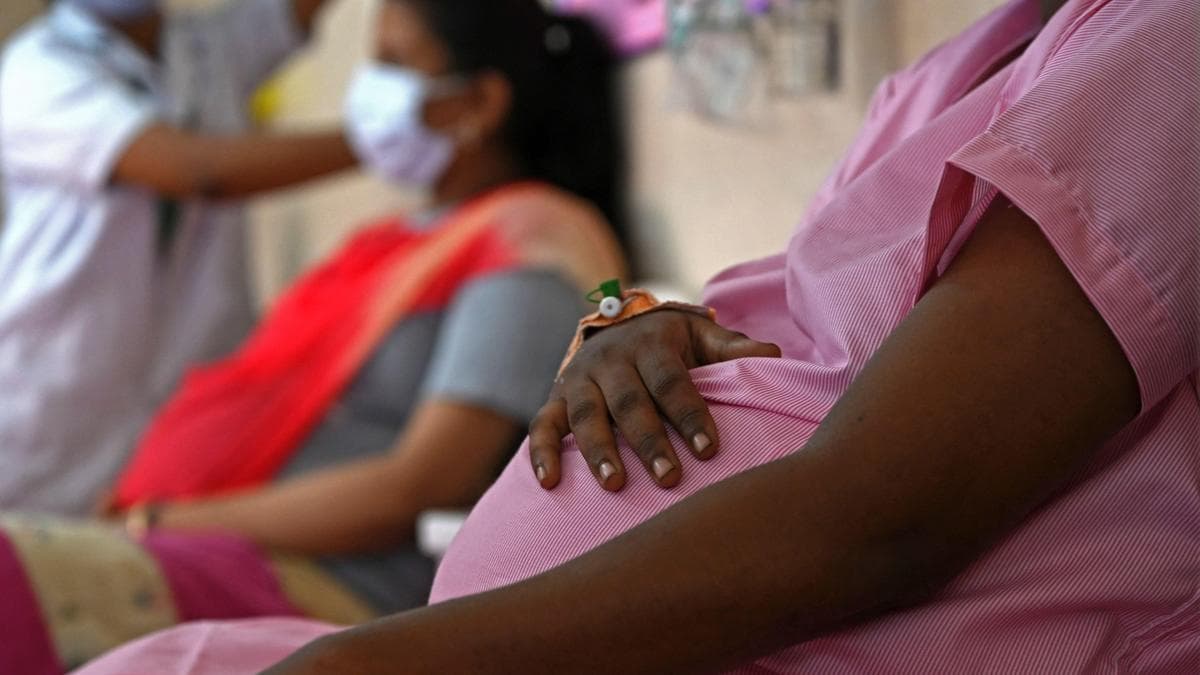
BJP member C.T. Ravi suggested strengthening the Pre-Conception and Pre-Natal Diagnostic Techniques Act, 1994, so that the accused lose licence to practice