



Relevant for Exams
TDP MP seeks Central aid for Andhra Pradesh's revenue deficit to roll out 'G RAM G' scheme.
Summary
A TDP MP has highlighted Andhra Pradesh's significant revenue deficit, urging the Central government for financial assistance. This aid is crucial for the state to successfully implement its 'G RAM G' scheme. The issue underscores the ongoing fiscal challenges faced by Indian states and the critical role of central support in ensuring state-level development initiatives, making it relevant for understanding India's federal financial structure for competitive exams.
Key Points
- 1A TDP Member of Parliament (MP) raised concerns regarding Andhra Pradesh's revenue deficit.
- 2The MP sought financial assistance from the Central government for the state.
- 3The central aid is specifically requested for implementing the 'G RAM G' scheme.
- 4The issue highlights fiscal challenges faced by states and their dependence on central support.
- 5This topic is relevant to understanding inter-state fiscal relations and federal financial mechanisms in India.
In-Depth Analysis
The recent plea by a Telugu Desam Party (TDP) MP for central assistance to Andhra Pradesh, citing a significant revenue deficit and the need to fund the 'G RAM G' scheme, brings into sharp focus the complex dynamics of fiscal federalism in India. This issue is not merely about one state's financial woes; it encapsulates broader challenges related to state reorganization, equitable resource distribution, and the delicate balance between central support and state autonomy.
**Background Context: The Aftermath of Bifurcation**
Andhra Pradesh's current revenue deficit is largely a legacy of the state's bifurcation in June 2014, when the state of Telangana was carved out of it through the Andhra Pradesh Reorganisation Act, 2014. The residual state of Andhra Pradesh lost Hyderabad, its capital and primary economic engine, which contributed significantly to its revenue. This sudden loss of a major revenue source, coupled with the need to build a new capital (Amaravati) and develop infrastructure from scratch, plunged the new state into a deep financial crisis. The Act itself contained provisions for financial assistance to the successor states, but the quantum and mechanisms have been a continuous point of contention. A significant demand from Andhra Pradesh has been the grant of 'Special Category Status' (SCS), a status that would unlock more central funds and tax concessions. While the Centre provided a 'Special Package' in lieu of SCS, the state government has consistently argued it falls short of the promised support and its actual needs. The 'G RAM G' scheme, for which aid is sought, likely represents a crucial state-level development initiative, underscoring the urgency of the financial assistance.
**What Happened and Key Stakeholders**
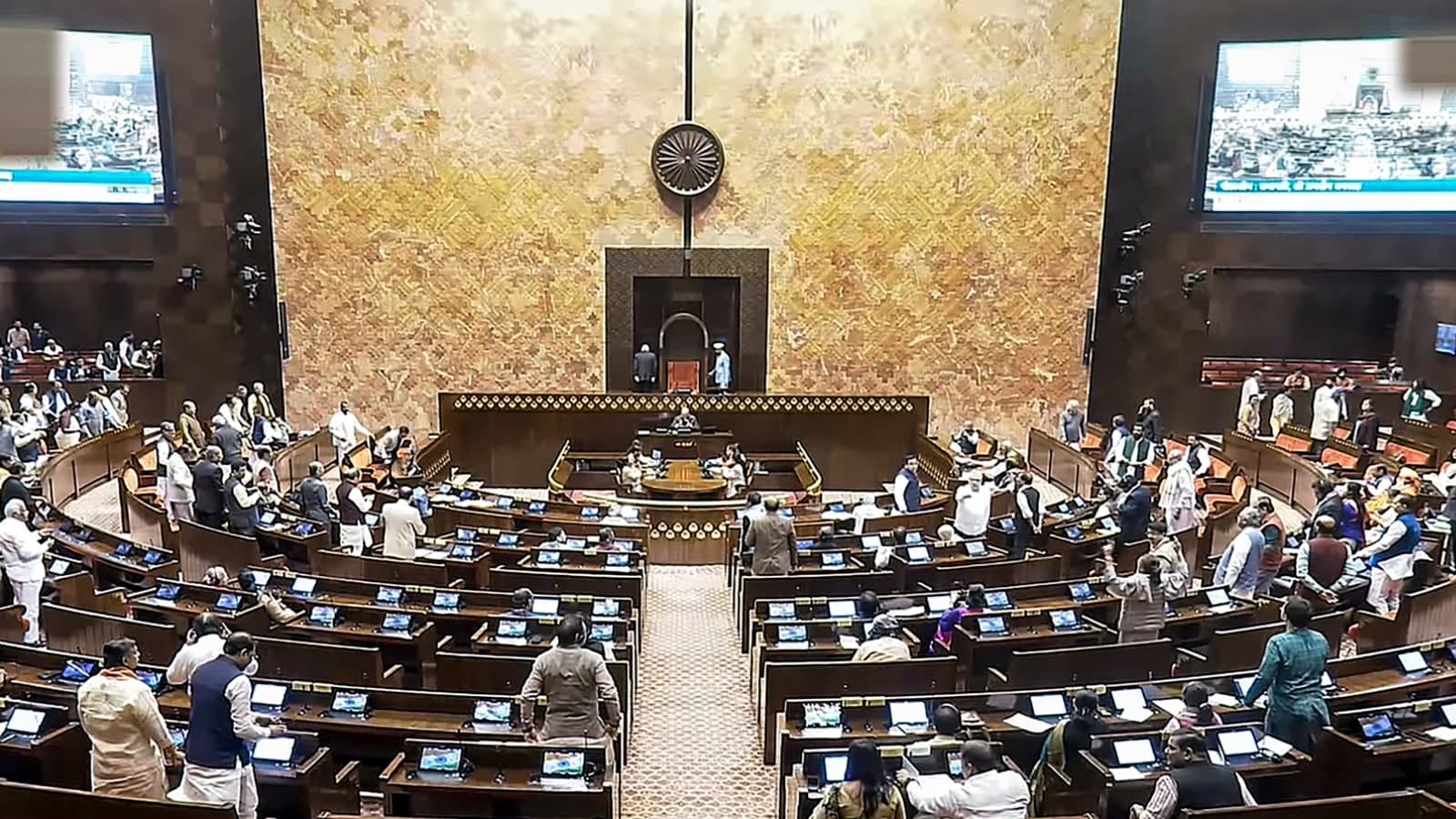
The TDP MP's intervention in Parliament highlights the state's persistent fiscal challenges and its dependence on central aid for critical developmental projects. The primary stakeholders involved are:
1. **Andhra Pradesh Government and its elected representatives (like the TDP MP):** They are directly responsible for the state's finances and development, constantly advocating for more resources from the Centre to fulfill their electoral promises and developmental agenda.
2. **The Central Government (Ministry of Finance):** As the custodian of national finances, it plays a crucial role in deciding the allocation of funds to states, balancing the demands of various states with national priorities and fiscal prudence. The Centre's decisions are often guided by the recommendations of the Finance Commission.
3. **The Finance Commission (under Article 280 of the Constitution):** This constitutional body is pivotal in recommending the distribution of net proceeds of taxes between the Union and the states (vertical devolution) and among the states themselves (horizontal devolution), as well as grants-in-aid to states in need. Its recommendations are crucial for the stability of fiscal federalism.
4. **Citizens of Andhra Pradesh:** Ultimately, they are the beneficiaries or sufferers of the state's financial health, as it directly impacts the delivery of public services and the implementation of welfare and development schemes.
**Significance for India and Constitutional Framework**
This issue holds immense significance for India's federal structure and economic stability. It exemplifies the practical challenges of fiscal federalism, where states often have significant expenditure responsibilities but limited independent revenue-generating capacities, leading to reliance on central transfers. This dependence can sometimes strain Centre-state relations, particularly when political parties at the Centre and state levels differ. The debate around Andhra Pradesh's revenue deficit underscores the need for robust mechanisms for inter-state fiscal adjustments and equitable resource distribution, crucial for mitigating regional disparities and ensuring balanced national development.
Several constitutional provisions underpin these financial relations:
* **Article 280:** Mandates the President to constitute a Finance Commission every five years to make recommendations on the distribution of taxes and grants-in-aid.
* **Article 275:** Empowers Parliament to provide grants-in-aid to states that are in need of assistance, based on the recommendations of the Finance Commission. These are statutory grants.
* **Article 282:** Allows the Union or a state to make grants for any public purpose, even if the purpose is not within the legislative competence of the body making the grant. These are discretionary grants, often used for specific schemes or packages.
* **Seventh Schedule:** Defines the legislative powers and, by extension, the taxation powers of the Union (Union List), states (State List), and both (Concurrent List). States primarily rely on taxes like sales tax (now subsumed mostly by GST), land revenue, and state excise duties, while the Centre collects major taxes like income tax, corporation tax, and customs duties.
* **Andhra Pradesh Reorganisation Act, 2014:** Specifically contained financial provisions to address the revenue deficit and infrastructure needs of the successor state of Andhra Pradesh.
**Future Implications**
The resolution of Andhra Pradesh's revenue deficit is vital for its long-term economic stability and growth. If the Centre provides further assistance, it could set a precedent for addressing financial challenges arising from state reorganizations or other unique circumstances. Conversely, if the state's pleas are not adequately addressed, it could lead to increased fiscal stress, impacting development projects and welfare schemes, potentially fueling political discontent. The ongoing discourse also feeds into the broader debate about the criteria for granting Special Category Status and the role of the Finance Commission in ensuring equitable and sustainable state finances across the country. Future Finance Commissions will likely continue to grapple with these complexities, seeking to strike a balance between fiscal prudence, developmental needs, and cooperative federalism.
Exam Tips
This topic falls under the 'Indian Polity' and 'Indian Economy' sections of the UPSC Civil Services Exam syllabus, particularly focusing on 'Centre-State Relations', 'Fiscal Federalism', 'Public Finance', and 'State Finances'.
Study the constitutional provisions related to financial relations between the Centre and states (Articles 268-293) thoroughly. Pay special attention to the role and recommendations of the Finance Commission (Article 280) and different types of grants (Article 275 and 282).
Understand the concept of 'Special Category Status' (SCS) – its criteria, historical context, and the economic implications for states. Be prepared for questions that compare SCS with special packages or other forms of central assistance.
Common question patterns include direct questions on the functions of the Finance Commission, analytical questions on the challenges of fiscal federalism, and case-study based questions on specific state financial issues like revenue deficits or demands for special status.
Relate this issue to the Goods and Services Tax (GST) regime, as GST's implementation significantly altered state revenue autonomy and introduced a compensation mechanism, which is also a crucial aspect of Centre-state fiscal relations.