



Relevant for Exams
State allocates ₹113.10 Cr for menstrual hygiene in 2024-25; Madras HC seeks BPL/EWS expansion.
Summary
The Advocate-General informed the Madras High Court about a ₹113.10 crore allocation for the state's menstrual hygiene programme in 2024-25. The Chief Justice’s Bench requested further details to assess expanding the scheme to include women from Below Poverty Line (BPL) and Economically Weaker Section (EWS) categories. This news is significant for exams covering social welfare schemes, public health initiatives, and judicial oversight of government programmes.
Key Points
- 1A sum of ₹113.10 crore has been allocated for the menstrual hygiene programme.
- 2This allocation is specifically for the financial year 2024-25.
- 3The information was provided by the Advocate-General to the Madras High Court.
- 4The Chief Justice’s Bench of the Madras High Court is reviewing the programme.
- 5The court is exploring the expansion of the programme to include women from BPL and EWS categories.
In-Depth Analysis
The recent announcement regarding the allocation of ₹113.10 crore for Tamil Nadu's menstrual hygiene programme for the financial year 2024-25, and the subsequent review by the Madras High Court, brings to the forefront a critical aspect of public health and social justice in India. This development underscores the growing recognition of menstrual hygiene as a fundamental right and a key indicator of women's empowerment and overall societal well-being.
**The Unseen Struggle: Background of Menstrual Hygiene in India**
For decades, menstrual hygiene has been shrouded in silence, stigma, and neglect in India. Cultural taboos, lack of awareness, limited access to affordable sanitary products, and inadequate sanitation facilities have severely impacted the health, education, and dignity of millions of women and girls. Studies have consistently shown that poor menstrual hygiene management leads to various health issues, including reproductive tract infections. Beyond health, it significantly contributes to girls dropping out of school, particularly in rural areas, due to discomfort, shame, and lack of proper facilities. This cycle of disadvantage perpetuates gender inequality and limits women's participation in education and the workforce. The government, both central and state, has slowly begun to address this issue through various initiatives, recognizing its multi-dimensional impact.
**The Current Development: A Glimmer of Hope**
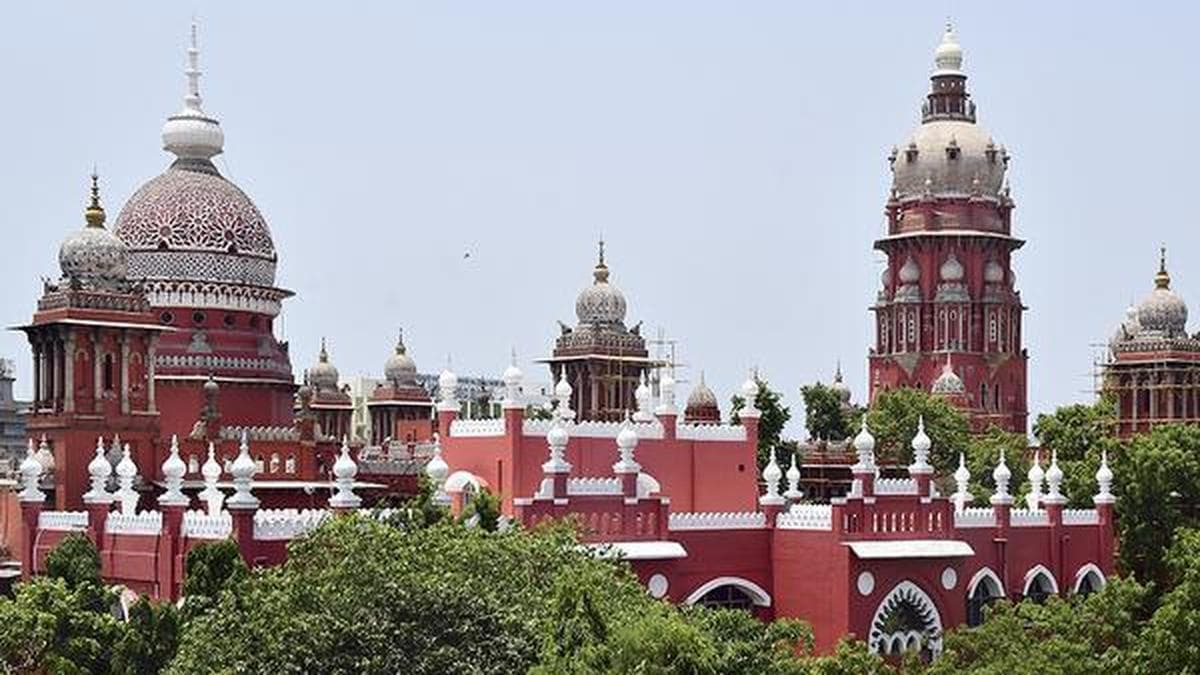
The core of the news lies in the Tamil Nadu government's commitment of ₹113.10 crore for its menstrual hygiene programme for 2024-25, as conveyed to the Madras High Court by the Advocate-General. This substantial allocation reflects a proactive stance by the state to address this often-overlooked public health challenge. What makes this development particularly significant is the Madras High Court Chief Justice’s Bench's intervention, which has called for additional details to explore the expansion of the programme to include women from Below Poverty Line (BPL) and Economically Weaker Section (EWS) categories. This judicial oversight highlights the court's role in ensuring equitable access to essential services and upholding the rights of vulnerable sections of society.
**Key Players in the Arena**
Several stakeholders are crucial in this ongoing discourse. The **State Government of Tamil Nadu**, particularly its Health and Social Welfare Departments, is the primary driver, responsible for policy formulation, budgetary allocation, and ground-level implementation of the programme. The **Madras High Court**, through its Chief Justice’s Bench, acts as a crucial oversight mechanism, ensuring that the allocated funds are utilized effectively and that the programme reaches those who need it most, particularly the marginalized BPL and EWS women. The **Advocate-General** serves as the legal representative of the state, presenting the government's position and details to the court. Most importantly, **women and girls**, especially those from BPL and EWS categories, are the ultimate beneficiaries and central to the programme's purpose. Their access to safe and hygienic menstrual practices is directly linked to their health, educational attainment, and overall empowerment. Civil society organizations and NGOs also play a vital role in advocacy, awareness campaigns, and often in last-mile delivery of services.
**Why This Matters for India: A Multifaceted Impact**
This initiative holds immense significance for India. From a **public health** perspective, improved menstrual hygiene reduces the incidence of infections and promotes reproductive health. For **education**, it can significantly reduce school absenteeism among adolescent girls, improving literacy rates and future opportunities. Socially, it helps in breaking down deep-seated taboos and stigmas associated with menstruation, fostering a more open and gender-sensitive society. Economically, healthy and educated women contribute more effectively to the workforce, boosting national productivity. Politically, such programmes demonstrate good governance, accountability in public spending, and a commitment to social justice. The judicial intervention further reinforces the principle of checks and balances, ensuring that welfare schemes are inclusive and effectively implemented.
**Constitutional Underpinnings and Policy Framework**
The state's initiative and the court's intervention are deeply rooted in India's constitutional framework. The **Right to Life and Personal Liberty (Article 21)**, a fundamental right, has been broadly interpreted by the judiciary to include the right to health and dignity. Access to menstrual hygiene products and education is integral to this right. Furthermore, the **Directive Principles of State Policy (DPSP)** guide the state in formulating social welfare policies. **Article 39(e) and (f)** direct the state to protect the health and strength of workers and ensure opportunities for healthy development of children. **Article 47** places a duty on the State to raise the level of nutrition and the standard of living and to improve public health. This programme directly aligns with these principles. At a national level, the **National Health Policy 2017** emphasizes comprehensive primary healthcare, including adolescent health, within which menstrual hygiene is a crucial component. Schemes like the central government's **Menstrual Hygiene Scheme (MHS)** under the National Health Mission (NHM) and the **Swachh Bharat Abhiyan (SBA)**, which focuses on sanitation and waste management, provide a broader policy context for such state-level initiatives.
**Looking Ahead: Future Implications**
If the Madras High Court's suggestion to expand the programme to BPL and EWS categories is adopted, it would mark a significant step towards achieving universal access to menstrual hygiene, especially for the most vulnerable. This could set a precedent for other states to review and expand their own programmes. The active role of the judiciary also signals a growing trend of judicial activism in ensuring the effective implementation of welfare schemes and protecting fundamental rights. This heightened scrutiny could lead to greater transparency and accountability in public spending and program delivery. Ultimately, sustained efforts in menstrual hygiene management, supported by robust policy and judicial oversight, are crucial for fostering a healthier, more equitable, and empowered India.
Exam Tips
This topic falls under GS Paper II (Social Justice, Governance, Welfare Schemes) and GS Paper I (Indian Society - Women's Issues) for UPSC. For SSC/State PSC, it's relevant for General Awareness, Social Schemes, and Current Affairs.
Study related government schemes like the National Health Mission (NHM), Swachh Bharat Abhiyan, and other state-specific health and women welfare programs. Understand the difference between central and state schemes.
Be prepared for factual questions on allocated amounts, specific years, and implementing bodies. Also, expect analytical questions on the social, economic, and health impacts of such programs, the role of the judiciary in governance, and constitutional provisions related to public health and gender equality.
Link this topic to broader concepts like Sustainable Development Goals (SDGs), particularly SDG 3 (Good Health and Well-being) and SDG 5 (Gender Equality), to provide a comprehensive answer in Mains examinations.
Understand the concept of 'judicial activism' and 'public interest litigation' (PIL) as the court's intervention is a prime example of judicial oversight in social welfare.
Related Topics to Study
Full Article
Chief Justice’s Bench calls for additional details to find out if the programme could be expanded to include women in BPL and economic weaker section categories