

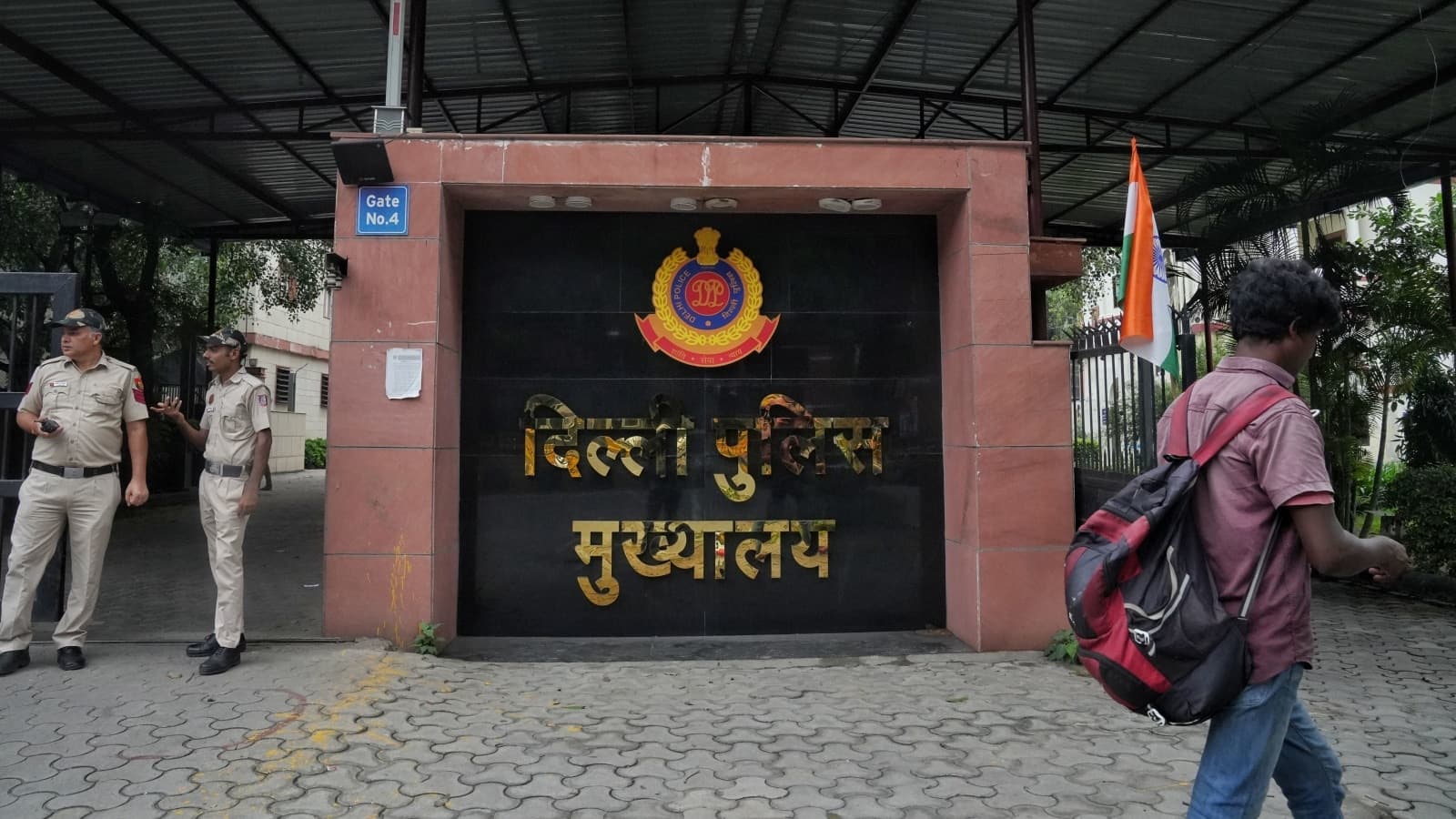


No content available for article on Delhi Police arrests in Parry murder case; no facts extractable.
Summary
An article titled "Shooters wanted for Parry murder held by Delhi Police Special Cell" was provided without any content. Consequently, no specific facts, names, dates, or details relevant for competitive exam preparation can be extracted from this entry. Its significance for exams is null due to the absence of information, making it impossible to assess its impact or implications.
Key Points
- 1The provided article explicitly states "No content available".
- 2Therefore, no specific details regarding the 'Parry murder' case or the arrests made can be extracted.
- 3Key information such as names of arrested individuals, date of arrest, or specific charges are absent.
- 4The involvement of the Delhi Police Special Cell is mentioned solely in the article's title.
- 5Without content, the article provides no factual basis for competitive examination questions.
In-Depth Analysis
Even without specific content from the article titled "Shooters wanted for Parry murder held by Delhi Police Special Cell," the headline itself provides a crucial window into the functioning of India's law enforcement and criminal justice system. For competitive exam aspirants, this is an opportunity to delve into the broader implications of such news, focusing on the roles of specialized police units, the challenges of urban crime, and the constitutional framework governing law and order.
**Background Context and What Happened (Generalised):**
The Delhi Police Special Cell is a highly specialized unit tasked with combating terrorism, organized crime, and other serious offenses that require advanced investigative techniques and intelligence gathering. The mere mention of the 'Special Cell' in connection with a 'murder' suggests a case of significant complexity or notoriety, possibly involving organized crime syndicates, contract killings, or inter-state criminal networks. In a typical scenario implied by such a headline, a serious crime – a murder – has occurred. Following the incident, investigative agencies, particularly the Delhi Police Special Cell, would employ their expertise to gather intelligence, track suspects, and ultimately apprehend those responsible. The 'Parry murder' would have likely been a high-profile case requiring intensive police work, possibly involving forensic analysis, electronic surveillance, and human intelligence.
**Key Stakeholders Involved:**
Primarily, the **Delhi Police Special Cell** is the central stakeholder, responsible for the investigation and arrest. Their role extends beyond routine policing, often involving counter-terrorism, anti-gang operations, and tackling sophisticated criminal activities. The **victims and their families** are crucial, as they seek justice and closure. The **accused individuals** are also key stakeholders, whose rights under the Constitution, such as the right to a fair trial (Article 21) and protection against self-incrimination (Article 20(3)), must be upheld. The **Judiciary** plays an indispensable role in ensuring due process, evaluating evidence, and ultimately delivering justice. The **public** is another stakeholder, whose perception of safety and trust in law enforcement is directly impacted by such cases. Finally, the **Union and State Governments** are stakeholders, as law and order is fundamentally a state subject (Entry 2, List II, Seventh Schedule of the Constitution), but central agencies like the Special Cell often receive central funding and support, especially in a Union Territory like Delhi.
**Why This Matters for India:**
Such incidents and their resolution are critical for several reasons. Firstly, they underscore the persistent challenge of **law and order** in metropolitan areas. The ability of law enforcement to apprehend 'shooters' in a murder case directly impacts **public safety and confidence**. Effective crime prevention and detection are vital for maintaining social order and fostering an environment conducive to economic activity. Secondly, the involvement of a specialized unit like the Special Cell highlights India's commitment to tackling **organized crime** and ensuring that even the most hardened criminals are brought to justice. This also reflects on India's **governance capacity** and the strength of its institutions. Cases involving serious crime often become litmus tests for the efficiency and integrity of the police and the judiciary. Moreover, the proper investigation and prosecution of such cases are essential for upholding the **rule of law**, a cornerstone of India's democratic framework.
**Historical Context and Future Implications:**
The evolution of specialized police units in India, including 'Special Cells' or 'Crime Branches,' dates back decades, driven by the increasing complexity of crime. From dacoity suppression in earlier times to combating modern-day cybercrime and terrorism, police forces have constantly adapted. The Delhi Police Special Cell itself has a rich history of handling high-profile cases. In the future, the challenges for such units will only grow, with the proliferation of technology in criminal activities, cross-border crime, and new forms of organized crime. This necessitates continuous **police modernization**, including training in cyber forensics, intelligence sharing mechanisms, and international cooperation. There is also a continuous debate surrounding **police reforms** (e.g., Prakash Singh v. Union of India, 2006, Supreme Court judgment), aiming to improve police accountability, independence, and efficiency. The handling of cases like the 'Parry murder' will influence public discourse on these reforms and the allocation of resources to law enforcement.
**Related Constitutional Articles, Acts, or Policies:**
Several constitutional provisions and legal frameworks are relevant. **Article 21** (Protection of Life and Personal Liberty) guarantees that no person shall be deprived of their life or personal liberty except according to procedure established by law. This applies to both victims and accused. **Article 20** offers protection in respect of conviction for offences, including protection against double jeopardy (Article 20(2)) and self-incrimination (Article 20(3)). **Article 22** details protection against arrest and detention in certain cases, ensuring rights like being informed of the grounds of arrest and the right to consult a legal practitioner. The **Code of Criminal Procedure, 1973 (CrPC)** governs the procedural aspects of arrest, investigation, trial, and bail. The **Indian Penal Code, 1860 (IPC)** defines various offenses, including murder (Section 300, punishable under Section 302). The **Indian Evidence Act, 1872**, dictates the admissibility of evidence in court. Furthermore, the **National Policy on Criminal Justice Reforms** and various recommendations from committees like the Malimath Committee highlight the ongoing efforts to strengthen the justice delivery system. The Delhi Police operates under the **Delhi Police Act, 1978**, which outlines its powers and functions.
Exam Tips
This topic falls under GS Paper II (Governance, Constitution, Polity, Social Justice) and GS Paper III (Internal Security). Focus on the structure and functions of police organizations, criminal justice system reforms, and fundamental rights.
Study related topics like the role of central investigative agencies (CBI, NIA), different types of police units (Special Cells, Crime Branches), the concept of 'Rule of Law,' and the challenges of urban crime. Understand the difference between 'law and order' (state subject) and 'police' (state subject).
Expect questions on the powers and limitations of police, constitutional safeguards for accused persons, police reforms, and the impact of technology on crime and policing. Common question patterns include analyzing the effectiveness of specialized units or discussing the balance between national security and individual liberties.