



Relevant for Exams
Karnataka Minister rejects regularisation of licensed surveyors to fill government posts.
Summary
MLC K. Shivakumar urged the Karnataka Minister to regularize licensed surveyors to fill vacant government posts, citing impending retirements and income concerns for current surveyors. However, the Minister clarified that such regularisation is not feasible. This news highlights administrative limitations and policy decisions within the state government regarding recruitment, making it primarily relevant for State PSC exams focusing on Karnataka's governance and public administration.
Key Points
- 1MLC K. Shivakumar raised the issue of regularisation of licensed surveyors.
- 2The proposal aimed to regularise licensed surveyors to fill vacant government surveyor posts.
- 3The request was made in the context of many existing government surveyors nearing retirement.
- 4The issue pertains to administrative policy and recruitment within the state of Karnataka.
- 5The Minister clarified that the regularisation of licensed surveyors is not possible.
In-Depth Analysis
The news regarding the Karnataka Minister's clarification on the non-regularisation of licensed surveyors brings to light a recurring and complex issue in public administration across India: the demand for and limitations of regularising contractual or ad-hoc employees. This specific instance, while focused on Karnataka, offers a valuable lens through which to understand broader principles of governance, public employment, and the balance between social welfare and administrative rules.
**Background Context and the Role of Surveyors:**
Land surveyors play a foundational role in any modern state. They are responsible for measuring and mapping land, establishing boundaries, and maintaining accurate land records. This work is crucial for property rights, land revenue collection, urban planning, infrastructure development (roads, railways, irrigation projects), and resolving land disputes. In India, the Department of Survey, Settlement and Land Records in each state is vital for this function. Licensed surveyors often operate independently or are engaged on a contractual basis for specific projects, sometimes even assisting the government in times of high workload, but without the security and benefits of permanent government employment. The demand for regularisation typically arises from these licensed or contractual workers who have often served for significant periods, contributing substantially but lacking job security, stable income, and post-retirement benefits.
**The Demand and the Government's Response:**
MLC K. Shivakumar's plea to regularise licensed surveyors was driven by humanitarian concerns, noting that many existing government surveyors were nearing retirement, creating vacancies, and that licensed surveyors lacked adequate future income. Regularisation, from the employees' perspective, offers a pathway to stable government jobs, complete with fixed salaries, allowances, and pensionary benefits, thereby ensuring their socio-economic security. However, the Karnataka Minister's firm clarification that such regularisation is "not possible" underscores the significant administrative and legal hurdles involved. Governments are bound by established recruitment rules, which typically mandate open competition through Public Service Commissions (like the Karnataka Public Service Commission – KPSC) to ensure meritocracy and equal opportunity for all eligible citizens.
**Key Stakeholders Involved:**
1. **Licensed Surveyors:** The primary demand group, seeking job security, better pay, and benefits. They represent a significant workforce whose skills are essential but whose employment status is precarious.
2. **MLC K. Shivakumar:** A political representative advocating for the welfare of a specific professional group, highlighting their concerns within the legislative framework.
3. **Karnataka Government (Minister for Revenue/concerned department):** Responsible for upholding administrative rules, managing state finances, ensuring efficient public service delivery, and adhering to constitutional provisions regarding public employment.
4. **Existing Government Surveyors:** Their impending retirements create vacancies, but their service conditions are governed by established rules, setting a precedent.
5. **Karnataka Public Service Commission (KPSC):** The constitutional body responsible for conducting examinations and selections for various state government posts, ensuring fair and merit-based recruitment.
**Significance for India and Constitutional Context:**
This issue has profound significance for public administration across India. It highlights the tension between the need for flexible workforce solutions (contractual appointments) and the constitutional mandate for fair and equitable public employment. The **Articles 14 (Equality before law)** and **16 (Equality of opportunity in matters of public employment)** of the Indian Constitution are central to this debate. Any regularisation drive that bypasses open competitive examinations can be challenged on grounds of violating these fundamental rights, as it denies other eligible candidates the opportunity to compete for public posts. The **Supreme Court's landmark judgment in *Secretary, State of Karnataka v. Uma Devi (2006)*** is highly relevant here. The court unequivocally ruled against the regularisation of illegal or irregular appointments made without following due process, emphasizing that public employment must be through open competition. This judgment has since guided government policy across the country, making regularisation a legally complex and often unfeasible option without a specific legislative framework or compelling exceptional circumstances.
Furthermore, **Article 309** empowers the state legislature to regulate recruitment and conditions of service for persons appointed to public services. This article forms the basis for various service rules and recruitment policies, which the government must adhere to.
**Broader Themes and Future Implications:**
This incident in Karnataka is not isolated; similar demands for regularisation arise from various contractual employees (teachers, health workers, sanitation workers, etc.) across different states. It underscores the broader themes of:
* **Administrative Reforms:** The need for a robust, transparent, and timely recruitment process to fill vacancies.
* **Human Resource Management in Government:** Balancing the need for a permanent, skilled workforce with temporary requirements and financial prudence.
* **Social Justice vs. Administrative Efficacy:** The dilemma of addressing the livelihood concerns of long-serving contractual employees while upholding the principles of meritocracy and equal opportunity.
In the future, the licensed surveyors might explore legal avenues to challenge the government's decision, although the *Uma Devi* judgment sets a high bar. The government, instead of regularisation, might consider fast-tracking direct recruitment through KPSC for surveyor posts, perhaps offering some age relaxation or preference for experienced licensed surveyors within the competitive framework, if legally permissible. Another approach could be to revise contractual terms to offer better benefits and security without conferring permanent status. The efficiency of land record management in Karnataka depends on adequately staffed departments, and continued vacancies could impede crucial development and administrative functions.
Exam Tips
This topic falls under 'Indian Polity and Governance' and 'Public Administration' sections of competitive exams, particularly for State PSCs. Focus on the constitutional provisions related to public employment.
Study related topics like 'Constitutional provisions for public services (Articles 14, 16, 309)', 'Role of Public Service Commissions (UPSC/SPSC)', 'Judicial pronouncements on public employment (especially *Uma Devi* case)', and 'Government recruitment policies and challenges'.
Expect questions on the legality of regularisation of ad-hoc/contractual employees, the constitutional articles governing public employment, the role of the Supreme Court in defining service conditions, and the challenges faced by state governments in managing their workforce. Be prepared for analytical questions on the balance between social welfare and administrative rules.
Related Topics to Study
Full Article
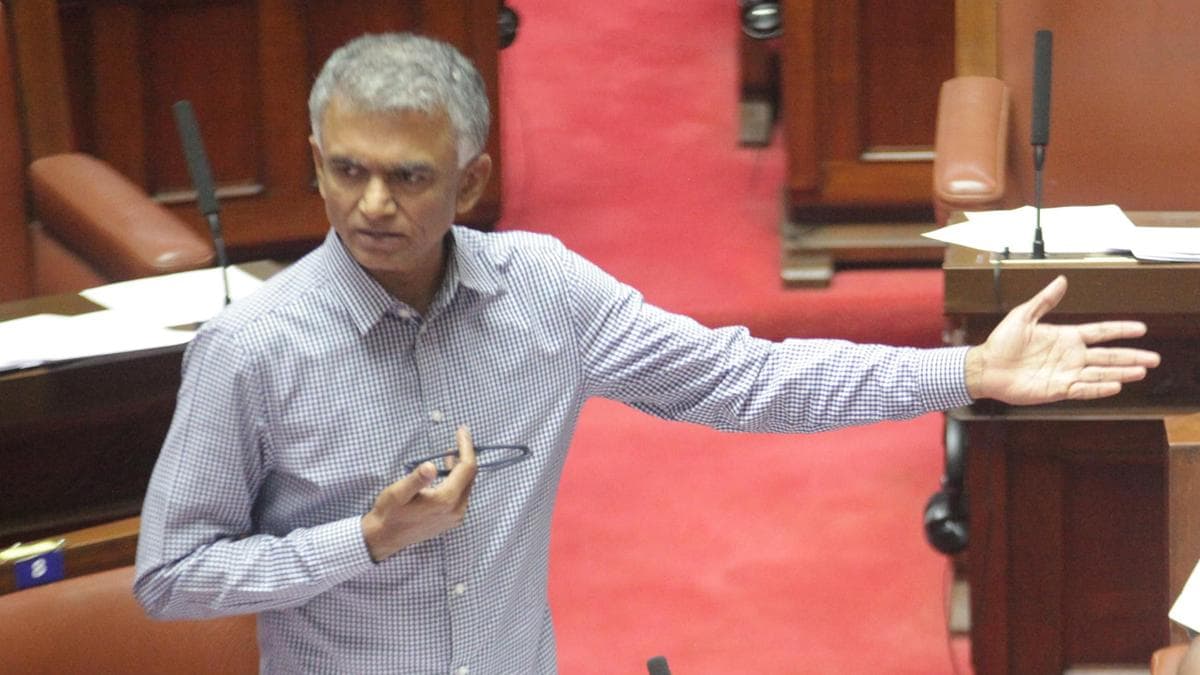
MLC K. Shivakumar urged the Minister to consider regularisation of licensed surveyors to fill vacant posts of government surveyors, as many of them were nearing retirement and did not have adequate source of income for the future