



Relevant for Exams
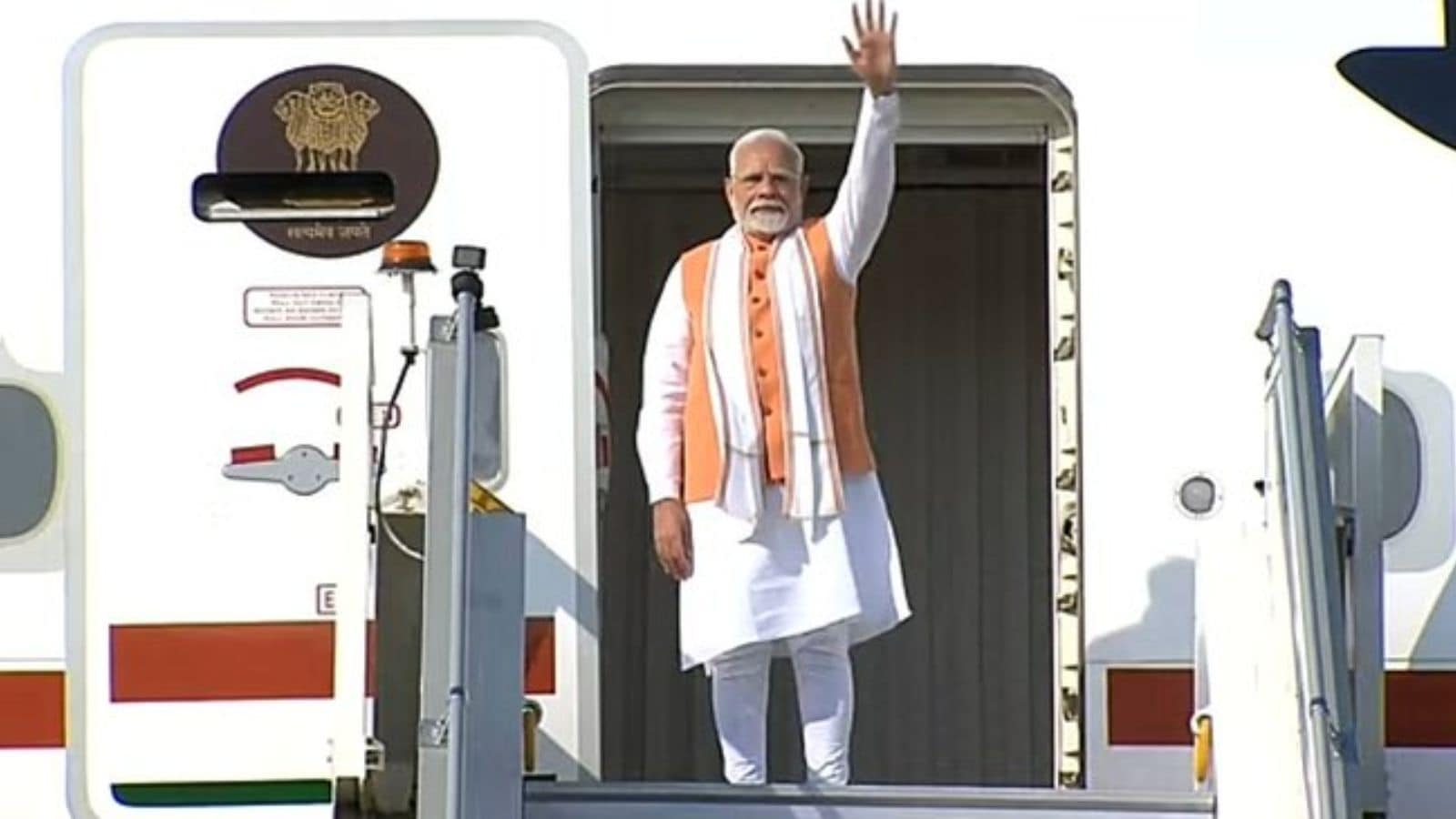
PM Modi in Oman to sign Free Trade Agreement, aiming to boost India-Oman economic ties.
Summary
Prime Minister Modi is visiting Oman to sign a crucial Free Trade Agreement (FTA). This visit signifies a major step towards strengthening bilateral economic ties and boosting trade between India and Oman. For competitive exams, understanding the implications of FTAs, key partner countries, and India's foreign policy objectives in the Middle East is vital, making this a significant development in international relations and economy.
Key Points
- 1Prime Minister Narendra Modi is undertaking an official visit to Oman.
- 2The primary agenda of PM Modi's visit is the signing of a Free Trade Agreement (FTA).
- 3The agreement is between India and the Sultanate of Oman.
- 4The Free Trade Agreement aims to enhance bilateral trade and economic cooperation.
- 5This initiative is part of India's broader strategy to strengthen economic partnerships in the Middle East region.
In-Depth Analysis
Prime Minister Narendra Modi's visit to Oman for the signing of a Free Trade Agreement (FTA) marks a significant moment in India's foreign policy and economic diplomacy, particularly with the strategically vital Middle East region. This development is not an isolated event but rather a culmination of decades of evolving bilateral relations and India's proactive 'Look West' policy.
**Background Context and Historical Ties:**
India and Oman share a history spanning millennia, rooted in ancient maritime trade routes connecting the Indian subcontinent with the Arabian Peninsula and beyond. Cultural exchanges, trade in spices, textiles, and frankincense have forged deep bonds. In modern times, diplomatic relations were established in 1955, and the relationship was elevated to a Strategic Partnership in 2008. Oman, strategically located at the mouth of the Strait of Hormuz, a critical chokepoint for global oil transit, holds immense importance for India's energy security and maritime interests. Bilateral trade, while substantial, has always had the potential for greater expansion, driven by Oman's economic diversification efforts under 'Vision 2040' and India's ambition to become a 5 trillion-dollar economy.
**The Significance of the Free Trade Agreement:**
The core of PM Modi's visit is the signing of a comprehensive FTA, often referred to as a Comprehensive Economic Partnership Agreement (CEPA) in India's recent nomenclature. Such an agreement aims to reduce or eliminate tariffs on a wide range of goods, streamline customs procedures, and liberalize trade in services. For India, this means enhanced market access for its manufactured goods, agricultural products, textiles, pharmaceuticals, and IT services in Oman. Conversely, India can expect more competitive access to Omani energy resources (crude oil, natural gas, petrochemicals) and minerals. Beyond traditional trade, the FTA is expected to boost investment flows, encourage joint ventures, and foster cooperation in emerging sectors like renewable energy, technology, and food security.
**Key Stakeholders Involved:**
The primary stakeholders are the **Governments of India and Oman**, represented by their respective Ministries of Commerce, External Affairs, and other economic departments. Their political will and negotiating teams have been instrumental in shaping this agreement. **Businesses and industries** from both countries are crucial stakeholders, as they are the direct beneficiaries and implementers of the FTA. Indian exporters and importers stand to gain from reduced barriers, while Omani companies can tap into India's vast consumer market and skilled workforce. The substantial **Indian diaspora in Oman** (estimated to be over 600,000) also plays a vital role, contributing to Oman's economy and facilitating cultural and economic bridges, often acting as informal ambassadors and investors.
**Why This Matters for India:**
This FTA holds multi-faceted significance for India. **Economically**, it provides a stable and preferential trade regime with a key Gulf partner, diversifying India's export markets and securing critical imports. It aligns with India's broader strategy to enhance its economic footprint globally and achieve its export targets. **Strategically and Geopolitically**, Oman is a trusted partner in a volatile region. Strengthening ties with Oman contributes to India's energy security agenda, given its heavy reliance on Gulf oil and gas. Furthermore, it enhances maritime security cooperation in the Indian Ocean, a region critical for global trade and India's strategic interests. Oman's consistent support for India's positions on various international forums also underscores its importance. This agreement reinforces India's 'Act West' policy, which seeks to deepen engagement with West Asian countries across political, economic, and security dimensions.
**Constitutional and Policy References:**
The power to enter into and implement international agreements, such as FTAs, primarily vests with the Executive. However, for domestic legal effect, **Article 253 of the Indian Constitution** empowers Parliament to make laws for implementing any international treaty, agreement, or convention or any decision made at any international conference, association, or other body. While not every FTA necessarily requires specific parliamentary legislation for its implementation, changes to tariff structures or other domestic laws often necessitate parliamentary action or executive notification under existing laws like the **Foreign Trade (Development and Regulation) Act, 1992**. This act provides the legal framework for the government to formulate and implement India's foreign trade policy, including signing and operationalizing FTAs.
**Future Implications:**
The India-Oman FTA is expected to catalyze further investment from Oman into India, particularly in infrastructure, energy, and manufacturing, and vice-versa. It could serve as a template for future trade agreements with other members of the Gulf Cooperation Council (GCC), with whom India is also pursuing a wider FTA. Enhanced economic integration will likely lead to greater people-to-people contact, cultural exchange, and collaboration in education and skill development. Moreover, this agreement solidifies India's position as a reliable economic and strategic partner in the Indo-Pacific, contributing to regional stability and prosperity. It underscores India's commitment to a rules-based international trading system and its proactive role in shaping global economic architecture.
Exam Tips
This topic falls under UPSC GS-II (International Relations: Bilateral, Regional and Global Groupings and Agreements involving India and/or affecting India’s interests) and GS-III (Economy: Indian Economy and issues relating to planning, mobilization of resources, growth, development and employment; liberalization and its effects on the economy).
Study the broader context of India's 'Look West' policy, the significance of the Gulf Cooperation Council (GCC) for India's energy security, trade, and diaspora, and the difference between various types of trade agreements (FTA, CEPA, PTA, Customs Union).
Common question patterns include: analytical questions on the economic and strategic implications of FTAs for India; direct questions on India's foreign policy objectives in the Middle East; and questions comparing India's engagement with different Gulf nations. Be prepared for map-based questions on the Strait of Hormuz and the region.
Pay attention to the key sectors that are expected to benefit from such agreements (e.g., IT, pharmaceuticals, energy, food products) and the specific economic benefits like market access, investment flow, and job creation.
Understand Article 253 of the Constitution and the Foreign Trade (Development and Regulation) Act, 1992, as they provide the legal framework for India's international trade agreements.