



Relevant for Exams
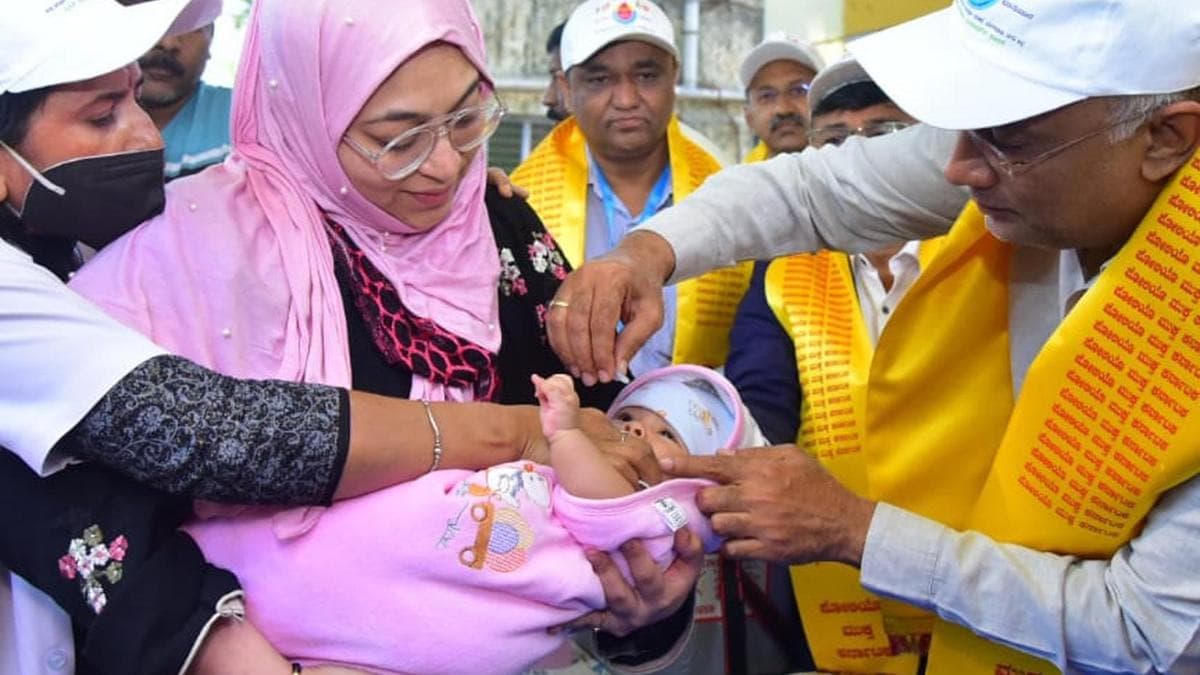
Karnataka to launch Pulse Polio campaign on Dec 21, targeting over 62.40 lakh children.
Summary
Karnataka is set to conduct a Pulse Polio campaign on December 21, aiming to immunize over 62.40 lakh children. This initiative is crucial for sustaining India's polio-free status and reinforcing public health efforts against the disease. For competitive exams, understanding the scale, objectives, and implementation of such national health programs is vital for questions on government schemes and social welfare.
Key Points
- 1A Pulse Polio campaign is scheduled to be conducted in the state of Karnataka.
- 2The campaign is slated to take place on December 21.
- 3It aims to cover over 62.40 lakh children in Karnataka.
- 4This initiative is part of India's ongoing national program for polio eradication.
- 5Pulse Polio campaigns typically involve administering Oral Polio Vaccine (OPV) to children aged 0-5 years.
In-Depth Analysis
The news of Karnataka's upcoming Pulse Polio campaign on December 21, targeting over 62.40 lakh children, might seem like a routine public health announcement. However, for competitive exam aspirants, it represents a crucial opportunity to delve into India's monumental public health achievements, the intricacies of national health programs, and the continuous vigilance required to maintain such victories. This campaign is not just about a single day's activity; it's a reaffirmation of India's commitment to its polio-free status and a testament to sustained public health efforts.
**The Scourge of Polio and Global Eradication Efforts:**
Polio, or poliomyelitis, is a highly infectious viral disease that primarily affects young children. It can cause irreversible paralysis, and in some cases, death. For centuries, polio crippled communities worldwide. The development of effective vaccines in the mid-20th century provided the first ray of hope. The Global Polio Eradication Initiative (GPEI) was launched in 1988 by the World Health Organization (WHO), Rotary International, UNICEF, and the U.S. Centers for Disease Control and Prevention (CDC), aiming to eradicate polio globally. At that time, polio was endemic in 125 countries, causing over 350,000 cases annually.
**India's Fight Against Polio: A Public Health Triumph:**
India, once considered one of the most challenging places to eradicate polio due to its vast population, high birth rates, poor sanitation, and high population density, embarked on its Intensified Pulse Polio Immunization (IPPI) program in 1995. This program involved administering the Oral Polio Vaccine (OPV) to all children under five years of age during large-scale, synchronized campaigns. The strategy was to create a high level of population immunity, thereby interrupting the transmission of the poliovirus. The sheer scale of these campaigns was unprecedented, involving millions of health workers, volunteers, and logistical planning to reach every child, even in the remotest corners. India recorded its last case of wild poliovirus on January 13, 2011, in Howrah, West Bengal. Following three years of no reported cases, the WHO officially certified India as polio-free on March 27, 2014. This achievement was hailed as one of the greatest public health successes in recent history.
**The Karnataka Campaign: A Microcosm of National Vigilance:**
The upcoming campaign in Karnataka, aiming to cover over 62.40 lakh children, is a prime example of India's continued vigilance. Despite being polio-free, the risk of re-importation of the virus from endemic countries like Pakistan and Afghanistan remains a significant concern. Therefore, supplementary immunization activities (SIAs) like the Pulse Polio campaign are crucial to maintain high population immunity. These campaigns typically target children aged 0-5 years, ensuring that new cohorts of children are protected. The Oral Polio Vaccine (OPV) is favored in these campaigns for its ease of administration and ability to induce intestinal immunity, which helps prevent the spread of the virus.
**Key Stakeholders and Their Collaborative Roles:**
Such massive public health initiatives are a result of multi-stakeholder collaboration. The **Union Ministry of Health and Family Welfare** provides policy direction, funding, and oversight. At the state level, the **State Health Departments** (like Karnataka's) are responsible for planning, implementation, and monitoring. International partners such as the **WHO** provide technical guidance, surveillance support, and independent certification. **UNICEF** plays a vital role in social mobilization, communication, and vaccine procurement. **Rotary International** has been a consistent global advocate and fundraiser for polio eradication. On the ground, millions of **frontline health workers** including ASHA (Accredited Social Health Activist) workers, Anganwadi workers, and volunteers are the backbone of these campaigns, reaching households and administering vaccines. Community leaders and parents also play a critical role in ensuring children are brought for vaccination.
**Significance for India: A Pillar of Public Health and Development:**
Maintaining polio-free status is immensely significant for India. Socially, it means preventing irreversible paralysis and improving the quality of life for millions of children, contributing to a healthier and more productive generation. Economically, it reduces the burden on healthcare systems and families, freeing up resources for other developmental priorities. Politically, it enhances India's global reputation as a nation capable of executing large-scale public health programs effectively, offering lessons to other developing countries. This success underscores the importance of strong primary healthcare infrastructure and robust immunization programs. It also aligns with Sustainable Development Goal 3 (SDG 3) – 'Good Health and Well-being'.
**Constitutional and Policy Framework:**
The Indian Constitution, though not explicitly mentioning polio eradication, places public health as a key responsibility of the state. **Article 47** of the Directive Principles of State Policy (DPSP) states that the 'State shall regard the raising of the level of nutrition and the standard of living of its people and the improvement of public health as among its primary duties.' This article provides the constitutional bedrock for public health initiatives like the Pulse Polio program. Furthermore, the **National Health Policy (NHP) 2017** emphasizes the importance of universal access to quality healthcare services, including immunization. Programs like the **National Health Mission (NHM)**, launched in 2005, aim to strengthen the public health system, with immunization being a core component.
**Future Implications and Continued Vigilance:**
While India is polio-free, the battle is not over. The global eradication of polio is still a work in progress, with wild poliovirus still circulating in Afghanistan and Pakistan. This necessitates continuous surveillance, rapid response mechanisms, and sustained immunization coverage. Challenges include vaccine hesitancy, reaching migrating populations, and ensuring the cold chain for vaccine efficacy. The focus is now shifting towards strengthening routine immunization services to ensure that every child receives all recommended vaccines, not just polio. This approach builds resilience against various vaccine-preventable diseases and ensures a lasting impact on child health.
In essence, the Karnataka Pulse Polio campaign is a critical component of India's ongoing commitment to public health, reflecting a successful model of national and international cooperation, robust implementation, and continuous vigilance. It's a reminder that public health achievements are hard-won and require constant effort to sustain.
Exam Tips
This topic primarily falls under GS Paper II (Social Justice, Government Schemes and Policies, Health) and GS Paper I (Social Issues) for UPSC. For State PSCs, SSC, Banking, and Railway exams, it's relevant under General Awareness, Government Schemes, and Current Affairs.
When studying, focus on key facts: the year the Pulse Polio program started in India (1995), the last wild polio case in India (January 13, 2011), and India's polio-free certification year (2014). Understand the difference between wild poliovirus and vaccine-derived poliovirus.
Relate this to broader health policies like the National Health Policy (NHP) 2017, the National Health Mission (NHM), and the Universal Immunization Programme (UIP). Also, connect it to the Directive Principles of State Policy, especially Article 47.
Common question patterns include: direct questions on the objectives and achievements of the Pulse Polio program, the roles of international organizations (WHO, UNICEF), the constitutional basis for public health, and the challenges faced in maintaining polio-free status.
Be prepared for questions on the types of polio vaccines (OPV vs. IPV) and why OPV is predominantly used in pulse polio campaigns, along with the concept of 'herd immunity'.