



Relevant for Exams
MP revokes Ujjain land pooling scheme for Simhastha Kumbh infrastructure amid farmer protests.
Summary
The Madhya Pradesh government revoked its Ujjain land pooling scheme, which was originally intended for developing infrastructure for the Simhastha Kumbh. This decision followed significant opposition and protest calls from various farmer bodies in the region. The revocation underscores the complexities of land acquisition for urban development and highlights the state government's response to public pressure, making it relevant for understanding governance and policy implementation for competitive exams.
Key Points
- 1The Madhya Pradesh government revoked a land pooling scheme.
- 2The scheme was specifically located in Ujjain, Madhya Pradesh.
- 3Its primary purpose was for developing infrastructure related to the Simhastha Kumbh.
- 4The revocation was a direct result of opposition and protest calls from farmer bodies.
- 5The scheme was part of a larger town development plan for the region.
In-Depth Analysis
The Madhya Pradesh government's decision to revoke the Ujjain land pooling scheme, initially designed for Simhastha Kumbh infrastructure, is a significant development that encapsulates several critical aspects of governance, land policy, and public participation in India. This move, prompted by robust opposition from farmer bodies, provides a compelling case study for competitive exam aspirants to understand the complexities of urban development, land acquisition, and state responsiveness to agrarian concerns.
**Background Context: The Evolution of Land Acquisition in India and the Rise of Land Pooling**
Historically, land acquisition in India was governed by the archaic Land Acquisition Act of 1894, a colonial-era law heavily criticized for its compulsory nature, inadequate compensation, and lack of provisions for rehabilitation and resettlement. This often led to widespread protests, social unrest, and a deep sense of injustice among affected landowners, particularly farmers. Recognizing these deficiencies, the Indian Parliament enacted the Right to Fair Compensation and Transparency in Land Acquisition, Rehabilitation and Resettlement Act (LARR Act), 2013. This landmark legislation aimed to balance the state's need for land for public purposes with the rights of landowners, mandating fair compensation (up to four times the market value in rural areas), comprehensive rehabilitation packages, and, crucially, the requirement of consent from a majority of affected families (70% for PPP projects and 80% for private projects).
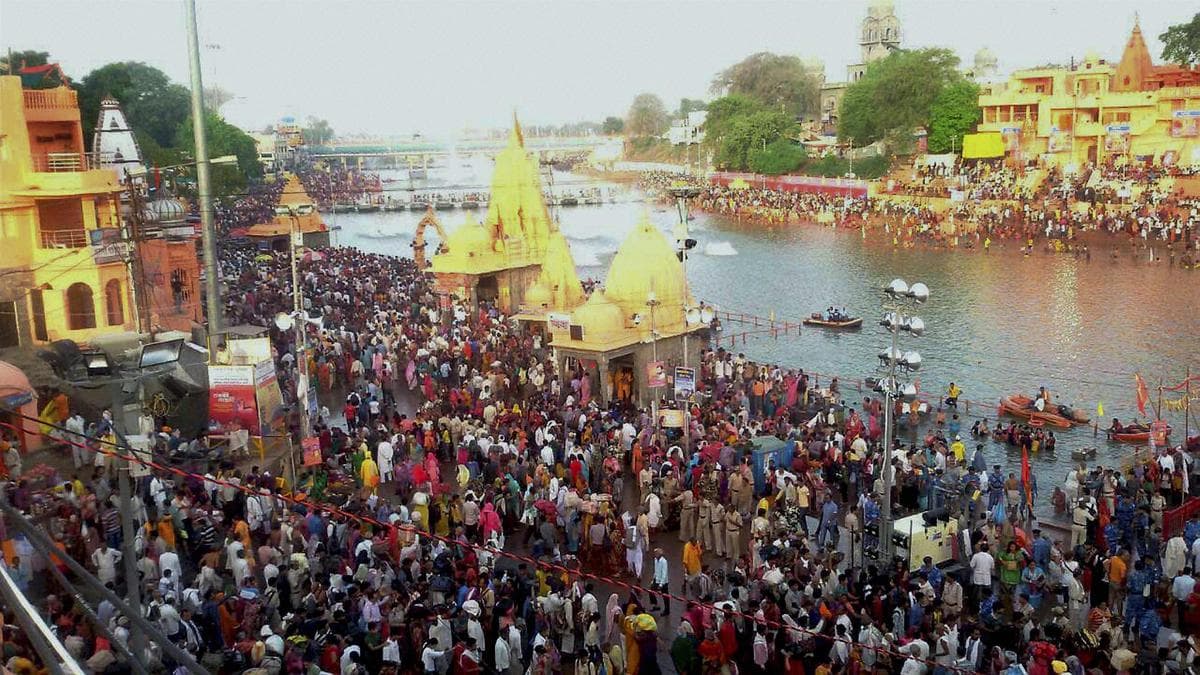
However, even with the LARR Act, the process of land acquisition remained lengthy, expensive, and often contentious. This led to the exploration of alternative models, such as 'land pooling.' Land pooling is a mechanism where individual landowners voluntarily pool their land parcels, which are then developed by a designated authority (e.g., urban development authority) with necessary infrastructure like roads, drainage, and utilities. After development, a portion of the developed land (typically 40-60%) is returned to the original landowners, often with enhanced value due to the improved infrastructure. The remaining land is utilized by the authority for public amenities, sale, or commercial purposes. The Ujjain land pooling scheme was conceived within this framework, intending to facilitate rapid infrastructure development for the Simhastha Kumbh Mela, a massive religious congregation held every 12 years, which requires significant temporary and permanent infrastructure.
**What Happened: A Policy Reversal Driven by Public Pressure**
In Ujjain, the Madhya Pradesh government had initiated a town development plan that included a land pooling scheme to acquire land for infrastructure related to the Simhastha Kumbh. This scheme aimed to streamline the process of acquiring land for roads, utilities, and other urban amenities necessary for managing the immense influx of pilgrims and tourists during the Kumbh. However, the implementation of this scheme met with fierce resistance from local farmer bodies. These farmers expressed concerns over inadequate compensation, potential loss of agricultural livelihoods, and a lack of transparency in the pooling process. Their protests and calls for agitation escalated, creating significant political pressure on the state government. In response to this mounting opposition, the Madhya Pradesh government decided to revoke the Ujjain land pooling scheme. This revocation highlights the state's acknowledgment of public sentiment and the political ramifications of pushing through policies without adequate stakeholder buy-in.
**Key Stakeholders Involved**
1. **Madhya Pradesh Government and Urban Development Authorities:** As the implementing authority, they sought land for public infrastructure, balancing development needs with social welfare. Their decision to revoke reflects a response to public pressure and a recalculation of political costs.
2. **Farmer Bodies and Local Farmers:** These were the primary antagonists of the scheme. Their concerns centered on land ownership, livelihood security, and fair compensation. Their organized protests proved instrumental in forcing the government's hand.
3. **Local Residents and Businesses:** While not directly involved in the protests, they represent the broader community affected by both the proposed development and the eventual revocation. Some might have benefited from the development, while others might have faced displacement or disruption.
4. **Simhastha Kumbh Organizers and Devotees:** The Kumbh Mela requires substantial infrastructure, and its successful conduct depends on such preparations. The revocation might necessitate alternative, potentially more expensive or time-consuming, methods for infrastructure development.
**Why This Matters for India: A Microcosm of Development Challenges**
This incident is highly significant for India for several reasons. Firstly, it underscores the persistent challenges in land acquisition for public projects, even with 'alternative' models like land pooling. It demonstrates that while land pooling offers potential benefits like reduced financial burden on the state and potential value appreciation for landowners, it is not immune to public discontent if not implemented transparently and equitably. Secondly, it highlights the growing power of farmer bodies and civil society in influencing policy decisions. In a democratic setup, public participation and the right to protest are fundamental, and this event reaffirms their efficacy. Thirdly, it has implications for urban planning and infrastructure development across the country. Many states are exploring land pooling as a viable option for smart cities and other large-scale projects. The Ujjain experience serves as a cautionary tale, emphasizing the need for robust consultation, fair terms, and clear communication with affected communities. Lastly, it touches upon the delicate balance between rapid economic development and social justice, a recurring theme in India's growth story.
**Constitutional and Policy References**
* **Article 300A (Right to Property):** While no longer a fundamental right, the right to property remains a constitutional right, stating that 'no person shall be deprived of his property save by authority of law.' This ensures that land acquisition must follow due legal process, which the LARR Act, 2013, aims to provide.
* **Right to Fair Compensation and Transparency in Land Acquisition, Rehabilitation and Resettlement Act, 2013 (LARR Act, 2013):** This central legislation is the primary legal framework governing land acquisition in India, emphasizing fair compensation, rehabilitation, and the consent of affected parties. Although land pooling is often implemented through state-specific town planning acts, the spirit and principles of the LARR Act often inform these policies.
* **State Town Planning Acts:** Many states, including Madhya Pradesh, have their own town and country planning acts (e.g., Madhya Pradesh Nagar Tatha Gram Nivesh Adhiniyam, 1973) that provide for land pooling or town planning schemes. These acts often derive their legislative power from the Seventh Schedule of the Constitution, specifically Entry 18 (Land) and Entry 20 (Economic and Social Planning) of the State List and Concurrent List, respectively.
* **Directive Principles of State Policy (DPSP):** Articles like Article 38 (State to secure a social order for the promotion of welfare of the people) and Article 39(b) and (c) (equitable distribution of material resources, prevention of concentration of wealth) provide the broader philosophical context for land reforms and policies aimed at social justice, even as the state pursues development.
**Future Implications**
The revocation of the Ujjain scheme sends a clear message to state governments and urban development authorities: land pooling, while conceptually appealing, requires meticulous planning, transparent execution, and genuine engagement with affected communities. Future infrastructure projects, especially those involving land acquisition or pooling, will likely face increased scrutiny and demands for greater stakeholder consultation. This could lead to: (1) more robust participatory planning processes, (2) stronger emphasis on rehabilitation and resettlement, even in pooling schemes, (3) potential delays in project implementation if consensus building is prolonged, and (4) a renewed focus on innovative land management techniques that minimize displacement and maximize benefits for original landowners. Ultimately, this incident reinforces the democratic principle that development must be inclusive and equitable, not just economically efficient.
Exam Tips
This topic falls under GS Paper II (Polity & Governance, Social Justice) and GS Paper III (Economy, Land Reforms, Infrastructure) for UPSC. For State PSCs, it's relevant for General Studies sections on state governance, economy, and social issues.
Study the 'Right to Fair Compensation and Transparency in Land Acquisition, Rehabilitation and Resettlement Act, 2013 (LARR Act)' in detail. Understand its key provisions, differences from the 1894 Act, and its pros and cons. Also, research the concept of 'Land Pooling' as an alternative model.
Be prepared for questions on the challenges of land acquisition in India, the role of farmer protests in policy-making, the balance between development and displacement, and the constitutional provisions related to property rights (Article 300A). Case studies like Ujjain can be directly asked or used to illustrate answers.
Connect this event to broader themes like urbanization challenges, smart cities mission, sustainable development goals, and the role of local self-governance (74th Constitutional Amendment Act) in urban planning.
Practice essay writing on topics like 'Land Acquisition: A necessary evil for development?' or 'The role of public participation in shaping government policies.'
Related Topics to Study
Full Article
Town development plan for Simhastha Kumbh infrastructure withdrawn after opposition from farmer bodies