



Relevant for Exams
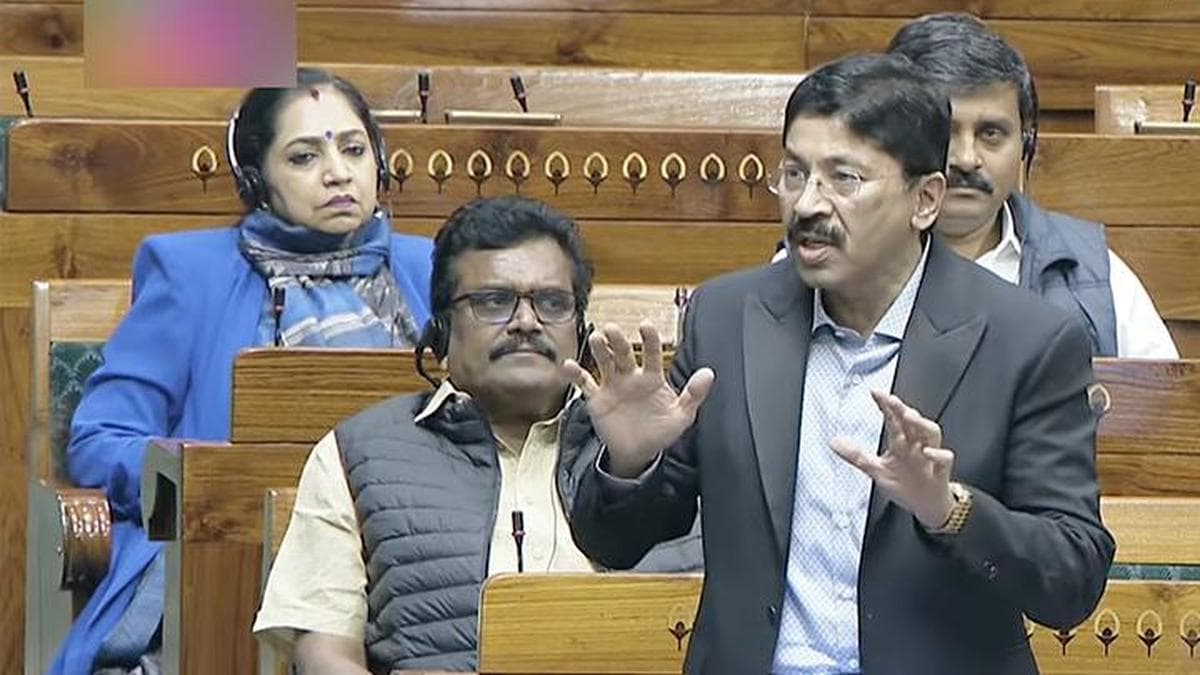
DMK MP Maran flags lack of in-flight WiFi; Telecom Minister Scindia says norms are in works.
Summary
DMK MP Dayanidhi Maran highlighted India's unique position as one of the few countries lacking in-flight WiFi, urging the government to address this digital connectivity gap. Union Communications Minister Jyotiraditya Scindia responded, confirming that norms for implementing in-flight internet services are actively being developed. This development signifies a potential policy shift towards enhancing digital infrastructure and passenger experience in Indian airspace, relevant for questions on government initiatives and digital India.
Key Points
- 1DMK MP Dayanidhi Maran raised concerns regarding India being one of the few places globally without in-flight WiFi.
- 2Union Communications Minister Jyotiraditya Scindia addressed the complaint.
- 3Minister Scindia stated that norms for introducing in-flight WiFi services are currently being worked out.
- 4The issue pertains to enhancing digital connectivity and passenger services in Indian aviation.
- 5The government's move indicates an upcoming policy framework for in-flight internet in India.
In-Depth Analysis
The recent complaint by DMK MP Dayanidhi Maran regarding India's lack of widespread in-flight WiFi, and Union Communications Minister Jyotiraditya Scindia's assurance that norms are being worked out, brings into sharp focus India's ongoing journey towards comprehensive digital connectivity. This issue, seemingly a matter of passenger convenience, is deeply intertwined with India's strategic vision for a 'Digital India', economic competitiveness, and national security considerations.
Historically, India has been cautious about allowing in-flight connectivity (IFC) due to significant national security concerns. The ability to communicate freely while airborne raised red flags for intelligence agencies, fearing potential misuse by anti-national elements. This led to India being one of the few major economies where passengers were routinely 'cut off' from digital communication once an aircraft ascended. For years, the Indian Telegraph Act of 1885, which governs telecommunications, did not explicitly cater to in-flight services, creating a regulatory vacuum or, at best, a restrictive environment. While global airlines began offering internet and mobile services in the early 2010s, India remained an outlier, citing the need for robust security protocols and monitoring mechanisms.
However, recognizing the growing global trend and the demands of its digitally-savvy populace and business travelers, the Indian government began re-evaluating its stance. In 2017, the Telecom Regulatory Authority of India (TRAI) issued recommendations for allowing IFC, advocating for a licensing framework. Building on this, in 2018, the Department of Telecommunications (DoT) officially approved the provision of in-flight internet and mobile communication services within Indian airspace. Subsequently, in 2020, the Directorate General of Civil Aviation (DGCA) amended the Aircraft Rules, 1937, to permit the use of Wi-Fi on board, provided the aircraft is equipped with the necessary technology and the service is activated only after the aircraft reaches a certain altitude. Despite these approvals, widespread implementation has been slow, primarily due to operational challenges, high costs for airlines, and the need for clearer, more comprehensive 'norms' – which Minister Scindia is now addressing.
Key stakeholders in this development include the **Ministry of Communications (DoT)**, responsible for telecom policy and licensing; the **Ministry of Civil Aviation (MoCA)** and its regulatory arm, the **DGCA**, which oversee aviation safety and operations; and the **Ministry of Home Affairs (MHA)**, which provides security clearances and inputs. Airlines, both domestic (like Air India, IndiGo, Vistara) and international operating in Indian airspace, are crucial implementers, eyeing enhanced passenger experience and potential revenue streams. Passengers, particularly business travelers and the younger demographic, are the primary beneficiaries, demanding seamless connectivity. Lastly, **Telecom Service Providers (TSPs)** and **Satellite Service Providers** are critical technology partners, providing the infrastructure and bandwidth for these services.
The significance of this move for India is multi-faceted. Firstly, it aligns perfectly with the 'Digital India' initiative, a flagship program launched in 2015, aimed at transforming India into a digitally empowered society and knowledge economy. Providing in-flight WiFi extends digital access to a previously unconnected segment of the population, enhancing 'ease of living' and 'ease of doing business'. Secondly, it boosts India's global competitiveness in the aviation sector. As a rapidly growing aviation market, offering modern amenities like IFC can attract more international airlines and passengers, bolstering tourism and trade. Economically, it opens up new revenue streams for airlines and creates opportunities for telecom and satellite service providers. Socially, it caters to the increasing demand for instant communication and entertainment, making air travel more productive and enjoyable.
From a legal and policy perspective, this development is rooted in the **Indian Telegraph Act, 1885**, which serves as the foundational legislation for telecommunications. Any new norms or licenses for IFC must operate within its ambit. TRAI, established under the **TRAI Act, 1997**, plays a crucial recommendatory role in shaping the regulatory framework. The **National Digital Communications Policy (NDCP) 2018**, with its vision of 'Broadband for All', provides the overarching policy direction for expanding digital infrastructure. While no specific constitutional article directly mandates in-flight internet, the broader constitutional ethos of promoting welfare (Article 38), and implicitly, the right to information and communication (derived from Article 19(1)(a) – Freedom of Speech and Expression, and Article 21 – Right to Life and Personal Liberty, through various judicial interpretations), underpins the government's drive for enhanced connectivity.
Looking ahead, the 'norms' being worked out are likely to address critical aspects such as spectrum allocation, security monitoring mechanisms, data privacy, quality of service standards, and pricing models. We can expect a phased rollout, with airlines gradually equipping their fleets. This will necessitate significant investment from airlines and technology providers. Future implications include potential growth in ancillary revenues for airlines, a more integrated travel experience, and a further push towards digital literacy and access across all domains of Indian life. However, challenges like ensuring robust cybersecurity, managing data traffic, and maintaining affordable service prices will need continuous attention from regulators and service providers. This move signifies India's commitment to bridging digital divides, even at 30,000 feet, solidifying its position in the global digital landscape.
Exam Tips
This topic falls under GS Paper II (Governance, Government Policies & Interventions, Welfare Schemes) and GS Paper III (Indian Economy, Infrastructure, Science & Technology) for UPSC Civil Services Exam. For SSC/Banking/Railway exams, it's relevant for General Awareness sections on government initiatives and technology.
When studying, connect this topic with broader themes like 'Digital India Mission', 'National Digital Communications Policy (NDCP) 2018', 'Ease of Doing Business', and 'Infrastructure Development'. Understand the roles of key ministries (DoT, MoCA, MHA) and regulatory bodies (TRAI, DGCA).
Common question patterns include: 'Discuss the significance of in-flight connectivity for India's digital transformation agenda.', 'What are the challenges and opportunities in implementing widespread in-flight WiFi in India?', or factual questions like 'Which Act primarily governs telecommunications in India?' or 'Which body gives recommendations on telecom policy in India?'
Pay attention to the timeline: TRAI recommendations (2017), DoT approval (2018), DGCA amendment to Aircraft Rules (2020). This shows a progressive policy evolution rather than a sudden decision.
Related Topics to Study
Full Article
DMK MP Dayanidhi Maran complained of India being one of the few places globally “cut off” from in-flight WiFi; communications Minister Jyotiraditya Scindia said that norms in this regard were being worked out