



Relevant for Exams
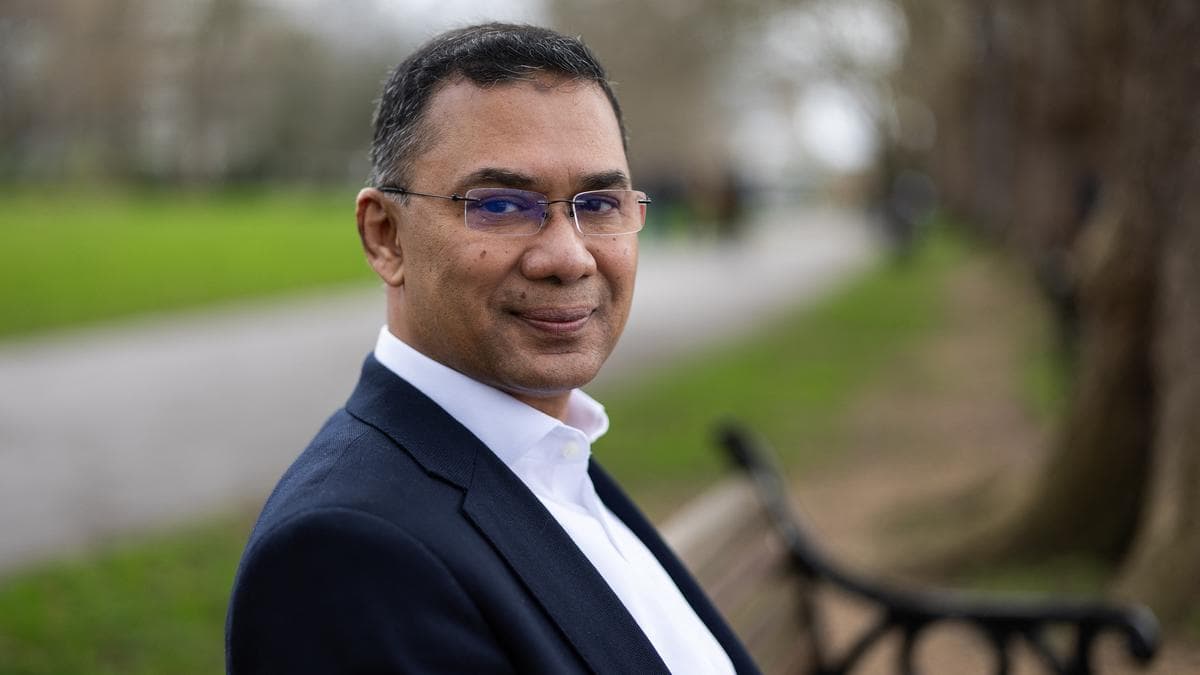
Khaleda Zia's self-exiled son, Tarique Rahman, plans return to Bangladesh after 17 years.
Summary
Tarique Rahman, son of former Bangladesh Prime Minister Khaleda Zia, is reportedly planning to return to Bangladesh after 17 years in self-exile. This move is significant given his mother's deteriorating health and the upcoming political landscape in Bangladesh. His return could significantly impact Bangladesh's political dynamics, especially with general elections on the horizon, making it relevant for understanding regional geopolitics in competitive exams.
Key Points
- 1Tarique Rahman, son of former Bangladesh Prime Minister Khaleda Zia, is planning to return to Bangladesh.
- 2Rahman has been in self-exile for 17 years.
- 3His mother, Khaleda Zia, is a former Prime Minister of Bangladesh.
- 4Khaleda Zia is currently hospitalized due to worsening health conditions.
- 5Rahman's potential return is closely linked to upcoming polls in Bangladesh and his mother's health status.
In-Depth Analysis
The potential return of Tarique Rahman, son of former Bangladesh Prime Minister Khaleda Zia, to Bangladesh after 17 years in self-exile, represents a significant development in the volatile political landscape of the neighboring nation. This move is particularly impactful given his mother's deteriorating health and the looming general elections, expected in early 2024. Understanding this event requires delving into Bangladesh's complex political history, its major political factions, and the implications for regional stability, especially for India.
Bangladesh's political narrative has largely been dominated by a fierce rivalry between two dynastic parties: the Awami League (AL), led by Sheikh Hasina, daughter of Bangladesh's founding father Sheikh Mujibur Rahman, and the Bangladesh Nationalist Party (BNP), founded by General Ziaur Rahman and later led by his widow Khaleda Zia. This rivalry, often dubbed the 'Battle of Begums', has deep roots in the post-1971 Liberation War period, marked by coups, assassinations (including that of Sheikh Mujibur Rahman in 1975 and Ziaur Rahman in 1981), and periods of military rule. Tarique Rahman emerged as a prominent figure within the BNP during his mother's premierships (1991-1996, 2001-2006), rising to become the party's Senior Joint Secretary General.
Rahman went into self-exile in 2008, during the tenure of a military-backed caretaker government, after facing numerous corruption and extortion charges. He has since resided in London, where he assumed the role of Acting Chairman of the BNP after his mother, Khaleda Zia, was convicted in 2018 on corruption charges and subsequently imprisoned. Although she has since been released on humanitarian grounds due to her health, she remains under house arrest, effectively sidelined from active politics. Her worsening health condition has created a leadership vacuum and intensified calls from BNP supporters for Tarique Rahman's return to revitalize the party ahead of the crucial elections.
Key stakeholders in this unfolding drama include Tarique Rahman himself, who despite his convictions and exile, remains a powerful symbolic figure for the BNP and its supporters. His return, however, would immediately trigger legal complications, as he faces multiple warrants and convictions, including a life sentence for his alleged involvement in the 2004 Dhaka grenade attack on an Awami League rally. The BNP, as the primary opposition, desperately needs a charismatic leader on the ground to challenge the entrenched Awami League government. The ruling Awami League, under Prime Minister Sheikh Hasina, will likely view Rahman's return as a direct challenge and will leverage the legal system to prevent his political resurgence. The Bangladesh judiciary and government machinery will play a critical role in determining the immediate fate of Rahman upon any potential return.
For India, the political developments in Bangladesh hold immense significance. Bangladesh is a vital neighbor, sharing a 4,096-kilometer-long border, the fifth-longest land border in the world. Political instability in Bangladesh directly impacts India's security, particularly along its eastern and northeastern states (West Bengal, Tripura, Assam, Meghalaya, Mizoram). A return to political unrest could fuel cross-border terrorism, illegal migration, and the rise of radical elements, posing significant security challenges for India. Economically, India has substantial investments and trade ties with Bangladesh, which is India's largest trade partner in South Asia. Projects under India's 'Neighbourhood First' policy and 'Act East Policy', such as connectivity initiatives (e.g., Agartala-Akhaura rail link, multi-modal transit through Bangladesh), energy cooperation, and border management, rely heavily on a stable and cooperative Bangladeshi government. Any shift in power or prolonged political turmoil could derail these crucial initiatives. India generally prefers a stable, democratic Bangladesh that is cooperative on security and economic fronts, aligning with its strategic interests in the Bay of Bengal region.
Historically, the India-Bangladesh relationship has seen fluctuations depending on the party in power in Dhaka. The Awami League, historically closer to India due to its role in the 1971 Liberation War, has generally fostered stronger bilateral ties. The BNP, while maintaining diplomatic relations, has sometimes been perceived as less favorably inclined towards India. The potential return of Tarique Rahman could heighten political polarization, leading to protests and even violence, thus testing Bangladesh's democratic institutions and the rule of law. The future implications are multifaceted: it could either galvanize the BNP and offer a fresh challenge to the AL, or it could lead to his immediate arrest, further entrenching the AL's position and potentially intensifying street politics. For India, ensuring regional stability and upholding its foreign policy objectives, broadly guided by Article 51 of the Indian Constitution (promotion of international peace and security), remains paramount. India's approach will likely be one of cautious observation, emphasizing the need for a peaceful and democratic resolution to Bangladesh's internal political processes.
Exam Tips
This topic falls under International Relations (GS-II for UPSC Civil Services Exam), Current Events (GS-I for UPSC, SSC, State PSCs), and Geography (bordering countries) sections. Focus on the geopolitical implications.
Study India-Bangladesh bilateral relations comprehensively, including trade agreements, connectivity projects (e.g., BBIN Motor Vehicle Agreement, Agartala-Akhaura rail link), border management, and security cooperation to understand the broader context.
Be prepared for analytical questions on the impact of political instability in neighboring countries on India's security and economic interests. Also, expect factual questions on key political figures and parties in Bangladesh.
Related Topics to Study
Full Article
The demand for Mr. Rahman’s return has been strong especially as his mother, former Prime Minister Khaleda Zia, has been hospitalised for weeks because of worsening health condition.